1. Headline & intro
Adobe isn’t just sprinkling AI into Photoshop anymore; it’s trying to turn the entire Creative Cloud into one big, semi-autonomous studio you talk to. Firefly AI Assistant, the new chat-based layer across Adobe apps, is less a feature and more a bet on how creative work will be structured in the next decade: as conversations, not timelines and layers.
In this piece, we’ll unpack what Adobe has actually launched, why this is strategically different from previous Firefly tools, how it reshapes the economics of creative work, and what it means for European creators navigating regulation and platform lock-in.
2. The news in brief
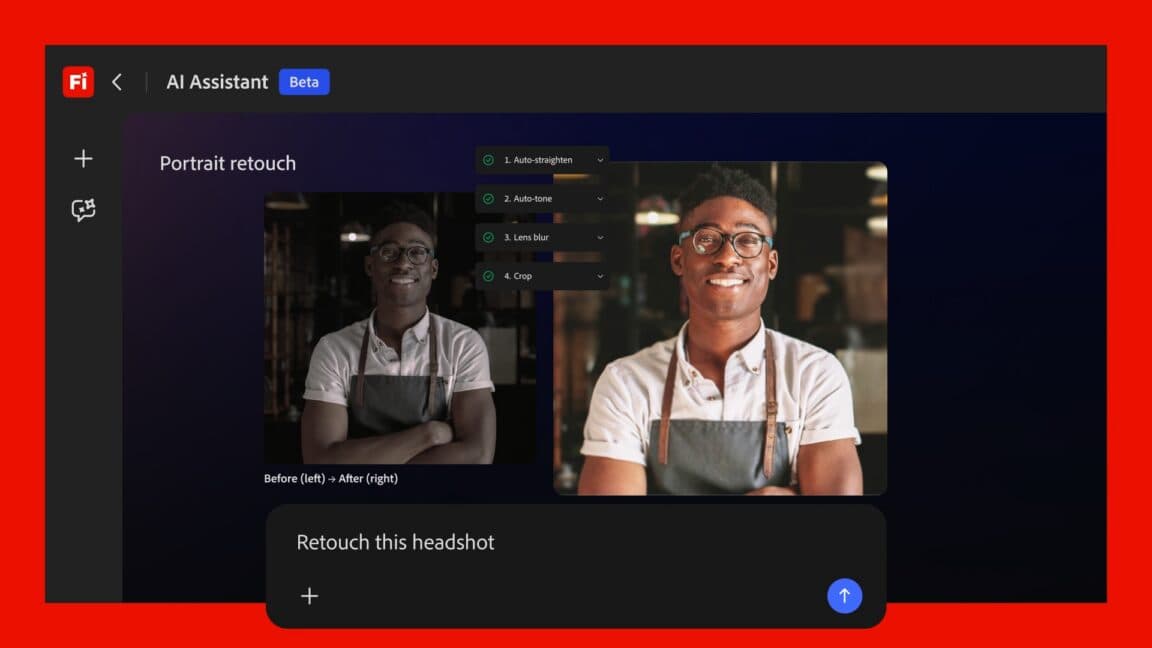
According to Ars Technica, Adobe is rolling out Firefly AI Assistant, a chat-style interface that works across multiple Creative Cloud applications. Instead of being limited to AI tools embedded inside individual apps like Photoshop or Premiere, this assistant can coordinate tasks across them, juggling text, images, and other media.
Users describe what they want in natural language; the assistant then proposes workflows, executes steps, and periodically checks back for clarification or approval. It can surface contextual controls—like sliders for intensity—directly in the chat. Adobe says it will also adapt to user preferences over time, learning favored tools and visual styles.
The system supports “skills”: reusable, preconfigured workflows for specific tasks, similar to how coding assistants offer task-specific agents. Creators can choose from a library of skills or define their own.
Firefly AI Assistant, previously previewed as “Project Moonlight,” will launch as a public beta within weeks. Adobe has not yet disclosed pricing, usage limits, or which Creative Cloud tiers will include it.
3. Why this matters
Firefly AI Assistant marks a strategic shift: Adobe is moving from AI as feature to AI as foreman.
Until now, Adobe’s AI efforts mostly mimicked Apple’s philosophy—polish specific actions (object selection, noise reduction, generative fill) inside each app. Powerful, but fundamentally incremental. With Firefly Assistant, Adobe is attacking the meta-layer: the planning, file juggling, exporting, and endless micro-decisions that sit between “idea” and “finished deliverable.”
Winners first:
- Power users and agencies gain a flexible automation layer without having to maintain scripts, actions, or complex templates. “Make socials from this key visual in the brand kit, export localized versions, and prep a client-ready deck” becomes a conversation, not a checklist.
- Non-experts finally get a way into Adobe’s world without reading a 500-page Premiere manual. You can ask, “Turn this rough clip into a 30-second TikTok with subtitles,” and let the assistant suggest a path.
But there are losers too:
- Junior production roles that today spend hours on resizing, exporting, masking, and cleaning up assets will see more of that work automated. The value of entry-level creative labor shifts from execution to taste, communication, and oversight.
- Third-party automation vendors selling workflow tools around Creative Cloud may find themselves squeezed if Adobe’s orchestration is “good enough” and tightly integrated.
Most importantly, this is a lock-in play. If the real power sits in cross-app workflows and custom skills, moving away from Adobe no longer means just replacing Photoshop—it means abandoning your AI “brain” that knows your brand, templates, and habits.
4. The bigger picture
Firefly AI Assistant sits squarely in a broader shift toward “agentic” AI—systems that don’t just answer questions, but plan and execute multi-step tasks.
In coding, we’ve seen this with tools like Anthropic’s Claude Code-style experiences and GitHub’s Copilot Workspace, which can decompose a feature request into tasks, edit multiple files, and run tests. In productivity, Microsoft’s Copilot for Office tries to orchestrate across Outlook, Word, and Teams. Adobe is now attempting the same for creative work.
Historically, similar jumps in abstraction have been painful but ultimately sticky. The leap from command lines to GUIs, from GUIs to templates, and from templates to cloud collaboration all reduced friction—but also concentrated power in a few platforms that owned each new layer. Firefly Assistant is Adobe’s bid to own the “creative agent” layer before someone else wraps its file formats and workflows in a more user-friendly front door.
Competitively, this responds to pressure from:
- Canva and web-native tools, which already feel more approachable and are adding AI to automate design variations.
- AI-first tools like Midjourney, Runway, and Pika, which started outside the Adobe ecosystem and threaten to become new default entry points for images and video.
- Figma and its plugin ecosystem, whose blocked acquisition by Adobe signaled regulators won’t let Adobe simply buy UX dominance.
If AI assistants become the main way clients and non-designers interact with creative workflows—“talk to the brand bot, it will draft assets and loop in a designer when needed”—Adobe needs to ensure that assistant runs on its stack, not someone else’s.
5. The European / regional angle
For European creatives, Firefly AI Assistant lands at an awkward but interesting intersection of productivity and regulation.
On the one hand, it’s a clear boost for freelancers and small studios across the continent. Many work solo across design, video, and social, often under intense pricing pressure from global platforms. A cross-app assistant that automates repetitive production could be the difference between saying yes or no to another client without burning out.
On the other hand, the EU AI Act and GDPR will shape how far Adobe can push personalization and cross-project learning in Europe. An assistant that “remembers” your preferences is, in GDPR terms, building a user profile. That raises questions about consent, data minimization, the right to be forgotten, and whether enterprise customers can keep sensitive assets out of model training by default.
Adobe has been vocal about training Firefly on licensed or Adobe Stock content and embedding provenance tags (Content Credentials). That positions it relatively well against EU transparency and watermarking requirements. But Stock itself includes works from European contributors who care deeply about how their content is reused; any hint of opaque data practices will draw scrutiny from both artists and regulators.
There is also competitive space for European or EU-friendly alternatives. After Canva’s acquisition of Serif (Affinity), and with open-source tools like GIMP, Krita, and Blender steadily improving, a plausible future is a European-flavoured creative stack with open or locally hosted models—especially attractive to public-sector and regulated industries that hesitate to send sensitive assets to US clouds.
6. Looking ahead
Over the next 12–24 months, three things will determine whether Firefly AI Assistant becomes indispensable or just another panel users close on day one.
Reliability as an autonomous operator. Cross-app orchestration is high-stakes. A hallucinated text snippet is annoying; a misapplied batch edit across 150 client files is catastrophic. Adobe will need strong guardrails—versioning, easy rollback, explicit confirmations—to earn trust, especially in agency and broadcast environments.
Pricing and metering. If Adobe tries to monetize Firefly usage with aggressive token or credit limits, it risks teaching users to avoid the assistant for anything non-essential. Expect a honeymoon period where usage is generous, followed by a tightening once Adobe understands cost dynamics. Watch what’s bundled into Creative Cloud vs. sold as an add-on.
Openness of the “skills” ecosystem. If skills are easy to build, share, and maybe even sell, Firefly Assistant could become a marketplace of reusable production recipes—"EU broadcast-safe titles,” “German print preflight,” “TikTok vertical remixes.” If they’re locked down or enterprise-only, much of the potential network effect disappears.
My bet: within three years, most Creative Cloud users who log in weekly will touch the assistant in some way, even if only for tedious chores. The deeper question is whether clients and managers will start interacting with outputs primarily through this assistant—reviewing drafts, requesting versions, leaving feedback—turning it into a new gatekeeper between buyers and makers.
7. The bottom line
Firefly AI Assistant is Adobe’s most serious attempt yet to redefine creative work as AI-supervised orchestration rather than manual tool-wrangling. It will save time, raise expectations, and accelerate automation of low-level production tasks—while tightening Adobe’s grip on the creative pipeline.
For professionals, the challenge is clear: lean into the assistant as leverage, not competition, and invest in the parts of your craft it can’t easily commoditize—taste, judgment, and ideas. The uncomfortable question: when your tools can “do the work,” how will you prove the value of what only you can do?