AI Traffic Cops Hit the Bike Lane: Why Santa Monica’s Experiment Matters
If you ride a bike in a city, you already know the real enemy is not rain or hills – it is the delivery van parked squarely in the bike lane. A coastal city in California is now turning to artificial intelligence to solve that problem, putting cameras on parking enforcement cars to automatically spot violators. On the surface, it is a simple traffic‑management story. In reality, it is a preview of how AI will quietly rewire urban life, one fine at a time. This piece looks at who wins, who loses, and what Europe should learn.
The news in brief
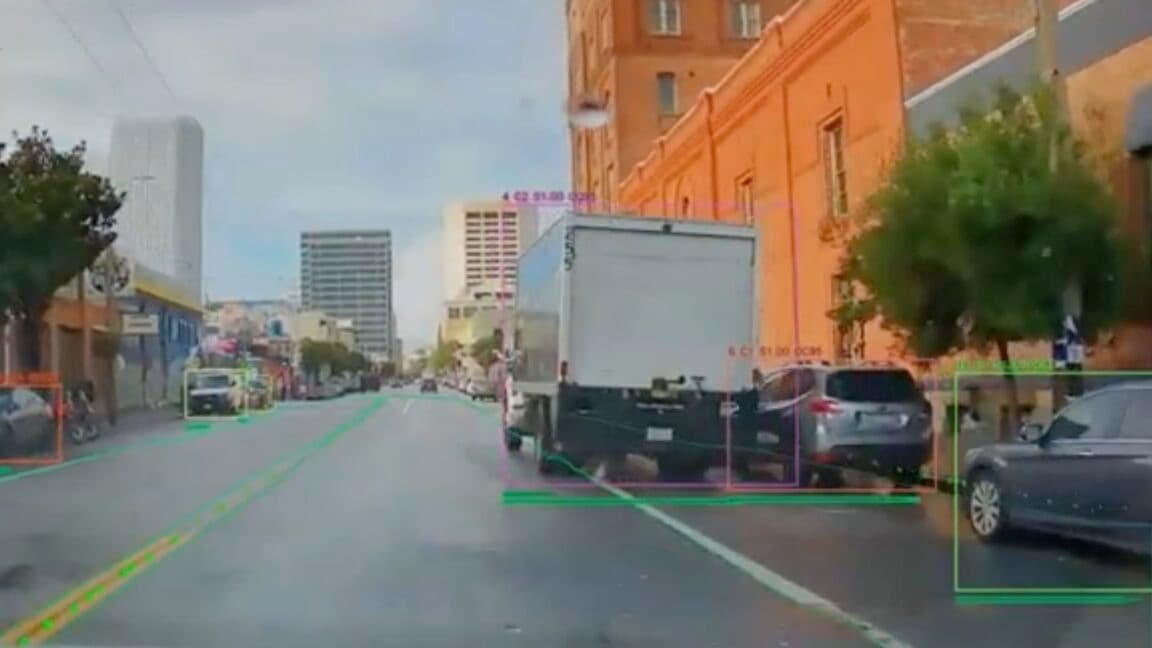
According to Ars Technica, the city of Santa Monica in Southern California will begin using AI‑powered cameras this April on seven municipal parking enforcement vehicles. The system, supplied by San‑Francisco startup Hayden AI, automatically scans streets for cars blocking bike lanes and other restricted areas, recording short video clips and license plates when a suspected violation is detected.
Santa Monica already uses the company’s cameras on buses, but until now enforcement was limited to bus routes. Hayden AI’s technology is also deployed on buses in Oakland and Sacramento, and in several East Coast cities including New York City, Washington, DC, and Philadelphia.
The company told Ars Technica that by September 2025 it had installed 2,000 systems on buses worldwide. In a 59‑day trial at the University of California, San Diego, its cameras identified more than 1,100 parking violations, about 88 percent of which involved blocked bike lanes. City staff still review footage before issuing citations under California law.
Why this matters
Santa Monica’s move sounds like a niche mobility story, but it sits at the crossroads of three powerful forces: the cycling boom, the automation of public enforcement, and the normalization of AI‑powered surveillance in everyday life.
The most obvious winners are people who depend on bikes and buses. Painted bike lanes are only as safe as the enforcement behind them. If drivers know that a parking officer might pass only once a day, the temptation to just stop for a minute is high. Once violations are detected automatically, the odds of getting away with it drop sharply. That can make cycling feel less like an extreme sport and more like a legitimate way to commute.
Public transport agencies also benefit. Keeping bus lanes and stops clear is one of the cheapest ways to improve service reliability without laying a single metre of new asphalt. If the same system can watch bike lanes, cities extend that effect to micromobility.
The losers are not only chronic lane blockers but also anyone uneasy about embedding cameras, machine vision and automated decision‑making into the basic fabric of city life. Even if Hayden AI’s implementation is relatively conservative – recording only when a clear violation is suspected – the underlying logic is expandable. Once the infrastructure exists, the political barrier to using it for other purposes, from low‑level policing to dynamic congestion charging, becomes much lower.
The competitive landscape is also worth watching. Companies like Hayden AI are turning AI for enforcement into a product category. Whoever wins this niche will wield quiet but real power over how cities regulate movement and space. The risk is that a handful of private vendors end up defining what is technically feasible and therefore politically thinkable.
The bigger picture
Santa Monica’s experiment is part of a broader shift from reactive, human‑led enforcement to continuous, sensor‑driven governance.
We have seen versions of this movie before. Fixed speed cameras and red‑light cameras sparked similar debates two decades ago; today they are a mundane part of driving in many countries. The difference now is that AI‑powered systems can be mobile, adaptive and much more granular. Instead of one fixed camera at a junction, a small fleet of vehicles can sweep entire districts daily, learning the city’s layout and its rules.
The trend dovetails with so‑called Vision Zero road‑safety strategies, which aim to eliminate traffic deaths by redesigning infrastructure and changing behaviour. Automated enforcement fits snugly into that philosophy: remove the subjective element, increase the certainty of punishment, and collisions should fall.
It also fits a less comfortable trend: the quiet expansion of commercial surveillance infrastructure under the banner of efficiency and safety. From private licence‑plate readers in US suburbs to smart‑city platforms that track noise, air quality and footfall, urban management is increasingly a data problem – and that data is often collected and processed by private vendors under opaque contracts.
Compared to flashy generative AI hype, this kind of boring AI gets fewer headlines, but it will probably touch more lives. Traffic, waste collection, parking, building inspections – these are precisely the domains where computer vision and pattern recognition can be deployed at scale with immediate financial justification. Santa Monica’s pilot is a template that other mid‑sized cities can easily copy.
Finally, Santa Monica is not a frontier town; it is a relatively affluent, politically progressive city with a strong cycling lobby. If the system proves popular there, it will become easier for mayors elsewhere to argue: we are just doing what Santa Monica did.
The European angle
For European readers, the obvious reaction is: interesting, but could we even do this under GDPR and the upcoming EU AI Act? The answer is: yes, but only with much tighter guardrails than many US cities currently apply.
From a GDPR standpoint, automated plate recognition for parking enforcement is not new; it already happens in many EU municipalities. The key issues are purpose limitation, data minimisation, retention periods and transparency. Santa Monica’s model – only recording short clips when a possible violation is detected, and having humans in the loop before fines go out – actually aligns surprisingly well with European data‑protection doctrine. The devil, of course, is in whether that design survives budget pressure and vendor roadmaps.
Under the AI Act, systems that are used to enforce laws and affect people’s rights tend to fall into the high‑risk category, triggering obligations around risk assessment, documentation, human oversight and robustness. Any Hayden‑style deployment in the EU would therefore need rigorous accuracy testing (including bias analysis), clear appeals processes for drivers, and strong procurement conditions.
Cities from Berlin to Barcelona are already cautious about outsourcing core public functions to black‑box vendors; politically, a US startup scanning European plates would be a hard sell unless the governance story is watertight. That is also an opening for European suppliers to differentiate on transparency and sovereignty.
There is a competitive angle here too. European mobility and ITS (intelligent transport systems) companies – from big players down to small computer‑vision startups in places like Munich, Tallinn or Ljubljana – will not want to leave this enforcement niche entirely to US firms. Expect more GDPR‑native offerings pitched explicitly as trustworthy alternatives, perhaps integrated with existing low‑emission zone and parking solutions.
Looking ahead
Three things are worth watching over the next three to five years.
First, scope creep. Once the hardware is on the roof of municipal vehicles, political pressure will grow to squeeze more value from it. Today it is bike lanes; tomorrow it could be bus‑only corridors, loading zones, low‑emission areas, even littering or outdoor advertising violations. Each new use case may be reasonable on its own, but together they could add up to a pervasive, semi‑automated compliance net.
Second, governance and transparency. Cities will need to decide how often to publish statistics on accuracy, false positives, demographic distribution of tickets, and revenue raised. Without that sunlight, automated enforcement will quickly be framed as a cash grab rather than a safety measure, especially in car‑centric suburbs. Expect court challenges around due process and the right to contest machine‑assisted evidence.
Third, international diffusion. If Santa Monica can demonstrate fewer crashes and faster buses without major privacy scandals, copy‑cat projects will surface in other US cities, Canada and eventually in more regulation‑heavy regions like the EU. The timeline here is measured in procurement cycles: three to seven years, not months.
For citizens and local activists, the opportunity is to get ahead of this wave: push for strict rules now – short retention, independent audits, open technical standards – rather than fighting a rear‑guard action once the cameras are ubiquitous.
The bottom line
AI‑powered bike‑lane enforcement looks like a narrow technical tweak, but it is really a political choice about the kind of city we want: one where vulnerable road users are actively protected, but also one where automated eyes quietly become part of the streetscape. Santa Monica is running a high‑profile test. The rest of us should pay attention – and decide under what conditions we are willing to let algorithms write the next parking ticket we receive.


