Big Tech’s DIY power plants won’t save your bill – but they will rewrite the grid
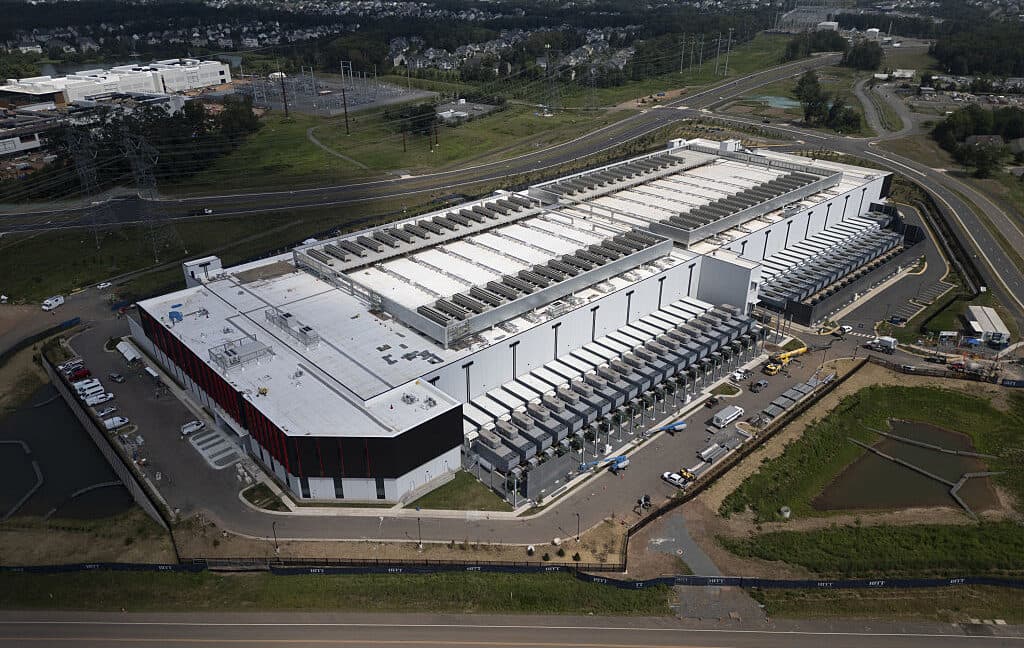
US tech giants are promising to build their own power plants for AI data centers so that ordinary households do not end up paying more for electricity. On paper, it sounds like a win‑win: more AI, no extra pain on your utility bill. In reality, this pledge is less a consumer protection measure and more a high‑stakes reshaping of who owns and operates the next generation of power infrastructure.
This piece looks at what the pledge really changes, why it is unlikely to fully protect consumers, how it could lock in fossil fuels, and what lessons Europe should take as its own AI‑driven power demand surges.
The news in brief
According to Ars Technica, citing reporting from the Financial Times, major US tech companies including Amazon, Google, Meta, Microsoft, xAI, Oracle and OpenAI are preparing to sign a White House pledge to supply power for new data centers from their own dedicated generation rather than relying on the existing electricity grid.
The initiative, championed by President Donald Trump and due to be formalised at an event in Washington, is framed as a way to prevent AI‑driven data center growth from raising residential electricity prices. US data center demand is forecast to rise from roughly 35 GW in 2024 to more than 100 GW by 2035.
Ars Technica reports that much of the planned capacity will be natural‑gas‑fired, and that there are already severe bottlenecks in the supply of gas turbines. Experts quoted by the Financial Times doubt that the pledge can fully shield consumers, warning that overall demand growth, supply‑chain constraints and higher generation costs are still likely to spill over into retail electricity prices.
Why this matters
The headline promise is simple: AI will not raise your power bill. The underlying economics are anything but.
First, even if hyperscalers build their own power plants, they are not doing it in a vacuum. They will compete with utilities and industrial users for turbines, engineers, fuel and grid capacity. That competition alone drives up system‑wide costs. When gas turbines are on seven‑year lead times, as the Financial Times reporting notes, tech firms jumping the queue does not magically create extra capacity; it reallocates it.
Second, a private power plant does not isolate you from wholesale prices. If data centers lock in large volumes of gas‑fired capacity, they influence fuel demand and therefore market prices. In liberalised systems, those prices set the benchmark for everyone, whether you live next to a server farm or not.
Third, there is a governance problem. Traditional utilities are heavily regulated, with public‑interest obligations, grid‑planning oversight and cost‑of‑service rules. Tech companies are not used to operating in that world. They are optimised for speed and secrecy, not 30‑year asset stewardship under regulatory scrutiny. Moving gigawatts of generation into private, vertically integrated silos risks fragmenting planning and weakening public leverage over decarbonisation and resilience.
Who gains? In the short term, hyperscalers get more control: they can bypass slow interconnection queues and negotiate bespoke fuel and infrastructure deals. Turbine manufacturers and gas producers enjoy a fresh demand wave. Who loses? Smaller industrial users, regional utilities and ultimately households, who face tighter supply chains, infrastructure constraints and an energy system increasingly shaped around the needs of AI rather than the broader public.
The bigger picture
The pledge sits at the intersection of three powerful trends: the AI arms race, the long‑delayed renewal of power infrastructure, and the re‑fossilisation risk of the energy transition.
First, AI demand is different in character from traditional IT loads. Training and inference for large models require dense, always‑on compute with tight reliability requirements. That favours large, centralised campuses with dedicated high‑voltage connections and stable baseload power. In practice, that has meant clustering near gas pipelines and existing substations, not necessarily where wind and solar are best.
Second, grids on both sides of the Atlantic are paying the price for decades of under‑investment. Ageing transmission, slow permitting and local opposition have turned interconnection queues into four‑year odysseys. When Big Tech says it will build behind‑the‑meter plants, it is partly an indictment of how hard it has become to get clean, shared infrastructure built at scale.
Third, there is a climate angle that the political soundbites gloss over. If roughly three‑quarters of new data‑center‑linked generation is gas‑fired, as the underlying research cited by Ars Technica suggests, AI risks becoming a structural prop for fossil gas just as many countries are trying to phase it down. Deals to reopen nuclear plants in the US show there is an alternative path, but those projects are slow, capital‑intensive and politically sensitive.
Historically, waves of new industrial demand — aluminium smelters, shale‑era petrochemicals, crypto mining — have always pushed up local prices and forced grid upgrades. AI data centers are following the same script, only bigger and more politically salient. The novelty is not the physics; it is that a handful of trillion‑dollar platforms are now acting as de‑facto power companies.
The European and regional angle
This is a US pledge, but Europe is not a bystander. The same hyperscalers are building out massive campuses in Ireland, the Netherlands, Germany, Spain and the Nordics. The same AI workloads will land here, and the same tension between digital growth, climate targets and power prices is already visible.
The EU has some advantages. The Emissions Trading System, the upcoming EU AI Act, and the Green Deal industrial policies create a clearer framework linking digital expansion to climate obligations. A gas‑heavy private power strategy is much harder to square with Fit for 55 targets than with US energy politics.
At the same time, national governments are under pressure over high electricity prices, especially in Germany and Italy. It will be politically tempting to copy the US narrative: let data centers sort out their own power and keep them off household bills. But in Europe, that runs directly into other regulatory pillars: unbundling rules that separate generation and networks, state‑aid constraints, and strong public resistance to new fossil infrastructure.
For European utilities, there is both threat and opportunity. If tech firms go fully private, incumbents risk losing their most creditworthy industrial customers. If, instead, utilities can co‑develop low‑carbon campuses — combining new renewables, nuclear where available, and smart grid upgrades — they can turn AI into an anchor tenant for the clean‑energy buildout Europe needs anyway.
Looking ahead
The immediate next step is obvious: more bespoke power deals. Expect a wave of announcements pairing hyperscalers with gas turbine OEMs, nuclear operators, and in some cases large renewable portfolios with dedicated storage. These will be framed as green, firm and consumer‑friendly. The fine print — fuel contracts, capacity payments, grid‑access terms — will determine who actually bears the risk.
On a 3‑ to 5‑year horizon, several fault lines will matter:
- Regulation: US utility commissions and European regulators will have to decide how to treat these private plants. Are they purely behind‑the‑meter, or effectively merchant generators that should face the same obligations as utilities?
- Grid integration: Even self‑supplied campuses still need the grid for backup, balancing and emergencies. Who pays for the required reinforcement if the primary beneficiary is a private AI cluster?
- Climate accounting: Corporate net‑zero claims will collide with the reality of gas‑heavy baseload. Scope 2 accounting games will not withstand public scrutiny if local air quality and emissions worsen.
There are also overlooked opportunities. Data centers are large, controllable loads that could, in principle, offer demand response, waste‑heat utilisation and grid‑stabilising services. Europe is somewhat ahead here, with pilots in the Nordics and Germany. But those benefits require transparent integration into system planning, not isolated company‑town power islands.
The unresolved question is political: who gets to decide how much AI‑driven load a grid should absorb, on what terms, and with what safeguards for ordinary consumers? Leaving that entirely to bilateral deals between presidents and platforms is a recipe for backlash.
The bottom line
Big Tech’s promise to build its own power plants is less a protective shield for consumers than a bid for control over the energy systems that will feed AI. It may soften some local price spikes, but it cannot repeal supply and demand, nor the climate arithmetic of locking in new gas capacity.
If Europe wants AI without an energy backlash, it should not copy the US pledge. It should use its regulatory leverage to force alignment between digital expansion and a faster, cleaner, more democratic power buildout — and insist that the cost of AI’s appetite is shared fairly, not quietly shifted onto everyone else’s bill.

