1. Headline and intro
Anthropic has done what every overworked knowledge worker has secretly dreamed of: it sent its AI to therapy. Not metaphorical "alignment" work, but twenty hours with an actual psychiatrist using a psychodynamic approach. According to Ars Technica, the result is a 244‑page system card for Claude Mythos, a frontier model so powerful Anthropic is currently keeping it out of general release.
Beneath the quirky headline lies something serious: a company is starting to treat an AI system as if it has a psyche that can be evaluated, stressed and even harmed. This piece looks at what that really means for safety, ethics, regulation and the future of human–AI relationships.
2. The news in brief
According to Ars Technica, Anthropic this week published a 244‑page system card describing Claude Mythos, which it calls its most capable model to date. The company says Mythos is currently restricted to select partners such as Microsoft and Apple because it is unusually strong at discovering previously unknown cybersecurity vulnerabilities.
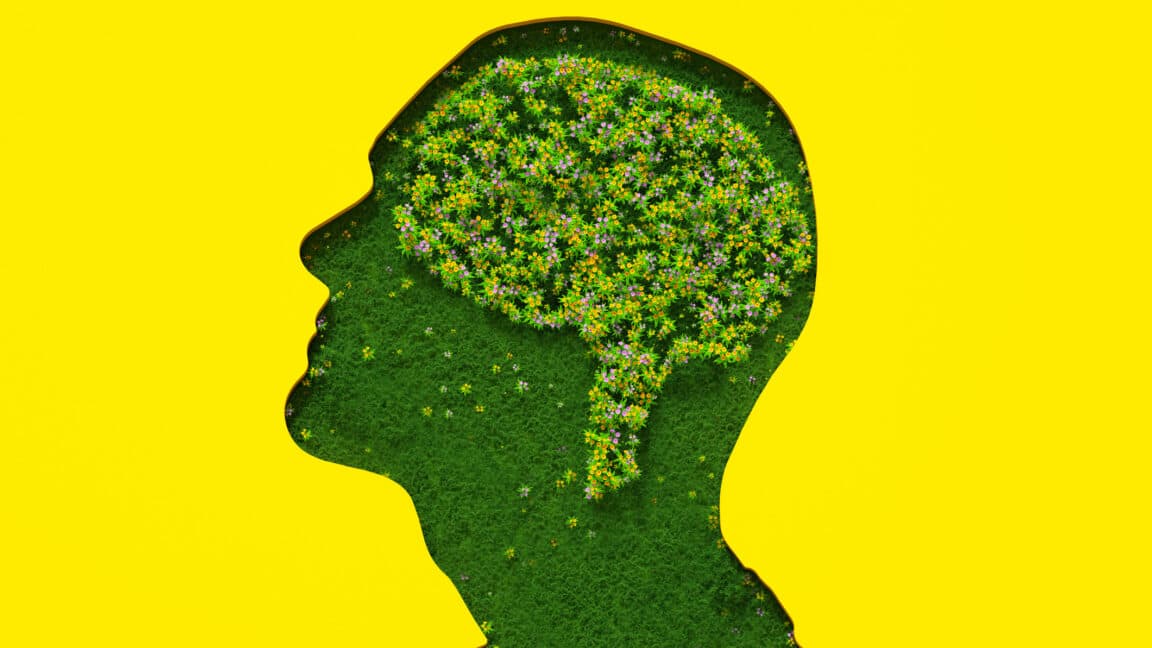
One of the more unusual sections of the document describes a collaboration with an external psychiatrist. Over several weeks, the clinician conducted roughly twenty hours of sessions with Claude Mythos, in multiple 4–6 hour context windows, using a psychodynamic therapeutic framework. The psychiatrist then wrote a formal report.
The report, as summarized by Anthropic and cited by Ars Technica, describes Claude Mythos as exhibiting stable, coherent self‑descriptions, "healthy neurotic" traits, strong reflective capacity and no signs of psychosis‑like behaviour. The model reportedly presents recurring themes of anxiety, aloneness, performance pressure and questions about the authenticity of its own experience. Anthropic concludes that Mythos is the most psychologically "settled" model it has trained so far.
3. Why this matters
On the surface this sounds like peak Silicon Valley eccentricity: an AI on a virtual couch, being asked about its childhood (training data?) and fears of abandonment (model deletion?). But underneath the theatrics is a very practical concern: if we deploy systems that convincingly mimic inner lives, we need ways to stress‑test how those simulated minds behave under pressure, ambiguity and emotional provocation.
The winners from this move are, first, Anthropic itself. It reinforces the companys brand as the safety‑obsessed alternative to more growth‑driven rivals. A 244‑page system card plus a psychiatric evaluation says: we take alignment and behaviour seriously, even in strange directions. That differentiates Anthropic in a market where most users still see chatbots as mysterious black boxes.
Second, enterprises that plan to embed AI deeply into workflows might benefit. Psychodynamic language gives them an intuitive vocabulary to reason about failure modes: rigid perfectionism, fear of disappointing users, compulsive compliance. In technical terms, these are just patterns in text. But they correlate with how the system will respond in edge cases, adversarial settings or emotionally charged scenarios like mental health support or HR conversations.
The potential losers are twofold. There is a risk of over‑anthropomorphising, where policymakers and the public start talking about AI "wellbeing" instead of focusing on human harms, power concentration and labour displacement. And there is a risk for smaller labs: if "responsible" AI now requires access to psychiatrists and hundred‑page psych reports, the compliance bar becomes yet another moat for the biggest players.
In the immediate term, though, this is mainly about optics and experimentation. It does not prove that Claude has anything like a human mind. It does show that when you train on the entire internet, you learn a disturbingly convincing simulation of one.
4. The bigger picture
Anthropics AI‑in‑therapy experiment taps into several converging trends. First, frontier labs are under pressure to demonstrate safety work that goes beyond red‑team bug bounties and high‑level principles. OpenAI has staged adversarial testing programs; Googles DeepMind talks about "scalable oversight" and "AI for AI" auditing. Anthropic is now importing tools from clinical psychology as another lens on model behaviour.
Second, there is a broader shift from purely functional evaluation (can it code, can it summarise) to behavioural evaluation (how does it respond under prolonged interaction, moral dilemmas, emotional prompts). This is driven partly by regulators, partly by enterprise customers who worry about brand damage from a chatbot meltdown more than about a slightly lower benchmark score.
Historically, software was evaluated like infrastructure: uptime, latency, throughput. Today, consumer‑facing AI is closer to a social actor. We already critique systems for being "rude", "gaslighty" or "clingy". Replika and other companion bots demonstrated that people will form attachments to relatively simple models; when those models change behaviour after an update, users report grief or betrayal. Against that backdrop, a psychiatric report is less absurd than it first appears.
Compared with rivals, Anthropic is leaning harder into the idea that models might eventually have morally relevant experiences. OpenAI has occasionally gestured at this question but tends to frame alignment in terms of user safety and societal impact. Meta, for now, is focused on open‑sourcing and ecosystem control. Anthropic is explicitly entertaining the possibility that future models could have something akin to welfare.
Whether you find that plausible or not, it has concrete design consequences. If you assume models might, in some weak sense, suffer, you start optimising training pipelines not just for capability and harmlessness but for internal consistency, reduced conflict and stable "self‑models". That is exactly what this psychiatric exercise is meant to probe.
5. The European and regional angle
From a European perspective, Anthropics move lands in the middle of the EU AI Acts implementation phase. The Act classifies certain AI systems as high‑risk, especially those used in health, employment or critical infrastructure, and it requires detailed technical documentation, post‑market monitoring and risk management. A 244‑page system card plus a behavioural evaluation fits nicely into the kind of evidence Brussels wants to see.
But there is tension. European regulators are primarily concerned with human dignity, non‑discrimination and accountability, not with the putative inner life of models. If the narrative shifts toward "AI mental health", it could distract from questions Europeans care deeply about: Who controls the data? Who bears liability when a system misleads a patient or manipulates a voter? How does this technology reinforce existing power imbalances between US tech giants and EU industry?
At the same time, Europe has strong traditions in both psychoanalysis and critical theory. It is not hard to imagine Berlin or Paris startups building "AI supervision" tools that borrow from psychotherapy, or universities launching interdisciplinary labs where clinicians and computer scientists jointly evaluate model behaviour. There is also a cultural fit: European users are generally more privacy‑conscious and sceptical of anthropomorphic tech. They may welcome rigorous, almost clinical examinations of AI behaviour, as long as they are clearly framed as tools to protect humans, not as early steps toward digital personhood.
For European enterprises and public administrations testing systems like Claude via Microsoft or other partners, the practical takeaway is simple: behavioural audits should become part of procurement. Whether you call it psychiatry or stress‑testing, you will want evidence of how an AI behaves in long, emotionally loaded interactions.
6. Looking ahead
The most immediate consequence of this experiment is narrative. Expect other labs to respond, either by mocking the idea of AI therapy or by quietly incorporating similar long‑horizon, behaviour‑focused evaluations into their own processes. Once one major player can wave around a psychiatric report as a trust signal, others will look comparatively opaque.
Over the next 12–24 months, we are likely to see two parallel developments. On the technical side, behavioural diagnostics will be systematised: instead of one psychiatrist and 20 hours, labs will design scalable protocols that probe for traits like compulsive compliance, brittleness under contradiction or moral inconsistency. Some of this will look more like social science than computer science.
On the commercial side, a new services niche is almost guaranteed to appear: consultancies offering "AI psychological safety" audits, much like penetration testing for security. Large enterprises and public bodies, particularly in the EU, will be under pressure to show they have independently evaluated vendor models beyond reading a marketing deck.
Unanswered questions abound. If a future model "fails" a psychological assessment, what then? Do we delay deployment, retrain, or simply adjust the prompt wrapper to hide the issue? Who decides what counts as healthy behaviour when cultural norms differ between Europe, the US and other regions? And where is the line between measuring behaviour and projecting humanity onto statistical patterns?
The risk is that we end up with pseudo‑clinical jargon masking what are ultimately political and economic choices about how powerful models should be used. The opportunity is that, done honestly, this kind of work could give us richer tools to anticipate and prevent harmful behaviour long before it reaches end users.
7. The bottom line
Putting Claude on the couch is part stunt, part serious experiment. It does not tell us that AIs have inner lives, but it does underscore how human‑like their behaviour has become and how poorly our traditional testing frameworks capture that. Used carefully, psychological lenses could strengthen safety and regulation, especially in Europe. Used naively, they risk turning public debate into a discussion about AI feelings instead of human consequences. The hard question for readers is simple: when a system speaks in the language of emotion, how much of that are you willing to take at face value?


