Anthropic’s Mythos Briefing Shows How “AI Safety” Became a National Security Product
When an AI lab says a model is too dangerous to release, you’d expect them to keep it as far away from power as possible. Anthropic is doing the opposite: it is quietly walking its new Mythos model straight into the heart of US political and financial power. That tension — between public restraint and private access — is exactly why this story matters beyond Washington. In this piece, we’ll unpack what actually happened, why Anthropic is willing to brief a Trump administration it is simultaneously suing, and what this reveals about the future of AI, regulation and dependence on US frontier models.
1. The news in brief
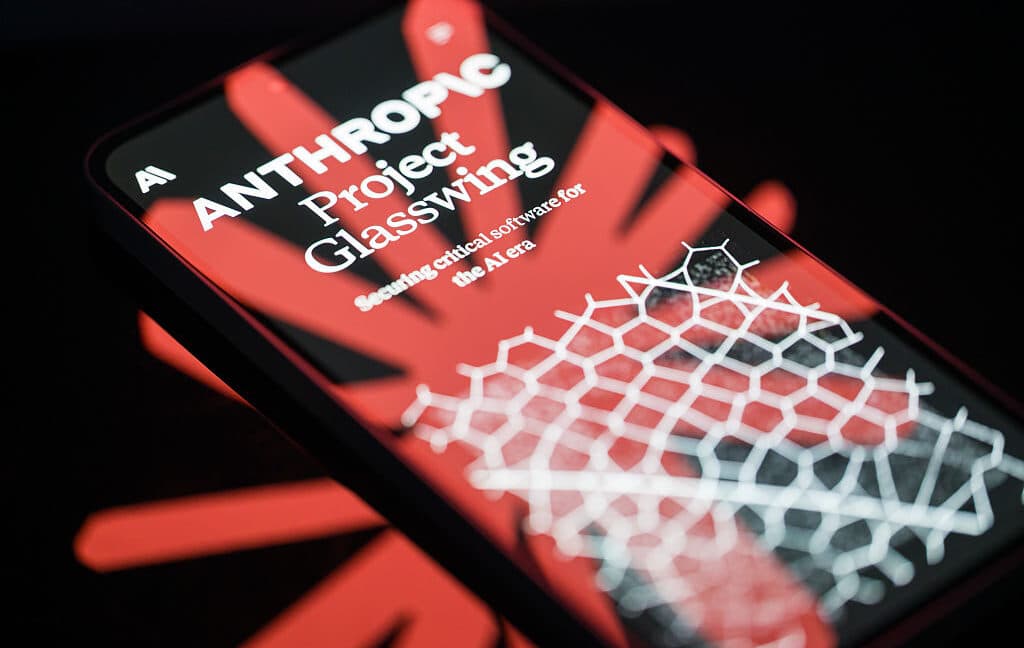
According to TechCrunch, Anthropic co‑founder Jack Clark confirmed that the company has briefed the Trump administration on Mythos, its newly announced AI model that the company itself describes as too dangerous to release publicly due to its cybersecurity capabilities.
Clark, who serves as Head of Public Benefit for Anthropic PBC, spoke at the Semafor World Economy summit, where he explained why the company remains in active dialogue with the US government even as it is suing the Department of Defense.
In March 2026, Anthropic filed a lawsuit after the Pentagon classified the company as a supply‑chain risk. The clash reportedly centred on the military’s desire for broad, largely unrestricted access to Anthropic’s systems for scenarios including large‑scale surveillance of US citizens and fully autonomous weapons. Anthropic pushed back; OpenAI ultimately won the government contract.
TechCrunch also reports that Trump officials have encouraged major US banks — including JPMorgan Chase, Goldman Sachs, Citigroup, Bank of America and Morgan Stanley — to experiment with Mythos under controlled conditions.
Clark further commented on AI’s labour‑market impact, saying Anthropic currently observes only early signs of weakness in graduate hiring in some sectors, in contrast with CEO Dario Amodei’s more extreme unemployment warnings.
2. Why this matters
The uncomfortable core of this story is simple: Anthropic is turning safety‑branded restraint into a premium access product for governments and megabanks.
On paper, Mythos is too dangerous for the public internet, yet safe enough for an administration that previously pushed for mass surveillance powers and is now explicitly exploring AI‑enabled autonomous weapons. The message to Washington is clear: we are the responsible adults in the room — as long as we’re the ones holding the keys.
Who benefits?
- Anthropic gains leverage. By positioning Mythos as a national security asset rather than a consumer product, the company raises its strategic importance, defends its access to critical US infrastructure and strengthens its narrative that regulation and safety should be designed around a small club of frontier labs.
- The Trump administration gets talking points and early access. Being briefed on a "too dangerous" model helps justify aggressive AI security postures and larger budgets, while signalling closeness to Silicon Valley’s frontier labs.
- Large US banks gain optionality. If Mythos can indeed supercharge offensive and defensive cybersecurity, they will want to be first in line — even if that access is framed as testing or evaluation.
Who loses?
- Smaller AI companies and open‑source projects are further pushed to the margins. If the most capable models are locked in opaque government–big tech arrangements, the rest of the ecosystem competes with blunt instruments and fewer data points.
- The public sees a widening transparency gap. We are told the system is dangerous, but we have no meaningful oversight into who is using it, for what purposes, and with what guardrails.
The immediate implication: national security is becoming the master key that overrides every other AI governance promise.
3. The bigger picture
Anthropic’s Mythos briefing is not an isolated event; it fits a broader realignment of the AI industry around state power.
Over the last two years, frontier labs have all converged on the same playbook:
- Talk loudly about existential and systemic risks. This justifies special treatment, closed‑door processes and bespoke regulation.
- Withhold the most powerful models from the public. They become internal research tools — or government‑grade capabilities.
- Negotiate privileged channels with states and critical industries. Access becomes a diplomatic and commercial instrument, not a product feature.
We have seen similar patterns with other AI vendors building dedicated versions of their systems for militaries, intelligence agencies and law‑enforcement bodies. The security framing is always the same: we must do this to keep up with adversaries. What is new with Mythos is the explicit acknowledgment that a model deemed too risky for civil society can still be selectively deployed among the most powerful institutions in that society.
Historically, this mirrors the evolution of cryptography and cyber‑offence capabilities. Strong encryption was once treated as a munition; offensive cyber tools were hoarded by states and a small number of contractors. Only later did we discover how many of those tools leaked into the wild.
The Mythos story suggests that cutting‑edge AI is on the same path: developed in private labs, integrated into national security architectures and only partially constrained by public regulation.
Competitively, this tilts the field toward US giants. If the most advanced models are effectively co‑developed with the US government and a handful of critical industries, non‑US players — including European startups — are nudged into a second tier, working with weaker or delayed capabilities.
It also exposes a contradiction at the heart of the "AI safety" movement when it is led by commercial vendors. The more dangerous you claim your system is, the more justification you have to sell it in secret to the most powerful customers, while keeping democratic oversight at arm’s length.
4. The European and regional angle
For Europe, Mythos is a cautionary tale about strategic dependence and regulatory asymmetry.
European institutions have spent years crafting horizontal rules — GDPR, the Digital Services Act, the Digital Markets Act and now the EU AI Act. Meanwhile, the United States is quietly building a vertical stack of relationships around a few frontier labs that are becoming de‑facto strategic contractors.
If Mythos‑class models are available only through privileged US government–industry channels, European banks, energy providers or telecom operators may face an uncomfortable choice:
- accept a capability gap versus US competitors, or
- integrate deeply with US vendors whose primary accountability is to Washington, not Brussels.
This comes on top of unresolved questions about data access, cross‑border transfers and law‑enforcement cooperation. A European bank using a Mythos‑like system fine‑tuned under US security requirements would sit at the intersection of the AI Act’s high‑risk provisions, GDPR’s data‑minimisation rules and national security exemptions that are often opaque.
There are also cultural and political differences. European publics are generally more sceptical of mass surveillance and automated decision‑making in policing and migration control. The idea of a model that was explicitly kept from the public but shared with security agencies would play very differently in Berlin or Paris than in Washington.
At the same time, Europe is not absent from this game. National security agencies, from the UK to France and Germany, are experimenting with advanced AI for intelligence fusion, cyber defence and disinformation analysis. The Mythos story should prompt European policymakers to ask: do we want our most sensitive tools to be designed in, and ultimately governed by, a small set of US frontier labs? If not, the window for building credible European alternatives is closing fast.
5. Looking ahead
A few trajectories now look likely.
1. More classified‑adjacent AI. Mythos will not be the last model declared “too dangerous” for the public but safe for governments and systemic institutions. Expect a formalisation of “restricted access tiers” where capabilities, audit rights and documentation vary dramatically depending on who you are.
2. Legal and political tests. Anthropic’s lawsuit against the Pentagon may become an important precedent. If the dispute really is a “narrow contracting issue”, as Clark framed it, courts will still have to clarify how far the US government can go in demanding unrestricted access to private AI infrastructure. The result will influence similar negotiations worldwide.
3. Regulatory friction with Europe. As the EU AI Act moves into implementation, European regulators will push for transparency, robustness and fundamental‑rights safeguards — even for foreign models. Tensions will arise when national security arguments are deployed to refuse meaningful scrutiny of systems like Mythos.
4. A labour‑market reality check. Clark’s more cautious view on unemployment — modest signs of stress in graduate hiring rather than depression‑level joblessness — suggests that the near‑term disruption may be uneven and sector‑specific. Policymakers in Europe and beyond should focus less on headline job‑loss numbers and more on who loses bargaining power first: junior knowledge workers, back‑office staff, and outsourced service providers.
5. Governance by contract, not just by law. The real guardrails for Mythos will not be press releases or summit speeches; they will be the private contracts between Anthropic, governments and banks — including clauses on logging, human oversight, red‑teaming and allowed use‑cases. Very few of those will see daylight.
Watch for three signals over the next 12–18 months: whether other labs follow Anthropic in openly branding models as too dangerous for the public; whether European regulators demand sight of restricted models used by EU‑based entities; and whether any misuse or leak of such systems becomes public, forcing a rethink.
6. The bottom line
Anthropic’s Mythos briefing to the Trump administration exposes the new political economy of “AI safety”: public restraint, private privilege. The company is not uniquely villainous — it is simply following the incentives that arise when national security, capital markets and frontier models intersect. The question for the rest of us, especially in Europe, is whether we are comfortable letting a handful of US labs become the invisible infrastructure of both our economies and our security services — and if not, what we are willing to build instead.