1. Headline & intro
Anthropic just received the harshest kind of free code review: from the entire Internet. A packaging mistake exposed the full source of Claude Code, its fast-growing command‑line AI assistant, handing rivals and hobbyists a rare inside look at a flagship commercial AI tool. Beyond the embarrassment, this incident raises uncomfortable questions for every company betting its future on proprietary AI infrastructure. How much of the supposed “secret sauce” is really defensible—and how much is just well‑engineered glue around an API? In this piece, we’ll unpack what actually happened, why it matters strategically, and what it signals for the next phase of the AI tools race.
2. The news in brief
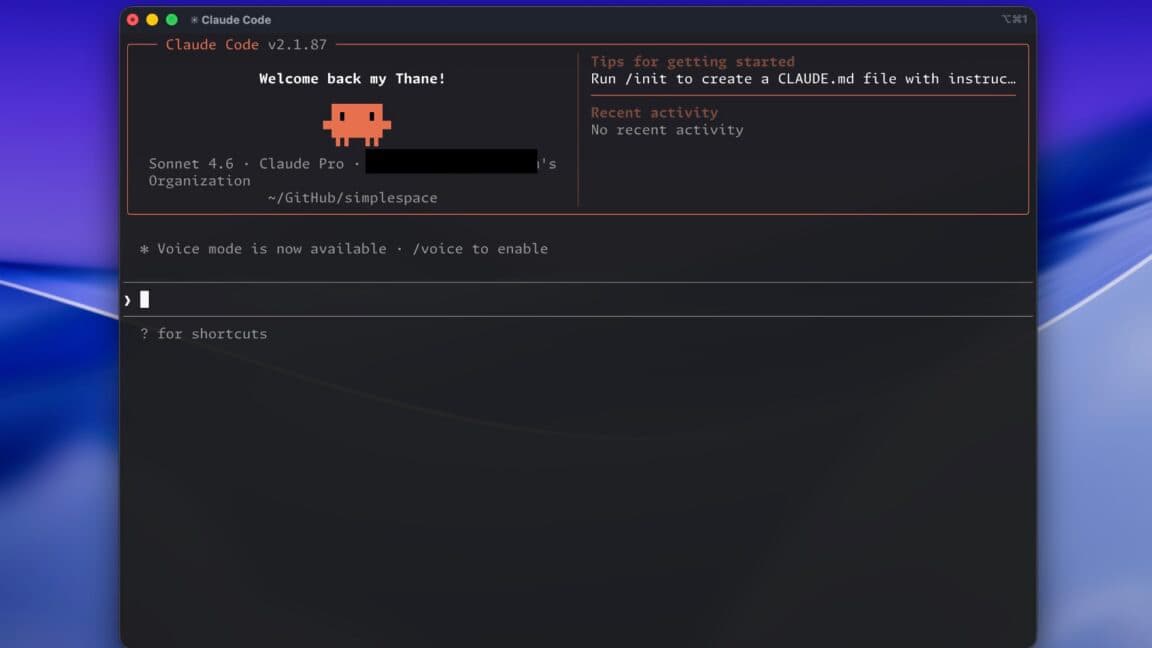
According to Ars Technica, Anthropic accidentally shipped the complete source code of its Claude Code command‑line interface in an npm package release (version 2.1.88) earlier today. The package included a source map file that allowed reconstruction of the entire TypeScript codebase—around 2,000 files and more than 512,000 lines of code.
A security researcher quickly highlighted the issue on X and linked to an archive of the files. The codebase was then uploaded to a public GitHub repository and rapidly forked tens of thousands of times, effectively guaranteeing that it cannot be fully withdrawn.
Anthropic confirmed to multiple outlets that internal source was unintentionally included in a release, stressing that no customer data or credentials were exposed and that this was caused by human error in packaging, not an external intrusion. The company says it is rolling out process changes to avoid a repeat. Meanwhile, developers worldwide have begun dissecting the architecture and internals of Claude Code in detail.
3. Why this matters
The leak isn’t about models—it’s about everything wrapped around them. That “everything” is exactly where AI companies have been trying to build defensible moats: the tooling, orchestration, memory systems, guardrails, and developer experience that turn an API into a sticky product.
Claude Code sits at the front line of Anthropic’s relationship with developers. It’s not just a basic wrapper around the Claude API; analyses of the leaked tree already point to complex memory management, plugin‑like tooling, and a substantial query system. In other words, this is a mature product architecture roadmap, exposed in one shot.
Who benefits?
- Competitors—from other frontier labs to IDE vendors and open‑source tool builders—now have a highly detailed reference design. They don’t need to copy the code to gain value; knowing which problems Anthropic chose to solve, and how, can compress their own design cycles dramatically.
- Open‑source communities get a reality check on what “production‑grade” AI tooling looks like at scale, plus inspiration for new projects.
Who loses?
- Anthropic’s product moat around Claude Code is weakened. Trade‑secret protection still exists, but enforcing it against a global developer community is practically impossible.
- Anthropic’s safety posture takes a hit. The CLI likely embeds logic related to prompt shaping, tool access limits and guardrail enforcement. Bad actors now have a much clearer map of where to probe for weaknesses, even if they can’t see model weights.
In the near term, the biggest damage may not be stolen code but lost narrative control: Anthropic has marketed itself as the safety‑first lab. A security‑adjacent blunder in its flagship developer tool undercuts that brand.
4. The bigger picture
This leak lands at a moment when AI infrastructure is simultaneously maturing and fraying at the edges. We’ve already seen adjacent incidents: sensitive internal prompts accidentally exposed in web clients; misconfigured GitHub repos leaking API keys; employees pasting proprietary logic into public chatbots. Now we have a full‑fledged product codebase spilling via something as mundane as a misconfigured source map.
The pattern is clear: the surrounding software and processes, not just the models, are becoming a critical attack surface and competitive battleground.
It also feeds into a longer‑running debate: open vs closed AI tooling. On one side, open‑source advocates argue that transparency leads to faster innovation and better security. On the other, labs like Anthropic, OpenAI, and Google have relied on secrecy around model internals and product glue code to justify valuations and maintain an edge.
What we have here is a forced experiment in partial openness. Claude Code is effectively “open architecture” now, without the legal clarity and community governance of true open source. That’s the worst of both worlds for Anthropic: competitors get insight, but Anthropic doesn’t gain the goodwill or contributions that come with intentional open‑sourcing.
Compare this with how some developer tools vendors handle it: they publish client libraries as open source but keep orchestration backends proprietary. Anthropic had opted to ship a compiled client via npm with source maps, straddling the line. That line has now vanished.
Zooming out, the incident reinforces where the industry is heading: AI models will commoditise faster than expected, and the real differentiation will increasingly live in integration quality, workflows, data, and distribution. Ironically, those are exactly the layers Claude Code has just involuntarily documented for everyone else.
5. The European / regional angle
For European developers and startups, the leak is both a cautionary tale and an unexpected learning resource.
On the opportunity side, EU‑based teams working on AI coding assistants or dev tools—whether in Berlin, Paris, Ljubljana, or Zagreb—now have a concrete, industrial‑scale example of how a top‑tier AI CLI is structured. That can accelerate local products built on European models (Aleph Alpha, Mistral, Stability, open‑source LLMs) and help smaller teams avoid architectural dead ends that Anthropic has already resolved.
Regulatory context matters here. Under the upcoming EU AI Act, providers of high‑impact AI systems face obligations around logging, transparency, security and risk management. Claude Code itself may not be “high‑risk,” but any similar assistant integrated into critical infrastructure or developer workflows inside banks, healthcare or public services will likely fall under stricter controls. Incidents like this strengthen the argument in Brussels for secure‑by‑design requirements and tighter software supply‑chain hygiene.
There’s also a GDPR and NIS2 lens. Even though Anthropic says no personal data was exposed, EU regulators have long stressed that process failures—like poor release management—are exactly how data breaches eventually happen. European enterprises, already wary of US‑based AI vendors, may use this as another reason to push for on‑prem, EU‑hosted or open‑source alternatives where they can audit the full stack.
At the same time, European AI companies should not be complacent. Many of them have far looser internal controls than hyperscale labs. If a safety‑obsessed firm like Anthropic can ship half a million lines of internal code by accident, so can anyone.
6. Looking ahead
What happens next is reasonably predictable on some fronts and wide open on others.
Technically, Anthropic will almost certainly:
- Audit and harden its entire release pipeline—expect stricter CI rules, no‑map builds, and additional approvals for publishing client packages.
- Refactor or rotate any especially sensitive logic now exposed, particularly around guardrails, rate‑limiting, or tool invocation.
- Consider reshaping Claude Code’s architecture so that more critical behaviour lives server‑side rather than in a distributable client.
Strategically, the company now has a choice: quietly treat this as an embarrassment and move on, or lean into it by formalising what’s already de facto public. That could mean clearly licensing parts of the client as open source, inviting contributions, and focusing its proprietary moat on server‑side orchestration, data and models. It’s not obvious Anthropic will take that route, but the option is now on the table.
For readers, the key things to watch over the next 3–9 months:
- The emergence of Claude Code‑inspired open‑source tools and forks targeting other models.
- Whether competing labs or IDE vendors ship unusually similar features or architectures—a sign that the leak influenced their roadmaps.
- Any security advisories related to Claude Code or to prompt/guardrail bypass techniques that trace back to insights from the leaked tree.
- How regulators, especially in the EU, reference this and similar incidents when justifying new security and transparency rules for AI tooling.
The biggest open question is cultural: will this push AI labs toward more disciplined software engineering practices—more like aviation and less like move‑fast‑and‑break‑things—or will it be written off as an isolated “oops” until the next, possibly worse, incident?
7. The bottom line
The Claude Code leak is not an extinction‑level event for Anthropic, but it is a serious strike against the idea that proprietary AI tooling is a durable moat. Competitors now have a rich architecture manual; bad actors have a clearer attack surface; and regulators have a fresh example of why AI infrastructure needs stronger governance. The interesting question is whether labs respond by doubling down on secrecy—or by accepting that much of the stack will eventually look open, and shifting their advantage to where leaks can’t help rivals: real‑world data, trusted distribution, and execution discipline.