1. Headline & intro
PC gamers have spent years tuning every texture slider and sharpening filter; now Nvidia wants a neural network to finish every frame for them. With DLSS 5, the company isn’t just upscaling pixels anymore, it’s trying to stylize games with generative AI—and the community is pushing back hard. In this piece, we’ll unpack what Nvidia is actually proposing, why the backlash is about culture as much as technology, and how this shifts the long-running power struggle between GPU vendors, game studios, and players.
2. The news in brief
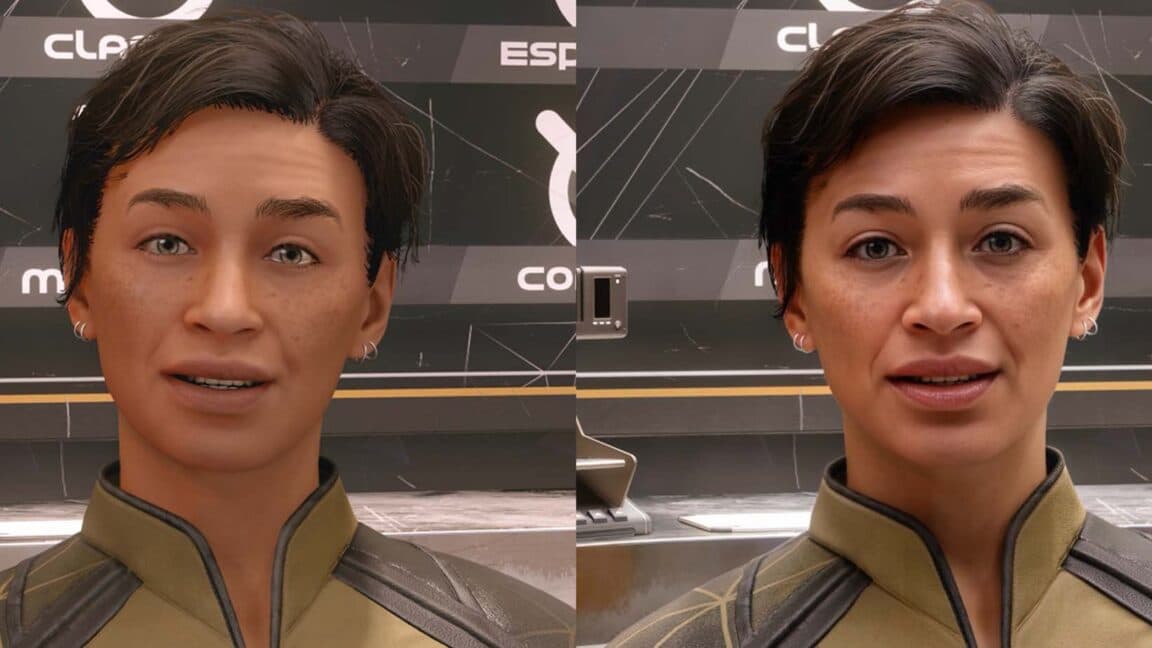
According to Ars Technica, Nvidia’s recent reveal of DLSS 5 triggered strong criticism from many PC gamers, who described its generative AI enhancements as turning games into indistinct, overprocessed visuals.
In a long conversation on the Lex Fridman Podcast, Nvidia CEO Jensen Huang tried to calm the waters. He argued that DLSS 5 is fundamentally different from generic generative AI content: the network is driven by the game’s 3D geometry and artist‑created assets, and is meant to enhance each frame rather than invent entirely new scenes.
Huang stressed that game artists can guide and train the model toward specific visual styles, and that players will be able to switch the new DLSS 5 “enhancement” layer off. Despite the controversy, Nvidia has already lined up major partners including Bethesda, Capcom, NetEase, NCSoft, Tencent, Ubisoft, and Warner Bros. Games, suggesting DLSS 5 will land in big-budget titles later this year.
3. Why this matters
DLSS used to be a fairly uncontroversial bargain: let the GPU render fewer pixels, let an AI upscaler hallucinate the rest, enjoy higher framerates. DLSS 5 changes that social contract. It isn’t just about performance; it’s about taste. Nvidia wants its model to have a say in what your game should look like.
That’s where the “AI slop” accusation stings. Gamers are not mainly afraid of glitches or artifacts; they’re afraid of homogenisation. Years of investment into unique art directions—from indie pixel art to painterly AAAs—could be flattened into the same glossy, sharpened, Instagram-filter version of reality.
Winners in this shift are obvious. Nvidia gets a fresh AI narrative to keep GeForce at the centre of the PC ecosystem and justify expensive RTX hardware. Big publishers gain a turnkey way to make games look more “premium” in trailers and screenshots without redoing assets, and a new setting they can plaster on marketing slides.
The potential losers:
- Players, who may see their favourite franchises converge on the same visual language, especially if DLSS 5 effects are enabled by default.
- Art teams, whose carefully tuned materials and shaders risk being overridden by a black-box model configured late in production.
- AMD and Intel, who now face not just an upscaling battle, but a full aesthetic platform war.
This is no longer just about frames per second—it’s about who owns the final look of a game.
4. The bigger picture
DLSS 5 lands in the middle of a broader trend: AI models increasingly sit between content creators and audiences.
In video, TVs and streaming apps already apply aggressive motion smoothing, upscaling, and HDR “enhancement” that many viewers hate but manufacturers enable by default. In photography, smartphone computational pipelines quietly reshape every shot before you ever see the RAW image. DLSS 5 is the gaming equivalent: a neural filter that ships with the platform and nudges everything toward a particular aesthetic.
We’ve been here before in games, too. Think of the bloom‑and‑lens‑flare era of the Xbox 360, or the brown‑and‑grey “realism” wave after Gears of War. This time, however, the style isn’t a set of explicit post‑processing shaders—it's an evolving model that Nvidia owns and can update.
Competitively, this is Nvidia doubling down on platform lock‑in. AMD’s FSR and Intel’s XeSS position themselves as more open, cross‑vendor upscalers. Nvidia is building an AI‑driven rendering layer that studios integrate deeply, tune with Nvidia tools, and then rely on across projects. Once your pipeline, QA, and visual targets assume DLSS 5, switching vendors gets harder.
It also ties into Nvidia’s broader push to brand everything as AI—from enterprise GPUs and Omniverse to RTX Remix for modders. DLSS 5 helps Nvidia tell investors a simple story: “Even consumer gaming is now generative AI.” The technology itself may be nuanced, but the stock‑market narrative is not.
5. The European / regional angle
For European players, this fight is about more than pretty pixels. The EU has some of the most aesthetically diverse gaming scenes in the world—from Eastern European PC RPGs to experimental indies out of Berlin, Warsaw, and Barcelona. Anything that nudges all of that toward a single “RTX house style” is going to trigger cultural resistance.
Regulators probably won’t care about DLSS 5 in isolation, but it sits in the shadow of the EU AI Act and Digital Markets Act (DMA). The AI Act pushes for transparency when generative models significantly alter content. If DLSS 5 increasingly does more than upscale—applying stylised rendering or adding details—it’s not crazy to imagine future disclosure requirements, or at least clearer labelling in settings and marketing.
From a consumer‑rights standpoint, European authorities have a history of pushing back on manipulative defaults. If major publishers ship games with aggressive DLSS 5 filters enabled, while burying native rendering options, that could attract the same kind of scrutiny already seen around dark patterns in app stores and cookie banners.
On the market side, Europe is a stronghold for PC gaming, including price‑sensitive regions in Central and Eastern Europe where older GPUs remain common. DLSS has been a way to extend hardware lifespan. If DLSS 5’s best features demand newer RTX hardware, Nvidia effectively pressures European gamers into earlier upgrades in markets where purchasing power is lower.
Finally, European studios—many of them mid‑sized rather than mega‑publishers—will have to decide whether to accept Nvidia’s aesthetic gravity or invest more to keep a distinct, DLSS‑resistant look.
6. Looking ahead
Over the next 12–18 months, DLSS 5 will move from tech demos into shipping games. The real test won’t be Nvidia’s slides; it will be side‑by‑side screenshots on Reddit and YouTube. If early implementations make games look samey or overprocessed, the “AI slop” label will stick, no matter how technically sophisticated the model is.
Expect three developments:
- Per‑effect controls. Players will demand granular toggles: keep upscaling and frame generation, dial down or disable style‑enhancing layers.
- Publisher pressure. Marketing teams will want DLSS 5 on for trailers, pushing art departments to embrace the Nvidia look, at least in performance‑capture builds.
- Competitor responses. AMD and Intel will be forced to respond with their own AI‑assisted styling or, conversely, will brand themselves as the “purist” alternative that preserves native rendering.
The open question is how modders and PC communities react. If Nvidia exposes enough control, we might see custom community‑trained DLSS styles—ironically using generative AI to restore retro looks or sharpen pixel art. If not, PC gamers may treat DLSS 5’s advanced features like TV motion smoothing: the first thing you disable on a new system.
7. The bottom line
DLSS 5 is less about a new rendering trick and more about who gets the last word on a game’s visuals: artists, players, or Nvidia’s model. Technically, the approach is fascinating; culturally, it pokes straight at anxieties about AI flattening creativity into glossy sameness. If Nvidia wants DLSS 5 to be more than a default setting everyone immediately turns off, it will need to hand real aesthetic control back to both developers and players—and prove that “AI‑enhanced” doesn’t have to mean “AI slop.”