Intro: When your coding assistant starts watching the clock
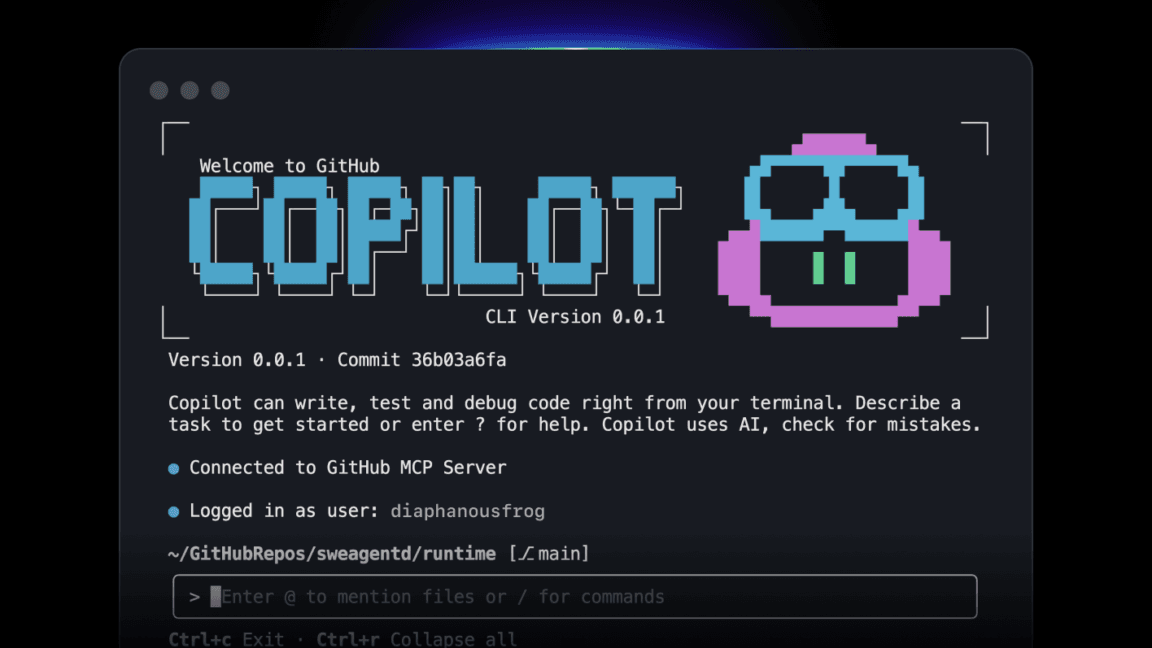
GitHub just confirmed what every AI company has been quietly signalling for months: the era of “all‑you‑can‑eat” AI for a fixed subscription is closing. From June 1, Copilot moves to metered billing based on how much AI you actually consume.
Developers who leaned on Copilot for marathon coding sessions, autonomous agents, and heavy code reviews are about to discover what those GPU hours really cost. In this piece, we’ll unpack what GitHub is changing, why it matters for developers and organisations, how it fits into a wider shift in AI economics, and what alternatives and strategies are emerging—especially for European teams.
The news in brief
According to Ars Technica, GitHub will switch Copilot to a usage‑based billing model starting June 1. Instead of today’s broad buckets of “requests” and “premium requests”, subscribers will receive a monthly pool of AI Credits tied to the price of their subscription.
Each AI interaction that goes beyond basic inline completions will consume credits based on token usage (input, output and cached tokens), priced at the public API rates of the underlying models. Ars Technica notes that OpenAI’s current high‑end GPT models used by Copilot can range from around $4.50 per million output tokens for lighter models to about $30 per million for top‑tier ones.
Lightweight features like standard code completion and Next Edit will remain unmetered. Heavier features, such as some code review capabilities, will incur extra cost through GitHub Actions minutes. GitHub is rolling out a “preview bill” tool so users can see how their historical usage would translate to the new pricing.
Why this matters: from SaaS vibes to cloud‑style billing
The core shift here is psychological as much as financial: Copilot is moving from feeling like a SaaS subscription to behaving like cloud infrastructure.
Winners in the short term are likely to be:
- Casual Copilot users – those who mostly accept inline suggestions may see little to no change and could even get more predictable performance if heavy users stop saturating capacity.
- Finance and procurement teams – they finally get a pricing model that ties AI spend to measurable usage, which can be allocated per team or per project.
Losers—at least initially—include:
- Power users and AI agent enthusiasts who run near‑continuous coding agents, long refactors or multi‑hour sessions. The article references internal documents suggesting Copilot costs nearly doubled in a few months, exactly because of this cohort.
- Teams that treated Copilot as a flat‑rate productivity tax. For them, Copilot was an easy justification at $10–20 per month. Now they need governance, budgets and monitoring.
Functionally, this solves a growing economic problem for GitHub: a small percentage of users consuming a massive share of GPU time under a heavily subsidised subscription. Instead of quietly throttling or removing features, GitHub is doing what AWS, Azure and GCP have done for years—charging more precisely for resource‑heavy workloads.
But it also creates a new friction: every long Copilot interaction will carry an implicit “how much is this costing us?” question. That could nudge developers to be more intentional—or to avoid powerful features entirely if companies overreact and clamp down on usage.
Competitively, this nudges Copilot closer to raw API consumption. If you’re already paying per token, self‑hosting or using alternative providers starts to look more rational, especially for large organisations.
The bigger picture: AI’s subsidy era is ending
GitHub’s move doesn’t happen in isolation. Ars Technica links it to similar steps at Anthropic:
- Large Claude Enterprise customers are reportedly being charged for the full cost of compute usage, rather than getting steeply discounted tokens under a flat subscription.
- Anthropic briefly pulled its resource‑intensive Claude Code from the $20/month Pro plan and has been dynamically adjusting usage limits during peak hours.
Read together, these signals show the same thing: GPU scarcity is now dictating business models. For two years, consumer AI looked weirdly cheap relative to its infrastructure cost because VC money and Big Tech cross‑subsidies were masking the bill.
We’ve seen this movie before:
- Early cloud had generous always‑free tiers; then came egress fees, reserved instances, and fine‑grained metering.
- Streaming platforms promised unlimited content for a tenner; now they raise prices, add ads, and carve out premium tiers.
AI is going the same way. Providers first over‑deliver to capture market share and lock in workflows. Once adoption is sticky, they start aligning price with real cost.
Compared to some competitors, GitHub is at least being explicit about token‑based charging rather than hiding it behind opaque “fair use” policies or quiet throttling. But it also underscores another trend: AI assistants are converging on the economics of cloud APIs, not the flat‑rate world of traditional productivity tools.
For developers and CTOs, that means AI strategy can no longer be separated from cloud‑cost strategy. Forecasting AI spend, optimising prompts, and picking models will become as routine as choosing instance types.
The European angle: cost pressure meets regulation
For European users and companies, Copilot’s new model intersects with a very different environment than Silicon Valley’s:
- Regulation: The EU AI Act, GDPR and the Digital Services Act already push organisations to think hard about which data they send to third‑party models and where it is processed. Adding variable cost on top further incentivises selective use instead of “send everything to Copilot and see what happens”.
- Budget culture: Many European enterprises are more conservative on IT spend and more decentralised in procurement. Fine‑grained billing will appeal to controllers—but could also slow adoption if every team needs approval for AI overages.
- Local alternatives: JetBrains AI Assistant, open‑source code models (e.g., Code Llama derivatives, StarCoder‑based stacks) and European‑hosted MLOps platforms suddenly look more attractive. A company in Berlin or Paris might decide to run a good-enough open model on its own GPUs or a European cloud to gain both cost visibility and data‑residency guarantees.
For smaller dev shops and startups in the EU, there’s a trade‑off:
- Paying Copilot’s metered pricing buys best‑in‑class models and tight GitHub integration.
- Investing in self‑hosted or regional providers trades convenience for control, and potentially lower marginal costs once usage crosses a threshold.
In practice, many will end up hybrid: Copilot for day‑to‑day work, in‑house models for large‑scale refactors, batch documentation, and anything involving sensitive code bases.
Looking ahead: from Copilot to cost‑pilot
Expect several concrete shifts over the next 12–24 months:
- AI cost dashboards become standard dev tooling. GitHub’s “preview bill” is just the start. Enterprises will demand per‑team and even per‑repository breakdowns, just as they do for CI minutes or cloud instances.
- Prompt and workflow optimisation become a real job. Teams will trim unnecessary context, avoid wasteful multi‑agent chains, and cache results. “Token‑aware engineering” will be a marketable skill.
- Tiered AI experiences will proliferate. We’ll likely see “basic Copilot” experiences bundled with subscriptions and “pro/agentic” modes priced per token, or even scheduled for off‑peak times when compute is cheaper.
- More providers will follow. If GitHub and Anthropic are tightening, others will too. Expect more aggressive rate‑limits, clearer overage charges and fewer “unlimited” promises across the AI landscape.
The open question is how loudly developers will push back. If the perception grows that AI assistance is becoming a nickel‑and‑dimed luxury, savvy competitors—particularly open‑source ecosystems—will use that frustration to gain share.
At the same time, if GitHub can transparently show that modest usage still falls well within the included credits, the backlash may be limited to the very heaviest users—those who were already pushing the boundaries of what a cheap subscription could realistically cover.
The bottom line
GitHub’s shift to metered Copilot pricing is not just a billing tweak; it’s a clear sign that AI has graduated from loss‑leader experiment to serious infrastructure business. Power users and teams running agentic workflows will feel real cost pressure, while casual users may barely notice—at least for now.
The strategic question for developers and organisations is simple: if AI coding help now behaves like cloud compute, are you prepared to manage it like cloud compute—budget, monitoring, optimisation and all?