Google’s $40B lifeline for Anthropic shows the AI race is now an infrastructure war
Every few years there is a deal that quietly redraws the map of the tech industry. Google’s commitment to funnel up to 40 billion dollars in cash and compute into Anthropic is one of those moments. This is not just another funding round; it is a bet that control of AI will be decided in data centers, not demo days. In this piece we look at what the deal really buys each side, how it reshapes the balance against OpenAI and Microsoft, and why European companies in particular should read it as a loud wake‑up call.
The news in brief
According to TechCrunch, Google plans to provide Anthropic with up to 40 billion dollars in a mix of direct investment and cloud infrastructure.
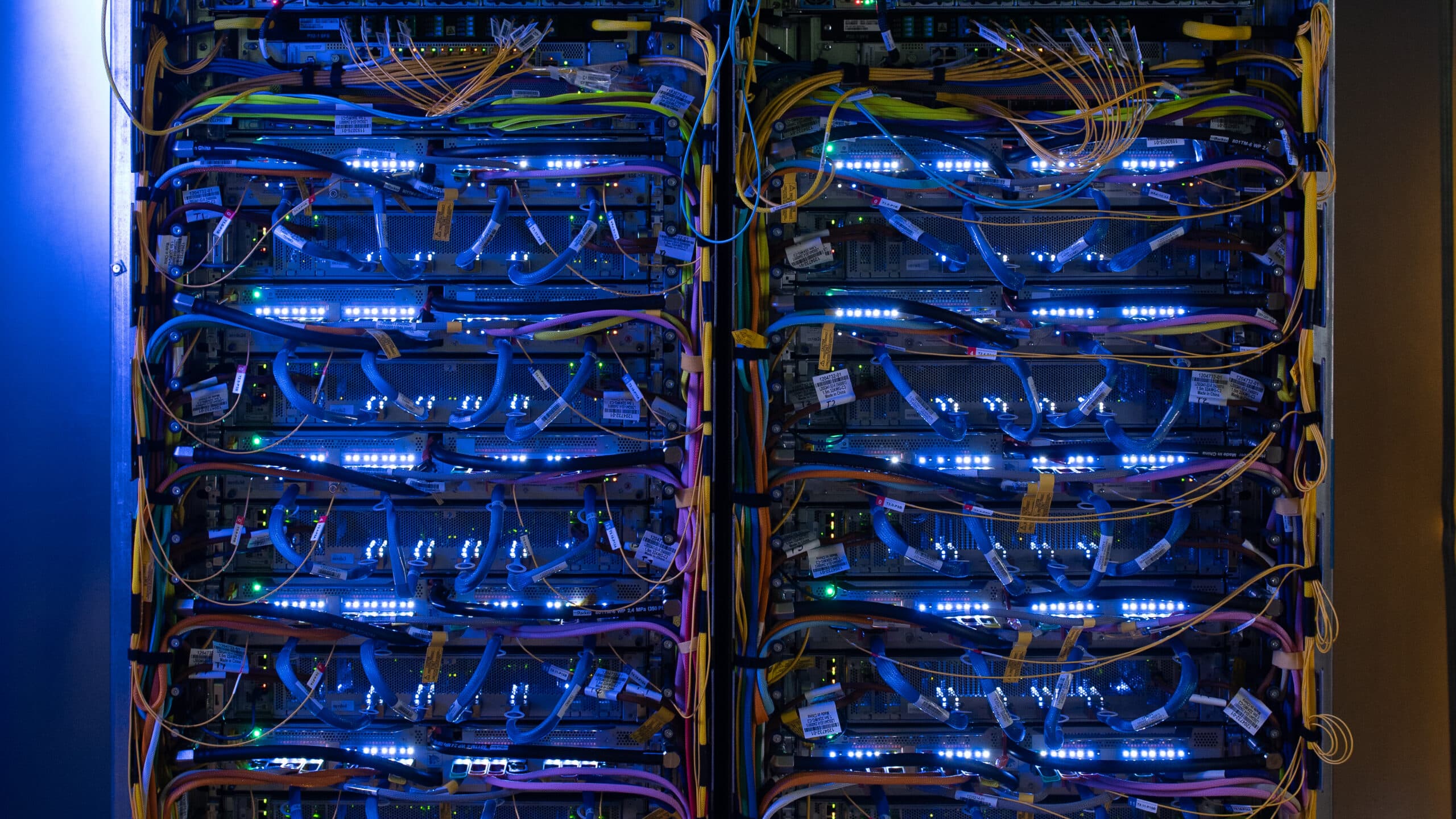
Anthropic says Google is wiring 10 billion dollars immediately at a valuation of 350 billion dollars. A further 30 billion dollars may follow if Anthropic hits agreed performance milestones. The package is tightly coupled to Google Cloud: Anthropic gets access to roughly 5 gigawatts of additional computing capacity over the next five years, built on Google’s TPU accelerator platform.
This extends an earlier arrangement under which Anthropic and Google, together with Broadcom, lined up multiple gigawatts of TPU capacity starting in 2027, with a Broadcom filing pointing to 3.5 gigawatts. The new deal also lands on top of Amazon’s recently expanded commitment: TechCrunch reports Amazon has just added 5 billion dollars to its own investment and expects Anthropic to spend up to 100 billion dollars on around 5 gigawatts of compute over time.
All of this follows Anthropic’s limited release of its latest model, Mythos, described by the company as its most capable system so far, with powerful cybersecurity applications and high operating costs.
Why this matters
This deal formalises something the industry has been hinting at for a year: in frontier AI, the scarcest resource is no longer talent or algorithms, but raw infrastructure.
Anthropic is the clearest short‑term winner. It gets a massive guarantee of compute at a time when access to high‑end accelerators is the bottleneck for training and running state‑of‑the‑art models. The implied 350 billion dollar valuation for the initial tranche, with talk (via Bloomberg, cited by TechCrunch) of investors willing to go far higher, shows that public and private markets are ready to price leading AI labs like systemically important utilities rather than conventional startups.
Google also wins strategically. By locking Anthropic even more tightly into Google Cloud and TPUs, it secures an anchor customer for its custom silicon and justifies colossal capex in new data centers and energy contracts. At the same time, Google gains direct insight into how one of OpenAI’s fiercest rivals trains and deploys large models, without having to own the company outright and trigger regulatory alarms.
The potential losers are everyone who cannot play at this scale. Independent AI startups suddenly look fragile when the going rate for staying competitive is multi‑tens of billions plus multi‑gigawatt power deals. Nvidia faces the long‑term risk that if Google’s and other hyperscalers’ in‑house chips become the default for training leading models, demand will shift away from its general‑purpose GPUs.
For customers, the picture is mixed. Cheaper, more capable models may arrive faster, but vendor lock‑in deepens. If you build on Anthropic, you are indirectly tying yourself to the strategic whims of both Google and Amazon.
The bigger picture
The Google–Anthropic pact slots neatly into a pattern that has been emerging around OpenAI. As TechCrunch notes, OpenAI has been stitching together a dense web of contracts across cloud providers, chip makers and energy suppliers. The details differ, but the direction is the same: frontier AI labs are morphing into vertically integrated infrastructure companies, or at least into entities whose survival depends on long‑term industrial‑scale supply chains.
We have seen similar patterns before. In mobile, Apple and Google used control over app stores and silicon to entrench their duopoly. In cloud computing, Amazon, Microsoft and Google accumulated such an advantage in data centers and network reach that late entrants had almost no chance. The Anthropic deal suggests frontier AI is following the same winner‑takes‑most trajectory, only faster and with far higher capital intensity.
It also clarifies strategic divergences. Google is doubling down on custom chips (TPUs) as the backbone of its AI and cloud strategy. Amazon is doing something similar with its Trainium and Inferentia chips, while also locking Anthropic into its own infrastructure. OpenAI, paired with Microsoft, leans heavily on the Azure–Nvidia axis but is now experimenting with a broader ecosystem, including Cerebras, to reduce single‑vendor dependence.
Meanwhile, Meta is trying a different playbook: open‑sourcing its Llama models to catalyse an ecosystem where it may not control all the infrastructure, but shapes the software standards. The Google–Anthropic move is almost the mirror image: a tightly coupled, highly proprietary stack where the main moat is capital plus silicon.
One more angle: Mythos, Anthropic’s latest model, is positioned as a powerful cybersecurity tool, but its partial leak into unsanctioned hands, as TechCrunch has reported, underlines a paradox. The more potent and specialised these models become, the more attractive they are for both defence and offence. Concentrating this capability in a handful of firms and clouds raises systemic risk: accidents, breaches or misuse at one provider can ripple across the entire digital economy.
The European and regional angle
For Europe, this deal is both a warning shot and an opportunity.
On the warning side, it highlights just how far the EU lags in hyperscale infrastructure. A single commercial partnership now involves gigawatts of compute capacity – comparable to several national‑scale power plants. Flagship European supercomputers like LUMI in Finland or Leonardo in Italy are world‑class, but designed primarily for research, not as elastic commercial AI platforms. The gap between public HPC and private cloud is widening.
At the same time, EU regulation is about to bite much harder. The EU AI Act introduces obligations for so‑called high‑impact foundation models, which will apply directly to systems like Mythos or Claude if they are offered in Europe. Combined with GDPR, the Digital Services Act and sector‑specific rules, this creates a far more complex compliance environment for Anthropic than in the US.
European customers – from banks to health providers to industrial groups – now face a strategic choice. They can tap into Anthropic’s cutting‑edge models via Google Cloud data centers in the EU, betting that Google’s localisation and compliance tooling will keep regulators satisfied. Or they can prioritise digital sovereignty, working with European providers such as OVHcloud or Deutsche Telekom that may not match the absolute frontier in performance, but offer more control over data location and contractual terms.
For startups and mid‑sized enterprises, especially in smaller markets, the gravitational pull of these US‑centric stacks will be hard to resist. But over‑reliance on a handful of foreign hyperscalers sits uncomfortably with the EU’s long‑term goals of strategic autonomy – as Brussels has repeatedly discovered in cloud, semiconductors and telecoms.
Looking ahead
Several things are worth watching over the next 12 to 24 months.
First, how independent does Anthropic remain? An IPO, which TechCrunch reports is under consideration as soon as October, would preserve formal independence but not necessarily strategic freedom if Google and Amazon effectively underwrite its compute and capital needs. Regulators in both the US and EU are already scrutinising cloud–AI tie‑ups; deeper integration could trigger competition investigations under the EU’s Digital Markets Act and traditional antitrust tools.
Second, what happens to prices and access? Anthropic has recently faced user frustration over strict usage limits on Claude. With guaranteed access to extra compute, it has room to relax those caps or launch more aggressive pricing to win customers away from OpenAI and others. If that happens, we may see a short‑term price war in AI APIs, subsidised by cloud capex – good for developers in the near term, but potentially devastating for independent providers who cannot match those subsidies.
Third, the energy and sustainability dimension will become harder to ignore. Multi‑gigawatt AI contracts intersect directly with Europe’s climate and industrial policies. Expect more pressure for transparency around model training footprints, data center efficiency and the sourcing of electricity, especially if new AI capacity competes with already strained grids.
Finally, the security and governance questions around tools like Mythos will intensify. If a model optimised for cybersecurity has already leaked, what happens when even more capable systems are trained under these mega‑deals? Europe’s AI Act will demand model evaluations, documentation and risk mitigation; enforcing that on cross‑border stacks built by US hyperscalers will be a major test of regulatory resolve.
The bottom line
Google’s up‑to‑40‑billion‑dollar commitment to Anthropic confirms that frontier AI is no longer a software story; it is an infrastructure arms race dominated by a handful of US giants. Anthropic gains the fuel it needs to stay in the game, while Google tightens its grip on the AI stack via TPUs and cloud. For Europe, the choice is stark: double down on its own compute and open ecosystems, or accept a future where its AI ambitions run on someone else’s hardware and policy. Which side of that trade‑off are you, and your organisation, really on?