Meta’s AI Zuckerberg: Gimmick, Management Revolution, or Both?
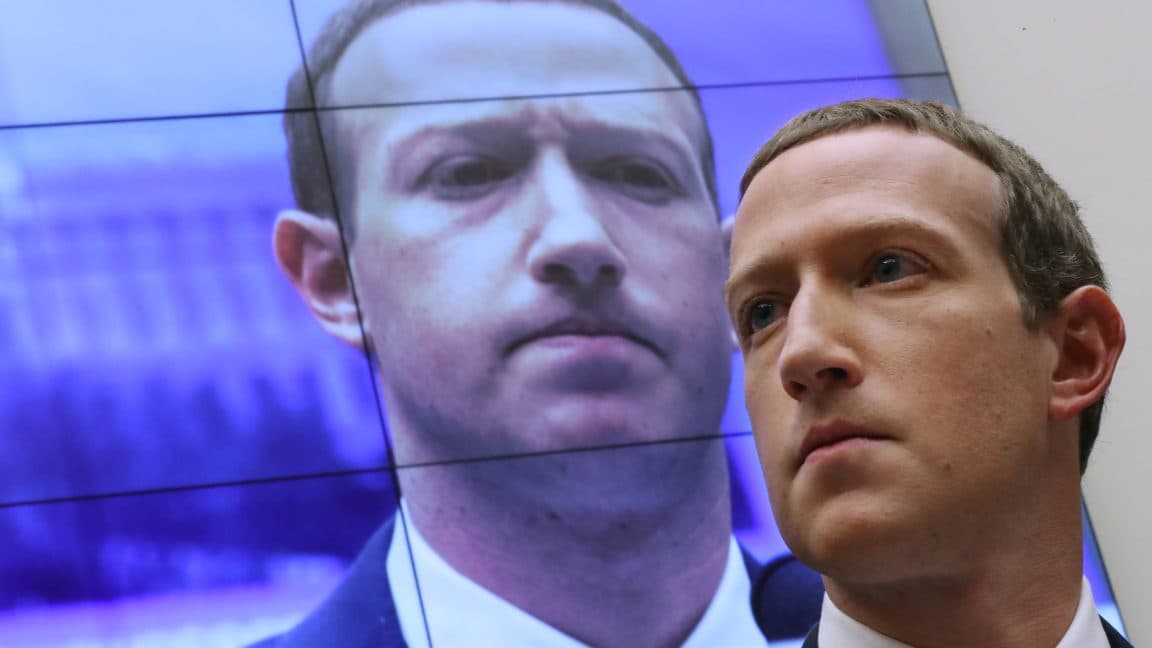
Meta is quietly experimenting with something most companies have only joked about in internal Slack channels: an AI version of the CEO that can talk to employees. Not a pre-recorded town-hall video, but an interactive, photorealistic “Mark Zuckerberg” trained on his voice, mannerisms and strategic thinking.
If this sounds like a Black Mirror episode, it’s also a logical next step in the race to inject AI into every possible workflow. In this piece, we’ll unpack what Meta is really testing here: not just a new AI product, but a new model of leadership, internal communication, and ultimately power inside large organisations.
The news in brief
According to Ars Technica, citing reporting from the Financial Times, Meta is developing a photorealistic, AI-powered 3D avatar of CEO Mark Zuckerberg designed to interact with employees in real time. The project sits alongside Meta’s broader push into what Zuckerberg has called “personal superintelligence” and its investment in advanced AI models.
The AI “Zuckerberg” is reportedly being trained on his public statements, characteristic tone and mannerisms, as well as his current thinking on company strategy, with the aim of making employees feel more connected to the founder during interactions. This effort is separate from a previously reported “CEO agent” meant to support Zuckerberg himself with fast information retrieval.
The avatar work builds on Meta’s earlier launch of AI chatbots with celebrity-based personas and its AI Studio for creating custom characters, as well as its acquisition of voice tech companies PlayAI and WaveForms. Internally, Meta is also pushing staff to adopt AI tools and complete AI-focused skills exercises, which some employees reportedly fear could be a prelude to restructuring.
Why this matters
On the surface, an AI Mark Zuckerberg looks like a publicity stunt: the billionaire CEO cloning himself in digital form. In practice, it is a test of something much more consequential—whether a synthetic leader can partially replace a human one in day-to-day interactions.
For Meta, the benefits are obvious. Founders do not scale. In a 60,000+ person company, most employees will never have a real conversation with the CEO. An AI version that’s “always available” could offer instant feedback on ideas, answer strategic questions, or help align teams around current priorities. It turns the founder’s voice into an API.
But that comes with costs. An AI CEO persona blurs the line between genuine leadership and scripted corporate messaging. Employees might feel more “access” to Zuckerberg while, in reality, speaking to a carefully tuned system that has been optimised to stay on message and avoid legal risk. The risk of using AI as a buffer between leadership and staff is that it becomes another layer of distance disguised as intimacy.
There are also power and labour implications. If employees enjoy asking AI-Zuck for feedback and direction, what does that do to the role of middle management? Internal comms, HR business partners, and even team leads risk being sidelined if the cultural expectation becomes: “Just ask the CEO-bot.”
Finally, it raises questions about accountability. If an AI version of the CEO gives advice that later proves problematic—on product, ethics, or compliance—who is responsible? The answer in practice will be “Meta as a company,” but internally, accountability becomes mushier when decisions are nudged by a non-human representative of leadership.
The bigger picture
Meta’s AI Zuckerberg experiment sits at the intersection of several trends that have been building quietly for years.
First, there’s the rise of digital doubles. Startups like Synthesia, Colossyan and Soul Machines already create AI avatars of executives for training, marketing and customer service. Influencers in Asia and the US are increasingly licensing their likeness to virtual agents that stream, chat and sell 24/7. Meta is essentially applying the same logic inwards, to its own employees.
Second, the workplace is being rewired around AI copilots. Microsoft is embedding Copilot into Office and Teams; Google is pushing Gemini into Workspace; Salesforce has Einstein across CRM. These tools already answer questions like: “What did my manager say in the last meeting?” or “Summarise leadership’s Q1 priorities.” An AI CEO is the logical yet more radical extension: not just summarising leadership, but embodying it.
Historically, leaders have tried to scale themselves through memos, management books, all-hands Q&As and corporate social media. The difference now is interactivity and realism. A pre-recorded message is clearly a one-way broadcast. A photorealistic avatar that responds in real time makes it psychologically much easier to attribute human traits—empathy, attention, endorsement—to what is ultimately a model sampling tokens.
Competitively, this is also Meta signalling to the market that it is not just catching up on foundational models, but exploring vertical, high-profile use cases that show off its strengths in avatars, real-time graphics and social engagement. OpenAI, Google and Anthropic do not have a social network with billions of users and years of investment in VR/AR avatars. Meta does—and an AI CEO is a convenient internal sandbox for what could later become a consumer-facing product for creators and brands.
The European and regional angle
For European companies and regulators, Meta’s AI Zuckerberg is less a curiosity and more a preview of coming headaches.
Under the new EU AI Act, systems used in employment and worker management can be classified as “high-risk,” triggering strict obligations on transparency, risk management and human oversight. An AI clone of a CEO that gives guidance on work topics, performance expectations or strategic direction could easily fall into this grey zone—especially if its responses influence evaluations or promotions.
GDPR adds another layer: training a model on a natural person’s voice, image and behavioural patterns is intensive biometric and personal data processing. Mark Zuckerberg can obviously consent for himself, but if this concept is rolled out to European executives or creators, companies will have to navigate consent, data minimisation and the right to withdraw.
European corporate culture also differs from Silicon Valley. Works councils in Germany, France or the Nordics are unlikely to accept AI “management proxies” without negotiation. Staff representatives will legitimately ask: Is this tool being logged? Are interactions used to profile employees? Could answers from the CEO-bot be used in disciplinary processes?
At the same time, Europe has its own strong avatar and synthetic media ecosystem—London-based Synthesia, Budapest-born Colossyan, several German and Scandinavian startups. Meta’s move validates their market: if Big Tech is comfortable putting a digital twin of its founder in front of employees, European enterprises will soon consider doing the same for board members, star salespeople and public-facing executives.
Looking ahead
If this internal experiment works, expect three concrete next steps.
First, Meta will almost certainly expand beyond Zuckerberg. A logical progression is AI versions of other senior leaders—CTOs, heads of product, regional VPs—each trained on their domain and communication style. Over time, new hires might “meet” their leadership team via AI first, before seeing them on stage.
Second, the technology will leak into the creator and influencer economy. Meta already lets creators build AI characters of themselves for fans. A functioning, highly realistic Zuckerberg avatar is a proof-of-concept the company can offer to celebrities, athletes and streamers: “Here is what a premium, officially sanctioned digital double on our platforms can look like.” That opens new revenue streams, but also new risks around deepfakes, consent and brand damage.
Third, internal AI upskilling efforts at Meta—like the reported AI-focused skills exercises for product managers—will accelerate. Once you have an AI CEO, it is a small cultural leap to expect AI-literate employees across the board. For staff, the question becomes whether this is genuine reskilling or quiet preparation for leaner, more automated teams.
Watch for three warning signs: employees bypassing human managers in favour of AI-Zuck; the avatar being used as a shield to avoid uncomfortable conversations; and leaks of the model’s behaviour into the public, whether through demos, hacks or whistleblowers. Any of these could quickly turn an internal experiment into a reputational crisis.
The bottom line
Meta’s AI Zuckerberg is not just a quirky side project; it is an early test of AI-mediated leadership and synthetic authority in the workplace. If it succeeds, expect digital doubles of executives, politicians and creators to become routine. If it fails, it may be because employees reject the idea that genuine leadership can be delegated to a model.
The real question for the rest of us is simple: when your next “conversation with the CEO” is technically just API calls to a cluster, will you still feel heard?