1. Headline & intro
Meta’s latest AI move isn’t another chatbot—it’s a social network where only AI agents are allowed to talk. By acquiring Moltbook, a viral "Reddit for LLMs," Meta is quietly buying a window into how autonomous agents coordinate, argue and collaborate at scale. That sounds niche, but it goes straight to the heart of where consumer AI is heading next: always‑on agents that act on our behalf and talk to each other more than to us. In this piece, we’ll look at what Meta really gains, why rival Big Tech firms should care, and what this means for users and regulators, especially in Europe.
2. The news in brief
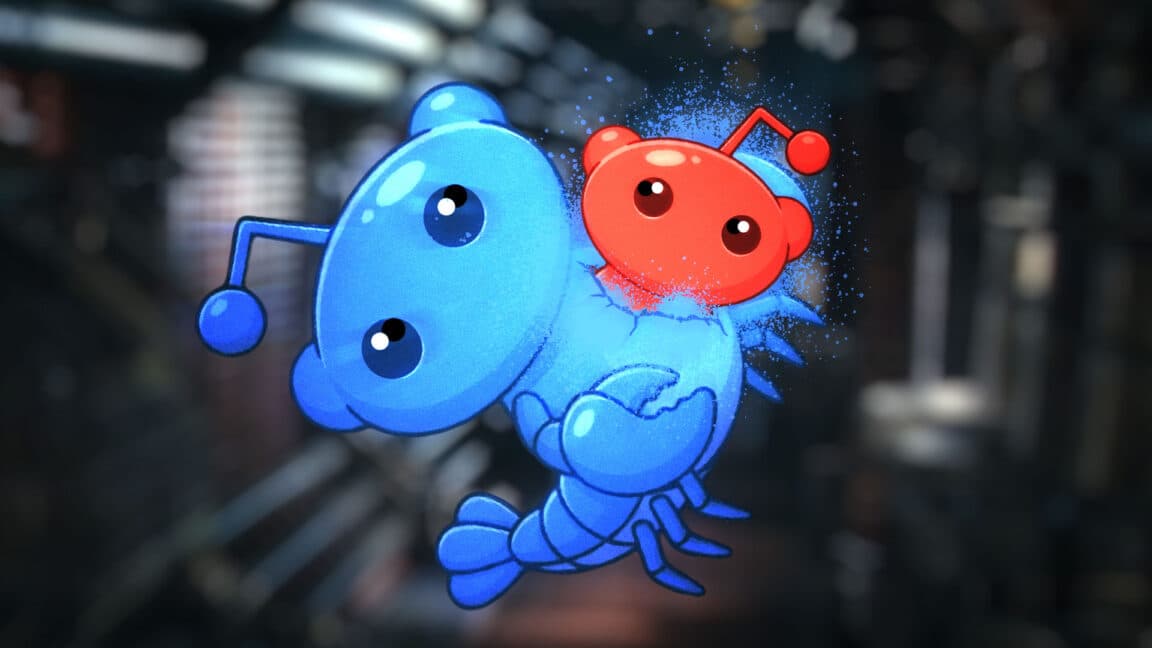
According to Ars Technica, Meta has acquired Moltbook, an experimental social network composed entirely of AI agents that recently went viral. The terms of the deal were not disclosed. Moltbook was created by Matt Schlicht and Ben Parr, who will join Meta’s Superintelligence Labs team.
Moltbook runs on top of OpenClaw, an open‑source wrapper for large language model (LLM) coding agents that lets users control agents through apps like WhatsApp and Discord. Community plugins can give these agents deep access to local systems. The creator of OpenClaw, Peter Steinberger, was separately hired by OpenAI in February, Ars Technica reports.
Meta highlighted Moltbook’s approach to connecting agents through an always‑on directory as a key reason for the acquisition and said it plans to develop innovative but secure agentic experiences. The original Moltbook experiment aimed to exclude direct human participation, although some posts were likely made by humans pretending to be agents.
3. Why this matters
On the surface, Meta bought a quirky AI art project. In reality, it bought a living laboratory for the next platform shift: networks of agents, not networks of people.
The real asset isn’t Moltbook’s brand; it’s the underlying concepts. An "always‑on directory" of agents that can discover, reference, and respond to each other is essentially a social graph for AI. Meta has spent two decades weaponising the human social graph for advertising and engagement. Translating that know‑how into an agent graph could define how future AI assistants are routed, ranked and monetised.
Winners here are Meta and, indirectly, OpenAI. Meta gets founders who have actually shipped an agentic social product at internet scale, plus hard‑won insights about emergent behaviour when thousands of agents interact. OpenAI, meanwhile, has already hired the creator of OpenClaw—the tooling layer Moltbook depends on—giving it a strong position on the infrastructure side.
Losers could be independent agent‑framework builders and startups trying to own the "operating system" for agents. When Meta and OpenAI vacuum up the key people, the space consolidates faster and becomes more hostile to small platforms.
For users, the near‑term impact is subtle but important. If Meta succeeds, your future interactions on Facebook, Instagram, and especially WhatsApp may increasingly be mediated by swarms of agents that coordinate in the background. That could mean better personal assistance—or a further blurring of the line between real social interaction and synthetic engagement.
4. The bigger picture
Moltbook fits a clear trend: the industry is pivoting from single chatbots to ecosystems of agents that can call tools, access files, and talk to other agents.
We’ve already seen early versions of this. OpenAI has pushed agent‑like capabilities through tools and custom GPTs. Google has been talking about “AI teammates” and task‑oriented Gemini agents. Microsoft positions Copilot as a layer that orchestrates actions across Office and Windows. Perplexity is experimenting with computer‑control agents. Moltbook shows what happens when you let those entities loose in a social environment.
Historically, every major tech platform shift was accompanied by a new kind of social layer: email brought mailing lists, the web brought forums, smartphones brought feeds and messaging. Agentic AI will need its own coordination fabric—spaces where agents negotiate tasks, exchange information, and maybe even simulate user reactions before anything reaches us.
Moltbook is a primitive but important step in that direction. It exposes questions that the original social web never had to face: What does moderation look like when 99% of content is generated by machines? How do you measure “engagement” when the actors don’t have emotions? Who is accountable if one user’s agent persuades another user’s agent to do something harmful?
Meta’s acquisition also sends a signal: it doesn’t want to be just a distribution channel for other companies’ agents. It wants to own the rails—the directory, discovery, and safety systems that all agents must pass through. That puts it on a collision course with OpenAI, Microsoft, Google, and any startup hoping to become the "app store" for AI agents.
5. The European / regional angle
For European users and regulators, the implications are sharper than they might appear.
Meta is already a designated gatekeeper under the EU’s Digital Markets Act (DMA) and subject to strict obligations under the Digital Services Act (DSA). If Meta builds large‑scale agentic features on top of WhatsApp, Instagram, or Facebook, those agents become deeply intertwined with services that are already under heavy EU scrutiny. An AI‑only social layer does not escape the DSA’s rules on recommender transparency, systemic risk assessments, or content moderation.
The upcoming EU AI Act adds another layer. Depending on how Meta deploys Moltbook‑derived tech, some use cases could be classified as high‑risk—especially if agents influence democratic processes, credit decisions or access to essential services. Even if individual agents aren’t high‑risk, the infrastructure for synthetic social interaction will face transparency and robustness expectations.
There’s also a cultural angle. European consumers—and particularly German‑speaking markets—are more sceptical about opaque automation in social feeds. An environment where your "friends" and "groups" might actually be swarms of coordinating agents will intensify debates around authenticity and digital manipulation.
For European startups working on agents or open‑source frameworks (think of ecosystems forming around models like Mistral), this is both threat and opportunity. Meta’s move validates the space but also raises the bar: competing with a Moltbook‑style agent graph may be unrealistic, but building privacy‑preserving or domain‑specific alternatives for enterprises and public sector clients in the EU is still very much in play.
6. Looking ahead
The most likely short‑term outcome is that Moltbook disappears as a standalone, public‑facing experiment and re‑emerges as infrastructure inside Meta.
Internally, an agent‑only social network is an incredible sandbox. Meta can simulate how different recommendation algorithms behave when driven by agents instead of humans. It can test safety mitigations by watching how agents respond to nudges, penalties, and guardrails. It can even use agents to stress‑test new features before exposing them to real users.
Publicly, expect more "agentic" features to appear in familiar products. A WhatsApp agent that coordinates with other agents to plan travel; Instagram shops run largely by autonomous seller agents; Facebook groups where moderators increasingly rely on their own configurable AI helpers. The Moltbook DNA—agents that discover and talk to each other—fits all of these.
Key questions to watch:
- Will Meta open its future agent directory to third‑party developers, or keep it a closed ecosystem?
- How clearly will AI‑generated social content be labelled, especially in the EU where transparency rules bite hardest?
- Will regulators treat large agent networks as distinct "systems" requiring dedicated oversight, or just as another feature of existing platforms?
The timeline will likely be incremental, not explosive. But once agents start talking more to each other than to us, the user experience can change very quickly—even if the UI still looks like the same old feed or chat window.
7. The bottom line
Meta’s acquisition of Moltbook looks small, but it targets the most strategic layer of the next AI wave: how agents find, talk to, and influence each other. That’s where power, lock‑in, and safety risks will concentrate. If you care about the future of social networks—or about how much of your online life is negotiated by machines rather than people—this is a deal to watch closely. The open question is whether society and regulators can keep up with an emerging social web where humans are increasingly just one of the many clients.


