1. Headline & intro
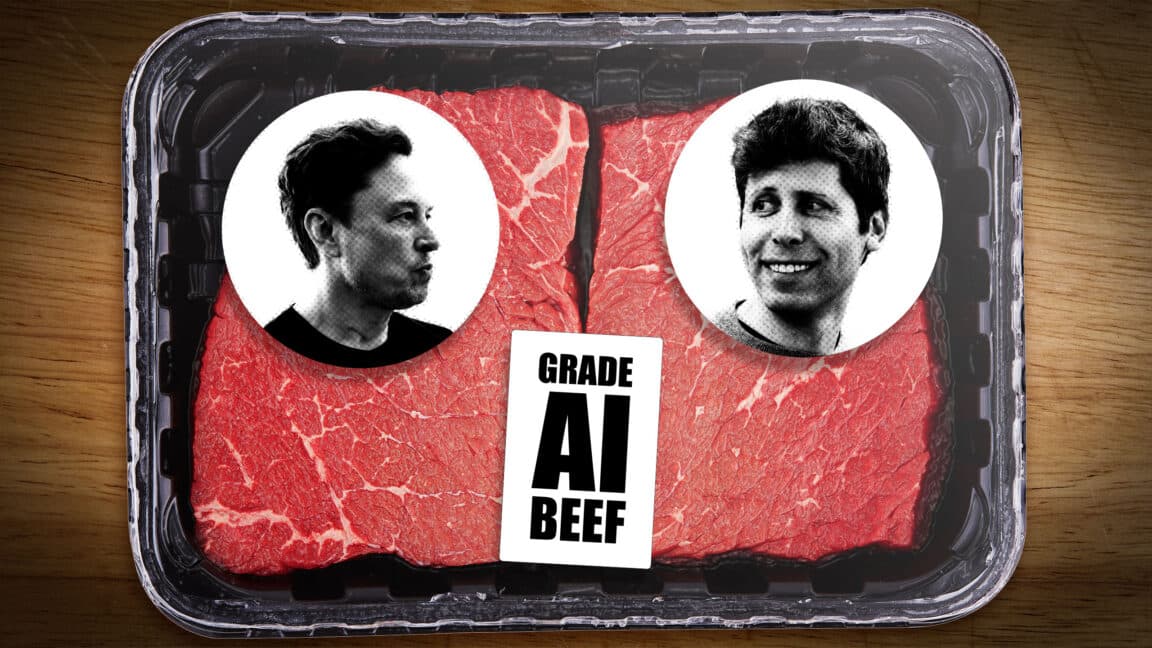
Elon Musk’s courtroom battle with OpenAI and Sam Altman just took a sharp turn: he now says he doesn’t want a cent of the potential billions in damages for himself. On paper, every dollar would go back to the OpenAI nonprofit. That sounds altruistic. In practice, it turns this case into something more interesting than a billionaire grudge match: a live test of whether lofty “for humanity” AI promises can be enforced in court.
This piece looks at what actually changed, why Musk’s move is as much legal survival as moral stance, and what the outcome could mean for AI governance far beyond Silicon Valley.
2. The news in brief
According to Ars Technica, Musk has amended his lawsuit against OpenAI, its CEO Sam Altman, and other leaders to change what remedies he is asking the court to award. Initially, Musk’s expert claimed OpenAI and Microsoft could have gained up to around 134 billion dollars as a result of Musk’s early 38 million dollar donation and the subsequent restructuring of OpenAI. His legal theory implied he could personally receive those "ill‑gotten" gains.
US District Judge Yvonne Gonzalez Rogers recently rejected Musk’s request for punitive damages and criticized his damages theory, indicating he had not adequately shown why he could pocket such sums. In response, Musk now says he is seeking no money for himself. Instead, he wants any wrongful gains returned to the OpenAI nonprofit foundation, OpenAI’s for‑profit structure unwound, and Altman and other leaders removed from control. The trial is expected to begin this month in California.
3. Why this matters
Musk’s new stance is being framed by his lawyers as a clarification of his original intent. In reality, it is also a rescue operation for a legal case that was losing altitude fast. Once the judge refused punitive damages and shredded his expert’s disgorgement theory, Musk had two choices: narrow the case or watch it be gutted before reaching a jury. He chose to narrow—and to wrap that in the language of public interest.
The winners, if Musk prevails, would not be Musk personally but a re‑empowered OpenAI nonprofit and any future stakeholders who prefer a mission‑driven governance model over the current Microsoft‑backed, for‑profit hybrid. Current equity holders—Microsoft, employees, and investors in the capped‑profit entity—would be the obvious losers. Billions in value and control over one of the world’s most strategically important AI platforms would be at stake.
More broadly, the case attacks a core Silicon Valley pattern: use the halo of a nonprofit or “public benefit” story to attract donations, talent, and goodwill, then drive a hard pivot into a hyper‑commercial model once the technology is proven. If a jury agrees that this crosses legal lines, every AI lab dressing itself in altruistic branding will have to think much harder about how it structures its governance and capital.
And there is a practical side effect: this shift undercuts OpenAI’s PR line that the lawsuit is merely Musk trying to grab cash. The narrative now centers less on his personal enrichment and more on whether OpenAI’s nonprofit promises can be enforced as a charitable trust. That is a far less comfortable battlefield for Altman.
4. The bigger picture
Musk vs. OpenAI is not just a personality clash; it sits at the intersection of several structural tensions in the AI industry.
First, governance. OpenAI’s 2015 founding story was that of a nonprofit designed to keep powerful AI aligned with humanity’s interests. That story cracked visibly during the 2023 boardroom crisis that briefly removed Altman, and it effectively shattered when the company’s partnership with Microsoft and its for‑profit entity became the real power center. Musk’s lawsuit weaponizes that narrative breach, asking a court to declare that the pivot was not just hypocritical but unlawful.
Second, corporate form. OpenAI’s “capped‑profit” structure and public‑benefit language inspired copycats across the AI ecosystem. Anthropic, various lab spin‑offs, and some European players all experimented with hybrids sitting somewhere between charity, foundation, and venture‑backed startup. If a US court says: “No, you cannot raise tens of billions on the back of charitable promises without strong legal guardrails,” those models could become much harder to defend.
Third, competition. Musk now runs xAI, a direct rival building its own large language models. Any legal, financial, or reputational constraint on OpenAI is de facto a strategic gain for xAI, Google DeepMind, Meta, and open‑source‑first players. Even if Musk never sees a dollar, slowing OpenAI’s ability to raise capital, restructure, or launch new products would reshape the leaderboard for frontier AI.
Historically, Silicon Valley “mission statements” like Google’s old “Don’t be evil” were marketing, not contracts. This case asks whether AI—given its systemic risks—deserves different treatment. If the answer is yes, tech executives will discover that promising to “benefit humanity” is no longer free.
5. The European / regional angle
From a European perspective, the most interesting part is not the Musk–Altman soap opera, but the potential precedent on enforceability of AI lab missions.
The EU AI Act, freshly approved, assumes that a small number of “systemic” model providers will wield outsized power. It forces them to document risks, provide more transparency, and adhere to stricter obligations. Brussels is essentially trying to hard‑code the kind of public‑interest constraints that OpenAI originally claimed to embrace voluntarily.
If a US court rules that OpenAI’s shift from nonprofit to quasi‑Big Tech satellite breached charitable trust principles, that will strengthen political arguments in Europe for tighter oversight of foundation models, especially those controlled from the US. Regulators in Brussels, Berlin, Paris, Madrid or Ljubljana would be able to point at the trial record and say: self‑regulation and nice charters are not enough.
European players—from Mistral and Aleph Alpha to smaller national labs and university consortia—could benefit indirectly. If OpenAI ends up more constrained in its capital raises or product strategy, that creates space for EU‑based providers who already operate under stricter GDPR, Digital Services Act, and upcoming AI Act requirements.
There is also a governance contrast. Europe knows foundations and charities—German Stiftungen, Dutch and Nordic foundations, university‑linked research institutes—where mission drift is a long‑standing legal and cultural concern. Many European tech leaders are already wary of mixing charitable language with aggressive venture scaling. The OpenAI trial may validate that instinct and push new European AI initiatives toward clearer separations between nonprofit research and commercial exploitation.
6. Looking ahead
What happens next is less about Musk’s public bravado and more about legal nuance.
The key question is standing: can a donor like Musk, rather than a state attorney general or regulator, meaningfully enforce a charitable mission in court? The judge has already signalled skepticism toward some of Musk’s theories, but she did not kill the core case. By redirecting damages to the charity and emphasizing “breach of charitable trust,” Musk is trying to fit his claim into a narrow door that courts sometimes leave open for private plaintiffs.
Several scenarios are plausible:
- Narrow win for Musk. The court or jury could find some breach but award limited remedies—perhaps governance changes without fully unwinding the for‑profit structure. That would still be a major symbolic blow to OpenAI and a warning to other labs.
- Defeat or dismissal. The court could conclude that whatever moral discomfort people feel about OpenAI’s evolution, it does not amount to a legally actionable breach that a private donor can remedy. In that case, the message to the industry is blunt: if you want enforceable safeguards, don’t rely on mission statements.
- Settlement. As trial risk rises for both sides, a confidential deal becomes more tempting—especially if OpenAI fears intrusive discovery or public airing of internal debates around Microsoft’s influence.
For European readers, the most important thing to watch is not who “wins”, but what the court says explicitly about charitable AI missions, donor rights, and the limits of hybrid structures. Whatever the verdict, expect EU policymakers to cite this case as they refine secondary legislation and enforcement under the AI Act.
7. The bottom line
Musk’s promise to send any winnings back to the OpenAI nonprofit is not just a moral gesture; it is a strategic move that turns his lawsuit into a high‑stakes test of AI governance. If a US court decides that you can’t market yourself as a charity for humanity and then behave like a standard Big Tech startup, the whole industry will have to rethink its narratives and structures. The open question for readers: do we want AI labs constrained by law, or are we still comfortable trusting their charters and CEOs?


