Headline & intro
The most valuable asset in AI isn’t GPUs or datasets – it’s people. That’s why every serious lab is aggressively recruiting from every other. A US judge has now drawn an important line in that battle: hiring away your rival’s engineers is not, by itself, evidence of stealing trade secrets.
Elon Musk’s xAI just discovered how high the legal bar really is. Beyond the courtroom drama and social‑media sniping, this ruling matters for anyone building AI: it shapes how freely talent can move and how far companies can stretch trade‑secret law to slow competitors.
In this piece we’ll unpack what the judge actually decided, what it signals for the AI industry, and why European companies should be paying close attention.
The news in brief
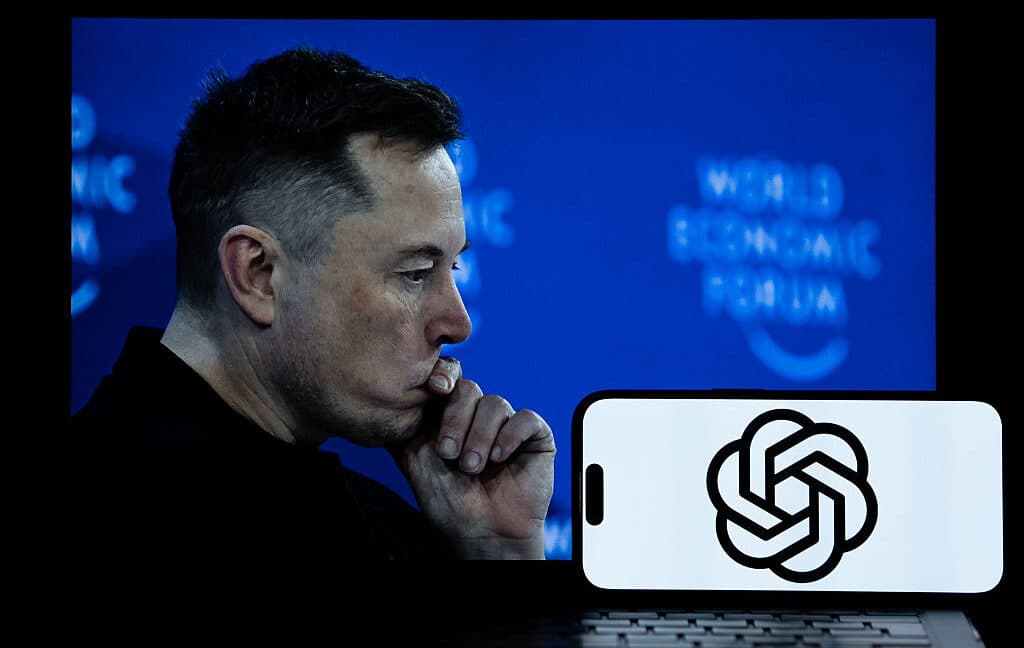
According to Ars Technica’s report, US District Judge Rita F. Lin has granted OpenAI’s motion to dismiss xAI’s trade‑secret lawsuit—at least for now.
Musk’s xAI claimed that OpenAI unlawfully poached eight xAI employees to gain access to confidential details about xAI’s data‑center strategy and its Grok chatbot. Two ex‑employees admittedly took xAI materials when leaving, including source code and a recording from an internal Musk meeting. But Judge Lin found that xAI had not plausibly alleged that OpenAI asked for, received, or used any xAI trade secrets.
The judge noted that, at most, xAI might have claims against specific former staff, not against OpenAI as a company. She allowed xAI to amend its complaint by 17 March, but limited the changes to fixing the current deficiencies. Separately, one ex‑engineer, Xuechen Li, still faces an FBI criminal probe over the alleged code theft.
Why this matters
This case is bigger than another Musk vs OpenAI skirmish. It’s a test of how far trade‑secret law can be weaponised in the AI talent war.
The immediate winners are OpenAI and, by extension, any AI company trying to hire aggressively. Judge Lin’s order reinforces a core principle: recruiting from a competitor is not the same as stealing IP. Suspicious timing, angry text messages, or even the fact that departing staff downloaded files are not enough without concrete evidence that the new employer actually obtained and used the secrets.
That’s good news for researchers who don’t want every job change to turn into a lawsuit. If xAI’s theory had succeeded, any high‑profile hire from a rival lab could have become a litigation risk by default. That would chill mobility precisely when AI expertise is scarce and concentrated in a small elite cohort.
The loser, obviously, is xAI—legally and reputationally. The order reads, from Ars Technica’s description, like a pointed reminder that courts need facts, not vibes. Aggressive rhetoric on X and circumstantial inferences did not convince the judge that OpenAI orchestrated theft.
There’s a subtler loser too: smaller AI startups. They genuinely do face a risk that a single disloyal engineer can walk out with model weights or infrastructure blueprints. This ruling doesn’t weaken their protection—but it does clarify that you must trace the theft to actual use by the competitor. That requires discipline: access controls, audit logs, clear documentation of what counts as a trade secret, and fast, well‑targeted legal action against individuals where necessary.
In short, the court is saying: protect your house; don’t expect judges to assume your neighbour planned the burglary just because your ex‑employee moved in next door.
The bigger picture
This lawsuit sits inside a broader pattern: Musk is attacking OpenAI on multiple fronts. There’s the separate California case accusing OpenAI and Sam Altman of abandoning the non‑profit, open‑science mission he helped fund. There are public accusations about safety, governance, and Microsoft’s influence. Trade‑secret claims were one more pressure point—and so far, they’re not landing.
Historically, the closest analogue isn’t another AI lab, but Uber vs Waymo in 2017, when a former Google engineer was accused of taking self‑driving car files to Uber. That case ended in a significant settlement and a criminal conviction. Two key differences: investigators could show that specific files existed, that they left Google, and that Uber actually got artefacts it shouldn’t have. In the xAI–OpenAI fight, the missing piece—so far—is credible evidence that OpenAI ever touched xAI’s code or confidential data.
This ruling also underscores something Silicon Valley employment lawyers have warned about for years: US courts, especially in California, are wary of the “inevitable disclosure” doctrine—the idea that a person simply knows too much to work for a rival without using secrets. Judges mostly reject that logic because it’s effectively a back‑door non‑compete.
In AI, where expertise is portable and research ideas diffuse quickly through papers, open‑source models, and conferences, that scepticism becomes even more important. If courts accepted Musk’s broad theory, incumbents could lock in star researchers for years not by paying them more, but by hanging legal threats over any prospective new employer.
Meanwhile, the industry trend is moving the opposite way: toward faster talent churn, cross‑lab collaborations, and hybrid open/closed approaches. Meta researchers join small European startups; DeepMind alumni pop up at Anthropic and open‑source collectives; Google poaches from everyone. The judge’s message fits that reality: employment mobility is normal; prove actual theft if you want to stop it.
The European / regional angle
This is a US case, but European players should treat it as a strategic weather vane.
First, EU law is not identical. The Trade Secrets Directive (2016/943) gives companies strong tools to act against misappropriation, and some member states are more willing than California courts to issue broad injunctions. Non‑compete clauses, while under political pressure, are still much more common in Europe than in California, where they’re essentially banned.
However, the underlying tension is the same: European AI startups desperately need senior talent from Big Tech labs—many of which are in the US or UK. If hiring anyone who has touched large‑scale model infrastructure automatically triggers a trade‑secret dispute, Europe’s already fragile AI ecosystem becomes even less competitive.
For European companies, the lesson is twofold:
- If you are hiring from US labs: be obsessive about clean processes. Document that you instruct new hires not to bring any code or confidential documents. Funnel them through standard onboarding that stresses "no prior IP". This is not just legal hygiene; it’s evidence if you ever get dragged into a US lawsuit.
- If you are protecting your own IP: lean on the EU’s Trade Secrets Directive and local laws, but be precise. Define what is secret, limit who can access it, and log access. Courts in the EU, like their US counterparts, are unimpressed by vague claims that “everything we do is a trade secret.”
The upcoming EU AI Act also nudges in the same direction indirectly: documentation, traceability, and risk management. Companies that already build those muscles will be better positioned both to defend their IP and to show regulators that their processes are robust.
For Europe’s policymakers, there’s a broader question: can you protect legitimate R&D investments without recreating a world where changing jobs in AI becomes legally dangerous? The Musk–OpenAI fight is a warning of how messy that balance can get.
Looking ahead
xAI now has a choice: walk away, or double down and try to fix its complaint.
To revive the case, Musk’s team would need more than colourful Signal messages and hostile replies from ex‑staff. They would need evidence that OpenAI actually received or used specific xAI trade secrets—logs, overlapping code, aligned data‑center designs, or testimony from insiders. That kind of proof is hard to obtain without extensive discovery, which the judge has effectively said xAI must earn by first clearing the plausibility bar.
The wild card is the FBI’s criminal investigation into alleged code theft by former engineer Xuechen Li. If prosecutors eventually conclude that Li stole protectable trade secrets with the intent of benefiting OpenAI, that government record could dramatically strengthen xAI’s civil case. At that point, the key question would shift from “was there a theft?” to “what did OpenAI know, and when?”
More broadly, this will not be the last AI‑related trade‑secret dispute. As frontier models become more expensive to train and slightly less differentiated in capability, the temptation to treat employees as walking vaults will only grow. Expect:
- more stringent security controls inside labs (DLP tools, monitored code access, segmented repositories),
- more aggressive, but also more targeted, litigation against individuals,
- and, paradoxically, a premium on reputation: labs seen as litigious or hostile to mobility may struggle to attract the very people they want to lock in.
For founders and engineers in Europe and beyond, the practical takeaway is clear: design your hiring and security practices now as if they will be scrutinised by a sceptical judge later.
The bottom line
This ruling is a reality check: outrage and suspicion are not a substitute for evidence when you accuse a rival of stealing AI trade secrets. The court has, for the moment, protected talent mobility and told companies to tighten their own security rather than litigate every departure.
The open question—for regulators, courts, and the industry—is how far we should go in policing what’s inside people’s heads when they change jobs in a field where knowledge itself is the main competitive edge.


