1. Headline & intro
SpaceX is no longer just trying to conquer Mars. With the acquisition of xAI and a plan to launch up to one million AI "orbital data center" satellites, Elon Musk is effectively proposing a new planetary infrastructure layer: a cloud that lives in low Earth orbit. If it works, it could upend the economics of artificial intelligence, reshape the satellite industry, and hand one private company unprecedented leverage over both connectivity and compute. In this piece, we’ll unpack the strategy, the physics, the risks—and what it means for everyone who will depend on AI infrastructure in the 2030s.
2. The news in brief
According to Ars Technica, SpaceX has formally acquired Elon Musk’s AI venture xAI, which runs the Grok chatbot and is tightly linked to the social network X. The merged company plans to deploy a massive constellation of up to one million satellites acting as orbital data centers, providing computing power for xAI’s models.
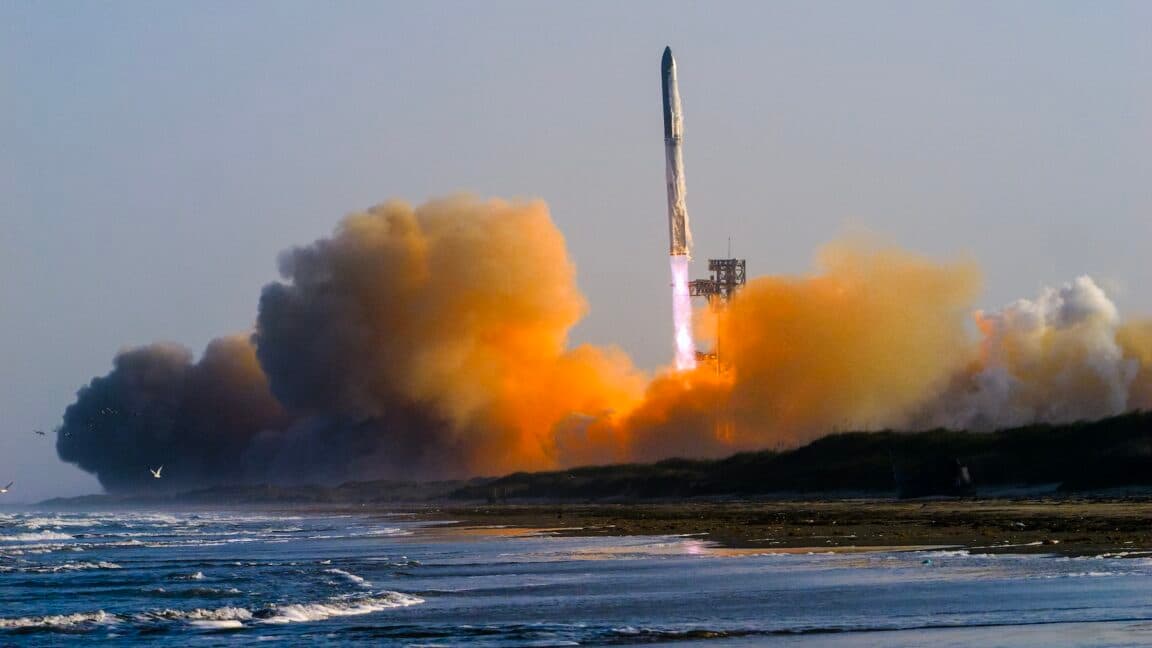
In a filing with the US Federal Communications Commission (FCC), SpaceX requested permission for this constellation, to operate in low Earth orbit between roughly 500 and 2,000 km altitude, at several orbital inclinations. Musk reportedly told employees he expects Starship to start launching new V3 Starlink and direct‑to‑mobile satellites this year, with long‑term ambitions of very high launch cadence and millions of tons delivered to orbit annually.
The core assumption behind the plan is that, within two to three years, space‑based compute will be cheaper than ground‑based data centers for AI workloads, thanks to Starship’s promised ultra‑low launch costs and mass‑produced satellites.
3. Why this matters
This isn’t just another mega‑constellation announcement; it’s an attempt to vertically integrate the entire AI stack from rocket to recommendation.
If SpaceX+xAI pull this off, the combined entity controls:
- Launch and mass to orbit (Falcon 9 today, Starship tomorrow)
- In‑orbit infrastructure (Starlink plus a new compute layer)
- Global connectivity (consumer Starlink and direct‑to‑device)
- Frontier models (xAI’s Grok and successors)
- A distribution platform (X as a real‑time content and data firehose)
In AI terms, that’s the equivalent of owning TSMC, AWS, OpenAI and Twitter in a single tightly coupled stack. The immediate winners, if the economics work, are Musk’s own companies and any partners who gain privileged access to this compute. The likely losers are traditional hyperscalers and cloud providers who’ve been betting on terrestrial data centers, power purchase agreements, and undersea cables rather than rockets.
But the bigger impact is strategic. Compute is becoming the chokepoint resource in AI—more than algorithms or even data. Whoever can provision massive, cheap, scalable compute has bargaining power over everyone else in the ecosystem. By trying to move compute into orbit, Musk is not just playing the AI race; he’s trying to redefine the playing field itself.
The risk: this also concentrates systemic dependencies in a single, highly centralized and idiosyncratically run corporate empire. When your connectivity, information feeds, and AI inference all flow through satellites controlled by one person, “single point of failure” takes on a new meaning—technical, commercial, and political.
4. The bigger picture
This move collides with several ongoing trends.
First, the AI compute crunch. The last two years have seen model sizes and training runs explode, while top‑end GPUs remain scarce. Governments from the US to the EU are racing to subsidize domestic supercomputers. Export controls on chips to China highlight that compute is now a strategic asset. Against this backdrop, Musk is arguing that the real constraint isn’t chips, but where you put them—and that orbit will soon beat Earth on cost.
Second, the great Internet‑from‑space land grab. Starlink has already rewritten the rulebook by operating nearly 10,000 satellites—more than any nation. Amazon’s Project Kuiper, OneWeb and others are scrambling to catch up with their own constellations. SpaceX’s new plan essentially says: communications were just the first layer; the next step is full-blown cloud infrastructure in orbit.
Third, there’s the energy and land footprint of AI. Data centers already consume significant fractions of national power grids in some regions. Communities are starting to push back on local water usage and land grabs. Building in space shifts some of those externalities off‑planet—but creates new ones: launch emissions, orbital debris, and re‑entry pollution.
Historically, telecoms and cloud infrastructure have been heavily regulated precisely because they underpin everything else. Satellite operators, by contrast, have operated in a lighter‑touch, slower‑moving regime built for an era of hundreds, not millions, of objects in orbit. SpaceX is deliberately exploiting that gap. The message is clear: regulation moves in years, rockets move in months.
5. The European / regional angle
For Europe, this plan lands in the middle of multiple strategic debates.
On the space side, the EU is already investing in its own secure connectivity constellation, IRIS², and in space situational awareness capabilities. A private US company proposing up to a million satellites fundamentally alters the congestion and risk picture for all other operators, including ESA science missions and European telecoms. Even if the FCC signs off, Europe will face pressure to tighten licensing, debris mitigation rules, and coordination via the ITU and UN space bodies.
On the digital regulation side, xAI and X do not escape EU law just because the compute sits above the Kármán line. Under the GDPR, Digital Services Act (DSA) and upcoming EU AI Act, obligations are tied to services offered to EU users, not to the physical location of servers. Content from Grok integrated into X will likely be classified as a high‑risk system, triggering transparency, safety and oversight requirements that could clash with Musk’s self‑described “free speech maximalism”.
For European industry, there is both threat and opportunity. Hyperscalers like AWS, Google and Microsoft have major data center footprints in Europe and deep regulatory experience; they may pitch themselves as the safer, compliant alternative to a Musk‑centric orbital cloud. On the other hand, European satellite and launch startups—from German small‑launchers to French and Italian space‑tech firms—could find new niches in debris mitigation, space traffic management, or specialized payloads that plug into this emerging orbital compute layer.
6. Looking ahead
Technically, the path from FCC filing to a functioning orbital cloud is long and fragile.
Starship still needs to demonstrate reliable, rapid reuse at the cadence Musk is implying. Packing meaningful AI compute into satellites that can survive radiation, manage heat in vacuum, and autonomously coordinate at huge scale is a non‑trivial engineering problem. Latency to and from orbit also constrains which AI workloads make sense to run there; training and some batch inference look plausible, ultra‑low‑latency applications less so.
Regulatory pushback is almost guaranteed. Expect:
- Astronomers and environmental groups to challenge the scale of the constellation.
- Other satellite operators and militaries to demand stricter space‑traffic rules.
- Data protection and AI regulators (especially in the EU) to probe xAI’s practices regardless of where the GPUs sit.
The most likely medium‑term outcome is not a sudden leap to a million satellites, but incremental deployment: a few thousand experimental orbital data center nodes launched with Starship over the next five to seven years, co‑evolving with better debris‑avoidance systems like SpaceX’s proposed Stargaze network.
Key signals to watch:
- Starship’s actual flight rate and demonstrated reusability by 2028.
- Early technical demos of compute‑heavy satellites, not just comms payloads.
- Whether major AI labs or cloud providers sign capacity deals for orbital compute.
- Moves by the EU and other blocs to harden space‑traffic and AI regulations.
7. The bottom line
Musk’s orbital AI gambit is both visionary and unsettling. Strategically, marrying launch, connectivity and compute could give SpaceX+xAI a structural advantage in the AI economy. But turning low Earth orbit into a de facto data‑center park at planetary scale raises serious questions about environmental sustainability, space governance and corporate power. The real decision point won’t be a single regulatory approval—it will be whether governments and competitors allow one company to define the architecture of our future AI infrastructure from above our heads. How comfortable are we with that level of dependency on a single orbital landlord?