1. Headline & intro
The AI boom was supposed to be an infrastructure gold rush: hyperscale data centers spilling out of cities into cheap rural land, with farmers happily cashing life‑changing cheques. Instead, tech giants have run into something Silicon Valley’s spreadsheets struggle to price: multi‑generational attachment to land and distrust of opaque deals.
Farmers in the US are turning down offers in the tens of millions to keep their fields, their lifestyle and their community intact. That resistance is more than a human‑interest story. It exposes the physical, political and cultural limits of AI’s explosive growth—and should be a loud warning for European policymakers and cloud providers planning their own data‑center build‑outs.
In this piece, we unpack what’s happening, why it matters, and what it signals for the next phase of AI infrastructure globally.
2. The news in brief
According to Ars Technica, drawing on reporting from The Guardian, NBC News and others, large tech companies and their intermediaries have been making aggressive offers to buy US farmland for new data centers.
Developers are reportedly targeting rural areas across multiple states, attracted by weak zoning rules, relatively cheap power and water, and large contiguous plots. Offers can reach into the tens of millions of dollars—far above normal agricultural land values. One Kentucky farmer in her eighties was reportedly offered more than $30 million for hundreds of acres; neighbours received similar proposals. In Wisconsin, offers in the $70–80 million range for thousands of acres have also surfaced.
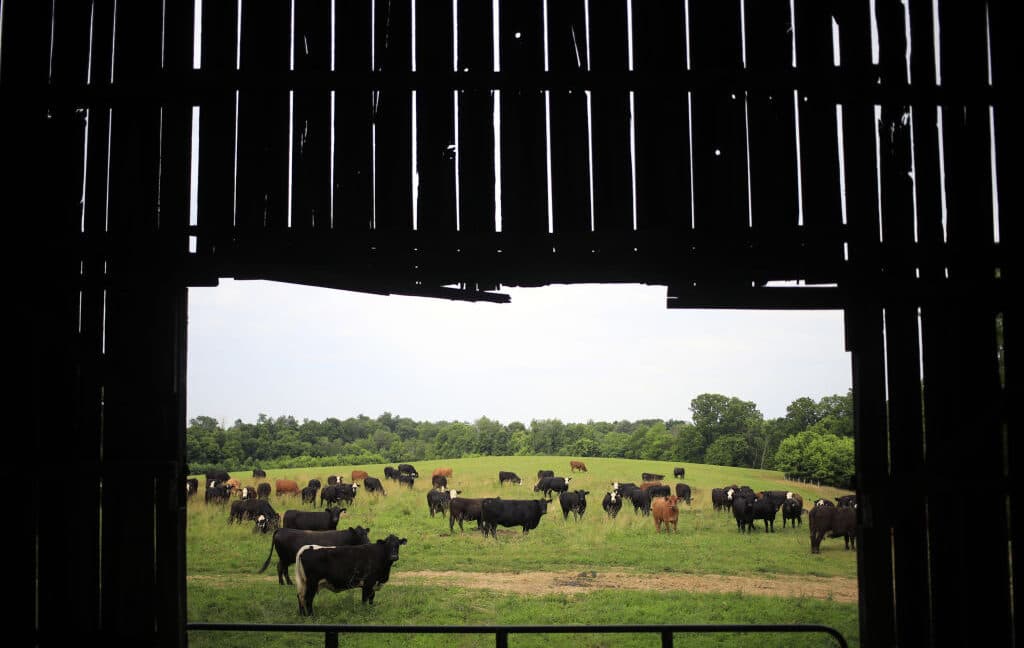
Many of these pitches arrive via middlemen who refuse to reveal the end customer without non‑disclosure agreements, leaving farmers in the dark about who is behind the projects and what exactly will be built. Despite a fragile farm economy and a continuing decline in the number of US farms, several farmers have rejected the offers outright, citing lifestyle, community impacts and the desire to keep land in agriculture. Some are even enrolling in farmland preservation schemes specifically to block future tech development.
3. Why this matters
At first glance, this looks irrational: family farms under severe financial pressure refusing windfalls that would secure several generations. But this clash reveals three important dynamics the AI industry has been downplaying.
First, land is not just an input cost. For multi‑generation farmers, the land is home, identity, pension and family history rolled into one. Selling it for a data center is not just a financial decision; it’s an irreversible lifestyle and community decision. The standard hyperscaler playbook—show up with a big cheque, an NDA and vague promises of jobs—completely misreads that reality.
Second, the externalities of AI infrastructure are hyper‑local while the benefits are remote. The noise, truck traffic, construction disruption, water consumption, possible PFAS and other pollution—these stay in the county. The upside (AI services, cloud capacity, corporate profits) accrues to distant companies and urban users. Without strong, transparent community benefit packages and environmental guarantees, resistance is rational.
Third, the industry is hitting physical friction. Analysts love talking about model sizes and GPU counts; far fewer talk about acres, megawatts and litres of water. Yet according to figures cited by Ars Technica, tens of thousands of acres worldwide will be needed for planned data center growth over the next five years. Farmers saying “no” now are an early sign that the limiting factor for AI may be land and local politics, not just chips.
The immediate losers are impatient cloud builders and the intermediaries who thought rural America was an easy target. The winners, at least for now, are communities discovering they still have leverage—and regulators who are about to be forced into actually planning where AI infrastructure should go.
4. The bigger picture
These stories fit into a much wider pattern: AI infrastructure is colliding with local constraints everywhere.
We’ve already seen this movie in Europe. The Netherlands effectively paused new hyperscale data centers after public backlash—Meta’s project in Zeewolde became a national controversy over land use and energy. In Ireland, planning authorities in the Dublin region have tightened approvals because the grid is running out of capacity. In Germany, municipalities are increasingly wary of large new sites that guzzle power but create relatively few jobs.
In the US, the same tension is now playing out on farmland instead of urban peripheries. For years, cloud companies concentrated near major cities and network hubs. The AI wave—large training clusters, huge cooling requirements, and the need for cheap renewable power—is pushing them into rural regions with wind, solar and available land. But that shift exposes them to a different set of stakeholders: not tech‑optimist city councils chasing “innovation,” but landowners and neighbours who see more risk than reward.
Historically, big infrastructure waves—from railroads to pipelines to wind farms—have all gone through a similar cycle: aggressive land acquisition tactics, local resistance, then a gradual move toward more regulated, negotiated approaches (and often, higher costs). Data centers are now entering that phase.
Competitively, this changes the map. Countries and regions that can offer both political stability and clear, community‑backed siting frameworks will attract more of the AI build‑out. Those that rely on backroom deals and NDAs will find projects bogged down in lawsuits and activism. This is no longer just a question of tax incentives; it’s about social licence to operate.
5. The European / regional angle
For European readers, it’s tempting to see this as an American culture clash. It isn’t. The same structural pressures are heading our way, just filtered through EU law and denser populations.
Europe is already a global hotspot for data‑center expansion—Frankfurt, Amsterdam, Dublin, Madrid and the Nordics are all jostling to be AI hubs. But suitable land close to robust power and fibre is finite. Once industrial zones and peri‑urban plots are saturated, pressure inevitably moves toward cheaper rural land and greenfield sites.
The difference is that the EU arrives with a heavier regulatory toolkit. The Energy Efficiency Directive now forces large data centers to report detailed information on energy and water use. The forthcoming EU AI Act doesn’t regulate sites directly, but it reinforces political scrutiny of AI’s environmental footprint. GDPR, the Digital Services Act and the DMA all contribute to a climate in which politicians cannot simply wave through hyperscale projects without detailed public justification.
That cuts both ways. On one hand, European farmers and rural communities—already familiar with CAP rules, Natura 2000 protections and local spatial plans—arguably have stronger procedural rights than many US farmers. On the other, Europe’s climate and digital‑sovereignty goals depend on domestic compute capacity. Brussels wants both more AI and more nature restoration; those two agendas will increasingly collide over land.
For Central and Eastern Europe, including Slovenia and Croatia, the stakes are high. These regions see data centers as a chance to climb the digital value chain. But if AI infrastructure expands by eating high‑quality farmland rather than repurposing industrial brownfields, they will import exactly the same conflicts we now see in the US Midwest.
6. Looking ahead
Expect three shifts over the next three to five years.
1. From opportunistic land grabs to structured national strategies. Governments will be forced to answer a simple question: where, exactly, should the country’s major data centers go? That means corridor planning around existing transmission lines, mandating use of brownfield sites where possible, and coordinating with grid operators. The days of developers quietly picking off farms one by one are numbered.
2. Stronger community benefit frameworks. If you want to build a 500‑MW AI campus next to people’s homes or fields, “trust us, there will be jobs” is no longer enough. We’ll see more legally binding agreements: guaranteed tax sharing with municipalities, investments in local schools and hospitals, commitments to use reclaimed water, requirements to share waste heat with district heating networks—as already piloted in Denmark and Sweden.
3. Legal and financial innovation around land preservation. The Pennsylvania farmer who used a farmland preservation program to permanently remove his land from the developers’ target list is unlikely to be an outlier. Expect new conservation easements, green bonds tied to protecting agricultural land, and potentially EU‑funded mechanisms that pay landowners for keeping carbon‑rich soils and local food production instead of selling to cloud companies.
Unanswered questions remain. Will AI efficiency improvements slow the land demand curve, or will new applications (autonomous systems, edge‑to‑cloud AI) keep it steep? How will future PFAS and water‑use regulations reshape siting decisions? And politically, what happens when national security arguments—“we need domestic compute to be sovereign”—are pitted directly against local landowners’ rights?
For investors and policymakers, one thing is clear: permitting and community acceptance risk are becoming core variables in the AI infrastructure business model, not footnotes.
7. The bottom line
US farmers refusing data‑center millions are not irrational holdouts; they are early proof that AI’s physical footprint has social limits. Tech companies that treat rural land as a cheap, silent input will face growing backlash, in America and in Europe. The next wave of AI infrastructure will be won by players who can align compute growth with land stewardship and community benefit—not by those who assume everything has a price.
The real question is: will governments move fast enough to set the rules, or will the battle over AI’s farmland footprint be fought field by field?


