AI’s New Smokestacks: How Private Gas Plants Turn Data Centers into Climate Outliers
The AI boom was sold as “digital” and “weightless.” Instead, it is quietly re‑industrializing parts of the US energy system. According to reporting by Wired, republished by Ars Technica, a handful of natural‑gas projects built specifically to power data centers could someday emit more greenhouse gases than mid‑size countries. And that’s just from 11 campuses.
This isn’t a side effect at the margins; it’s AI becoming a heavy industry in its own right, complete with its own power plants, pipelines, and pollution. In this piece, we’ll unpack what the numbers actually mean, why “behind‑the‑meter” gas is such a red flag, what it could signal for Europe, and what regulators and users should demand before AI’s climate tab explodes.
The news in brief
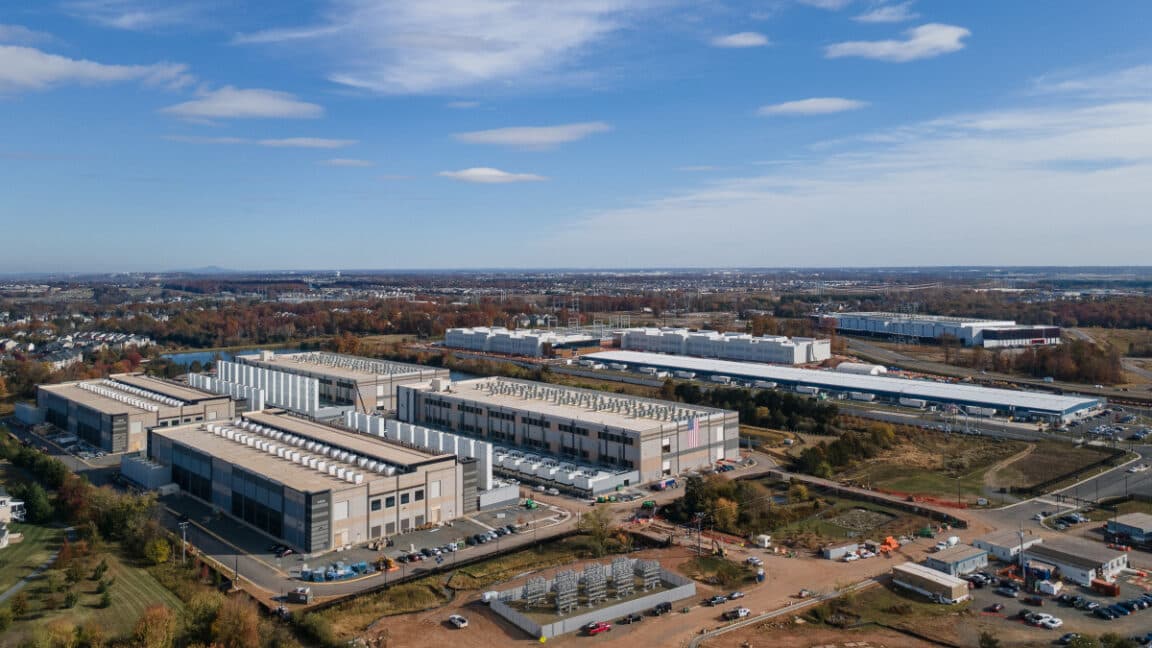
As reported by Wired and summarized by Ars Technica, developers linked to major AI players—including OpenAI, Microsoft, Meta, xAI and others—are backing a wave of natural‑gas power plants whose primary purpose is to feed data centers, not the public grid.
From air‑permit applications and public databases, Wired tallies 11 US data center campuses with associated gas projects that, on paper, could together emit over 129 million tons of CO₂‑equivalent per year. For context, that is more than Morocco’s total annual emissions in 2024.
Many of these plants are “behind‑the‑meter”: they bypass traditional utilities and deliver power directly to data centers. Some single campuses are permitted for tens of millions of tons of emissions annually, rivaling small nations or entire US states.
Companies stress that permit levels are upper bounds and that actual emissions will likely be lower. Even so, Wired notes that if real‑world output is only half of what’s permitted, these projects would still exceed Norway’s 2024 emissions and be comparable to operating more than 150 average gas plants.
Why this matters
The core story is not “tech companies use a lot of electricity”—we’ve known that for years. The real inflection point is that AI data centers are now important enough, and profitable enough, that companies are prepared to build their own fossil‑fuel plants to keep them running at any cost.
Who wins?
- Big AI platforms gain energy security and insulation from grid bottlenecks, allowing them to scale model training and inference faster than utilities could otherwise support.
- Gas developers and pipeline operators get a new, long‑term demand source just as climate policy was supposed to be phasing fossil generation down.
Who loses?
- The climate, obviously: even conservative emission scenarios for these projects erase big chunks of the net‑zero progress tech firms like to highlight in sustainability reports.
- Local communities, often lower‑income or already overburdened by pollution, bear the brunt of air quality impacts and industrialization—while the AI services they’re powering are sold globally.
- Competing AI players who try to stay genuinely low‑carbon may find themselves at a cost disadvantage against rivals willing to fire up cheap gas around the clock.
Behind‑the‑meter gas also exposes a major loophole in corporate climate narratives. Companies can continue to claim “100% renewable electricity” based on financial instruments and off‑site contracts, while simultaneously locking in dedicated fossil capacity for their AI clusters. Scope 2 accounting rules were never designed for hyperscalers owning quasi‑private power stations.
In short: this is AI’s coal‑plant moment. Not in technology, but in political optics. The sector is visibly moving from abstract data flows to concrete smokestacks, and that will transform how policymakers treat it.
The bigger picture: AI as the new heavy industry
These projects don’t exist in a vacuum. They intersect with several broader trends:
AI’s energy appetite is exploding.
Training frontier models and serving generative AI at scale is many times more energy‑intensive than traditional cloud workloads. Utilities from the US to Ireland have warned that projected data‑center demand could consume double‑digit shares of regional electricity within a decade.Grid constraints are biting.
Across the US and parts of Europe, interconnection queues for new loads and renewables can stretch to 5–10 years. AI firms don’t want to wait. Owning gas plants is the “move fast and burn things” workaround: you sidestep grid queues, capacity limits and some public scrutiny.We’ve been here before—sort of.
The crypto‑mining boom already showed how a purely digital activity can resurrect marginal coal and gas plants by creating a 24/7 demand sink. AI is different in that it underpins core products of trillion‑dollar companies, which means the long‑term lock‑in risk is much higher.Competitors are staking out divergent strategies.
- Some cloud providers loudly brand themselves as green, leaning heavily on renewable PPAs, location‑based accounting tricks, and future nuclear promises.
- Others are quietly prioritizing reliability and scale today, then promising to “clean it up later” with carbon capture or advanced reactors.
This divergence is crucial. It suggests we’re entering a two‑track AI industry:
- Fossil‑first AI: fastest to market, built around private gas capacity.
- Grid‑aligned, low‑carbon AI: slower but more compatible with long‑term climate policy and ESG capital.
History is not kind to sectors that bet on the wrong energy system. Steel, cement and autos all discovered that what looked like a cheap fossil path in the short term became a regulatory and financial liability later.
The European angle: climate rules meet compute hunger
For Europe, this US build‑out is both a warning and a competitive threat.
On one hand, EU policy is structurally more hostile to this kind of fossil lock‑in. The Green Deal, the “Fit for 55” package and national coal phase‑outs leave little space for new unabated gas dedicated purely to corporate data centers. The revised Energy Efficiency Directive already forces large EU data centers to report detailed energy and water metrics; more binding efficiency and waste‑heat rules are coming.
But the incentives to copy the US model are there. European grids are also congested; hyperscalers in Ireland, the Netherlands and Germany are running into connection moratoria and political pushback. Behind‑the‑meter gas would offer the same alluring shortcut.
The risk is carbon arbitrage: US‑based AI powered by cheap gas undercuts more constrained, greener European infrastructure. European firms would then be pressured—by investors and customers—to shift training to the US or other lax jurisdictions, exporting emissions while importing AI services.
Regulators in Brussels are not blind to this. The logic behind the EU’s Carbon Border Adjustment Mechanism for steel and cement could, in time, be extended conceptually to high‑carbon digital services. Even before that, the Digital Services Act and forthcoming AI rules create levers for transparency: platforms could be required to disclose the carbon intensity of large‑scale AI systems.
For European cloud users—from startups in Ljubljana or Berlin to public administrations—the question becomes strategic: do you want to anchor your products on an AI stack whose power source may soon be politically unacceptable at home?
Looking ahead: what to watch
Several fault lines will determine how this story unfolds over the next three to five years:
Regulatory catch‑up.
Expect US state‑level fights over air permits, environmental‑justice impacts and whether behind‑the‑meter power should face the same climate constraints as grid plants. If a few marquee projects get blocked or watered down, the entire model looks less inevitable.Accounting rules and greenwashing.
Investors and auditors are likely to push harder on whether a company can credibly claim steep emissions reductions while it is a counterparty to multi‑million‑ton gas projects. Watch for changes to Scope 2 guidance and for shareholder resolutions targeting AI‑related emissions.Technology pivots.
If nuclear small modular reactors finally get real timelines and costs, or if long‑duration storage and high‑voltage transmission unblock more renewables, the economic case for new gas dedicated to data centers weakens. Turbine shortages, mentioned in the reporting, are already nudging developers towards less efficient, dirtier models—another potential pressure point.User and policy backlash.
Today, few end‑users ask their AI provider, “How many tons of CO₂ per million tokens?” That won’t last. Universities, public agencies and large enterprises in Europe especially will face their own climate targets and will start to demand low‑carbon SLAs for AI workloads.
The most likely scenario is messy: some of these gas projects stall, others are built, and AI becomes yet another sector trying to retrofit climate policy onto assets that assumed fossil fuels would stay cheap and tolerated forever.
The bottom line
The AI industry is at risk of repeating 19th‑century industrial mistakes with 21st‑century code—building powerful, profitable systems first and worrying about pollution later. Behind‑the‑meter gas plants for data centers turn “the cloud” back into a very physical, very fossil infrastructure. If AI is truly as transformative as its champions claim, it should also be transformative in how it uses energy. The open question for readers—especially in Europe—is simple: will you reward AI providers that treat climate as a hard constraint, or ones that treat it as a PR problem to solve after the turbines are already spinning?