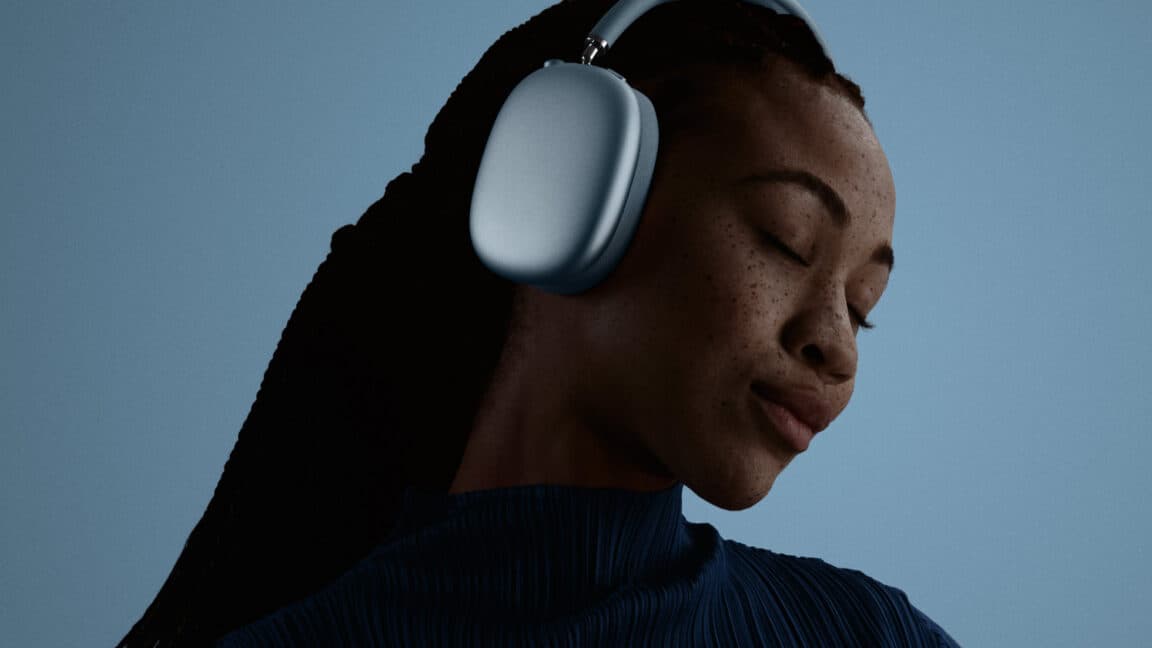
AirPods Max 2 Turn Apple’s Headphones Into an AI Wearable
After more than five years, Apple’s most expensive headphones finally get a sequel. On paper, AirPods Max 2 look like a familiar €600-class status symbol with better noise cancellation and a fancy new chip. In reality, this is Apple quietly redefining what “headphones” even are. With the H2 chip and deep ties to Apple Intelligence, AirPods Max 2 are less a hi‑fi upgrade and more Apple’s next AI computer you happen to wear on your head. In this piece, we’ll unpack what’s actually new, who should care, and what this says about the future of personal audio.
The news in brief
According to Ars Technica, Apple has announced AirPods Max 2, the successor to the original AirPods Max from late 2020. The new model is built around Apple’s H2 chip, the same platform introduced with AirPods Pro (2nd generation) in 2022, and replaces the older H1 used in the first Max.
Apple claims active noise cancellation (ANC) is up to 1.5× more effective than before, thanks to the new chip and updated computational audio algorithms. Transparency mode is also said to sound more natural. H2 enables several features already seen on other AirPods: adaptive audio, Conversation Awareness, Personalized Volume, loud sound reduction, and Siri control via subtle head gestures.
New this time are Apple Intelligence‑powered live translation in real time and enhanced voice isolation for calls. There’s also a “studio‑quality” voice recording mode and the ability to trigger photo or video capture on an iPhone or iPad via the Digital Crown. For higher‑fidelity listening, AirPods Max 2 support 24‑bit/48 kHz lossless audio when connected to a source over a USB‑C cable instead of Bluetooth. Pricing stays at $549, with preorders opening March 25 and availability in early April.
Why this matters
AirPods Max 2 matter less as an audiophile product and more as a signal of where Apple wants the AirPods line to go.
Winners first. If you live deep inside Apple’s ecosystem, this is the first over‑ear AirPods model that truly aligns with what the newer AirPods Pro can do. Features like adaptive audio, Conversation Awareness, more effective ANC and transparency, and better voice isolation transform the Max from “big AirPods” into a smarter, always‑on interface for your iPhone, Mac, or iPad.
Travelers and commuters in particular stand to gain. A 1.5× bump in noise cancellation effectiveness is not marketing fluff if it holds up in real life; it’s the difference between background engine noise becoming a soft hum versus almost disappearing. Paired with natural‑sounding transparency and automatic loud sound reduction, these headphones are clearly optimized for noisy urban environments and constant switching between isolation and awareness.
Creators also benefit more this time. Studio‑style voice recording and better spatial audio, along with improved instrument localization and cleaner amplification, push AirPods Max 2 slightly closer to being a practical tool for mobile content creation: voiceovers, TikTok/Shorts recording, podcast drafting, and on‑the‑go monitoring.
Who loses? Third‑party headphone makers, especially at the premium end, now compete not just with Apple’s audio quality but with deep OS‑level integration and AI features they can’t easily match on iOS. At $549, Apple isn’t competing on price; it’s competing on how tightly audio, AI, and the broader ecosystem are fused.
Android users, meanwhile, are clearly not the target. Most of the magic—from live translation to gesture‑driven Siri—is tightly coupled to Apple’s devices and Apple Intelligence, making AirPods Max 2 a poor value if you don’t own Apple hardware.
The bigger picture
Apple’s move slots into several broader industry trends.
1. Headphones as computing devices. With H2, AirPods Max 2 are less passive audio gear and more a networked sensor and processing node on your body. Computational audio for ANC, adaptive modes, and voice isolation uses on‑device processing power in ways that look increasingly similar to what we used to call “mobile computing.” Live translation goes a step further by tying the headphones directly into Apple’s AI stack.
We’ve seen earlier steps: AirPods Pro 2 brought H2 and adaptive transparency; Macs and iPhones got spatial audio head‑tracking; Apple Watch turned into a health computer. AirPods Max 2 are a logical continuation: another surface where Apple can run its AI and capture user attention without a screen.
2. Software‑led differentiation in a saturated ANC market. High‑end noise‑cancelling headphones from the usual suspects—Sony’s WH‑1000X family, Bose’s flagship QuietComfort line, and others—have been on an incremental hardware path for years. Drivers and basic ANC have plateaued at “good enough” for most people. The battleground has shifted to software: adaptive profiles, multipoint stability, environmental sensing, personalization.
By keeping the sound signature “similar” and focusing instead on a better amplifier, spatial audio improvements, and a long list of smart features, Apple is effectively saying: the hardware is mature; the experience will now be differentiated by chips and algorithms.
3. Apple Intelligence as a layer on everything. Live translation and voice isolation are not just nice extras; they’re a preview of Apple Intelligence being infused into every hardware line. For Apple, AirPods are not a side product—they’re one of the main delivery mechanisms for voice‑first AI services. You might use your iPhone screen less, but you’ll wear AirPods more.
Viewed through that lens, AirPods Max 2 are also a companion to Apple’s spatial computing ambitions (think Vision Pro). High‑fidelity spatial audio, precise instrument placement, and low‑latency lossless over USB‑C all line up with immersive media scenarios where Apple wants to control both the picture and the sound.
The European / regional angle
For European users, AirPods Max 2 sit at the crossroads of three forces: premium pricing, strict regulation, and a growing ecosystem lock‑in debate.
First, price. $549 typically translates into well above €600 once VAT is included—squarely in the ultra‑premium segment in most EU markets. This positions Max 2 as a niche device for affluent users, business travelers, and creative professionals, not a mass‑market upgrade.
Second, regulation. The EU has already forced Apple to adopt USB‑C on iPhones; AirPods Max 2 supporting lossless audio over a USB‑C cable dovetails neatly with that broader shift toward connector harmonization and reduced e‑waste. Features like loud sound reduction and Personalized Volume also align nicely with EU concerns about safe listening levels, especially for younger users.
Third, the Digital Markets Act (DMA) and the upcoming EU AI Act raise interesting questions. Many of the most compelling features—live translation via Apple Intelligence, deep Siri integration, device‑aware adaptive audio—are tightly tied to Apple’s platforms. Regulators are increasingly asking whether such deep coupling unfairly disadvantages competitors. AirPods Max 2 will inevitably become another example in debates over self‑preferencing and interoperability.
European privacy culture matters too. Live translation and voice isolation imply continuous audio processing. Apple will have to clearly communicate how much happens on‑device versus in the cloud, how data is retained, and how it complies with GDPR. In privacy‑sensitive markets like Germany or the Netherlands, that messaging can make or break adoption.
Finally, European audio brands—from hi‑fi stalwarts to newer lifestyle players—now face a consumer base that expects not just good sound, but AI‑enhanced features. Some will double down on pure audio quality and repairability; others may try to build their own software stacks or lean on Android integration to differentiate.
Looking ahead
AirPods Max 2 are unlikely to become a runaway bestseller simply because of their price, but they do show Apple’s hand for the next few years of personal audio.
Expect three trajectories:
More AI, more ambient computing. If live translation and head‑gesture Siri land well, it’s easy to imagine future updates adding smarter context awareness: automatically adjusting sound profiles based not only on noise but on calendar events, location, or even who’s calling. AirPods could become your primary interface to Apple Intelligence when you’re not staring at a screen.
Convergence across the AirPods line. With H2 now in both AirPods Pro and AirPods Max 2, Apple has a consistent audio compute platform. That makes it easier to roll out new features simultaneously across the lineup via firmware updates. Watch for Apple to introduce at least one or two headline computational‑audio features per year that ship to both in‑ear and over‑ear models.
Growing pressure on Apple from regulators and rivals. The more central AirPods become to how you use an iPhone or Mac, the more they will show up in antitrust filings and interoperability discussions—especially in the EU. At the same time, Android‑aligned companies and PC manufacturers will keep pushing their own tightly integrated audio solutions. We may end up with two largely parallel smart‑audio ecosystems that don’t talk to each other well.
Open questions remain. Will Apple ever bring true lossless over wireless, or is that waiting on a post‑Bluetooth standard? How replaceable and repairable will AirPods Max 2 be in practice, given European right‑to‑repair momentum? And will Apple allow any of the smarter features—like live translation—to work decently on non‑Apple devices, or is ecosystem lock‑in the whole point?
The bottom line
AirPods Max 2 are not a revolution in sound; they’re a strategic upgrade that cements headphones as another surface for Apple’s AI ambitions. If you’re deeply invested in Apple devices and spend hours a day with headphones on, the combination of stronger ANC, smarter transparency, and Apple Intelligence‑powered features is compelling—provided you can stomach the price. For everyone else, they’re a clear sign that the next big battle in consumer tech won’t just be on screens, but in your ears. The real question is: whose AI do you want whispering in your head all day?