AI’s Hidden Price Tag: Motorola Just Redefined “Budget” Phones
Motorola’s Moto G line has spent more than a decade as the go‑to answer to a simple question: “What’s a good cheap phone?” That answer just got a lot more complicated. Steep price jumps across the 2026 Moto G family show how the AI boom and a brutal component market are colliding with already‑thin smartphone margins. This isn’t just one brand being greedy; it’s an early warning that the era of genuinely affordable, competent Android phones is under pressure. In this piece, we’ll look at what actually changed, why AI is partly to blame, and what it means for consumers, rivals, and regulators—especially in Europe.
The news in brief
According to Ars Technica, Motorola has quietly raised US prices across its 2026 Moto G budget lineup by as much as 50 percent, just as it launched a new mid‑range Moto G Stylus.
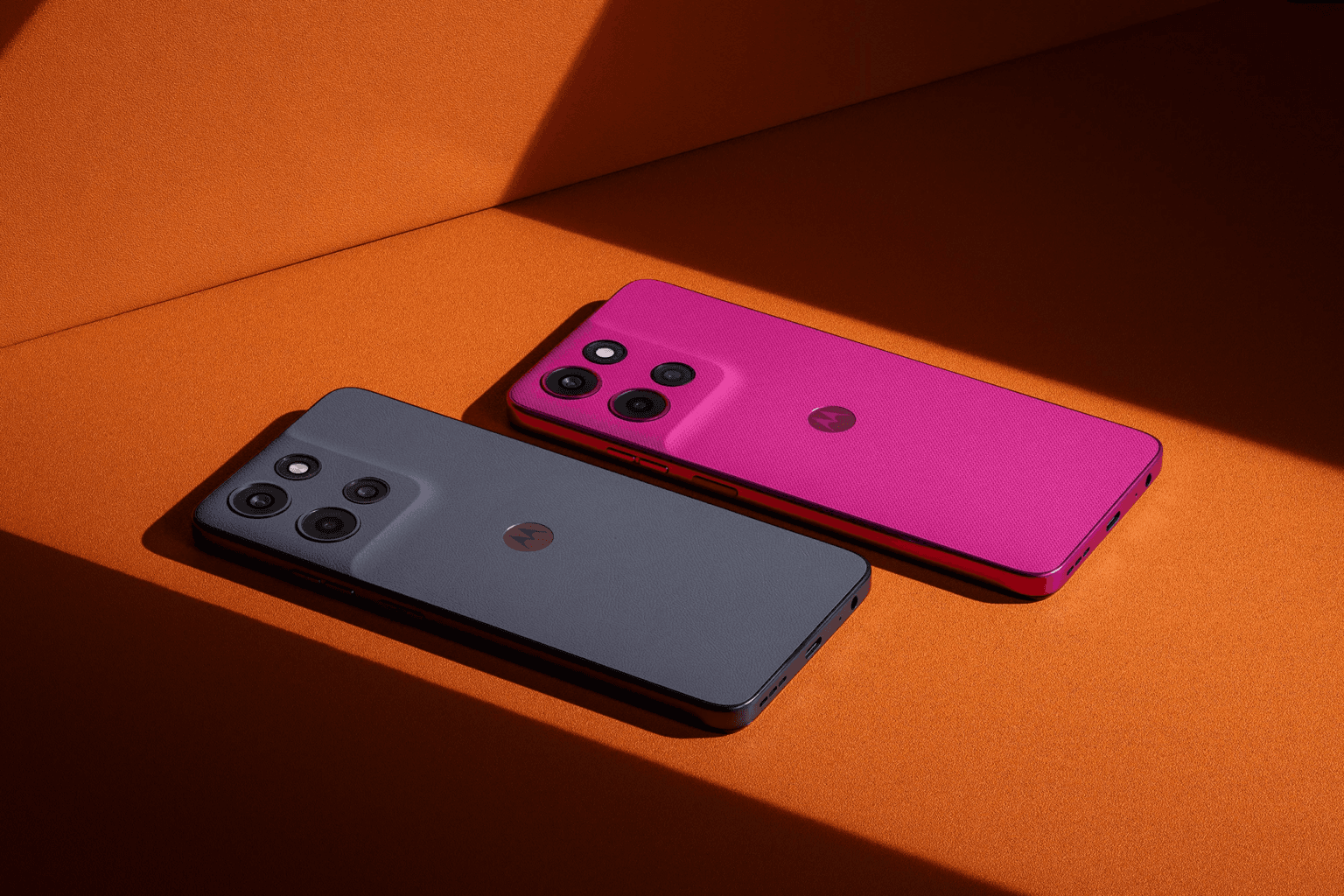
Previously, the 2026 Moto G series in the US consisted of three models: Moto G Play at $180, Moto G at $200, and Moto G Power at $300. Within a day of announcing the new Moto G Stylus, Motorola adjusted prices to $250 for the Moto G Play, $300 for the Moto G, and $400 for the Moto G Power.
The new Moto G Stylus itself debuts at $500—around $100 more than last year’s version—despite only modest upgrades such as a slightly larger battery and improved stylus sensitivity. Ars Technica notes that Motorola has not yet publicly explained the across‑the‑board increase, but points to surging memory and storage costs, driven in part by global AI infrastructure build‑out, as the likely cause.
Why this matters
For years, the Moto G line has been the safety net of the Android ecosystem: cheap enough for students and low‑income users, yet competent enough that you didn’t feel punished for not buying a flagship. By hiking prices this aggressively without equivalent hardware leaps, Motorola is effectively redrawing the lower end of the market.
Who benefits? In the short term, Motorola and its parent Lenovo may simply be trying to stop the bleeding. Budget phones run on razor‑thin margins, and if memory and storage suddenly cost far more, manufacturers either raise prices, cut specs, or leave the segment. The company appears to have chosen option one.
Who loses is clearer: first‑time smartphone buyers, people on prepaid plans, and anyone for whom €200–€300 was already the upper limit. When a “cheap” phone edges toward $300–$400, it nudges users toward keeping older devices longer, going second‑hand, or dropping features like 5G or decent cameras.
There’s also a competitive twist. By pushing its top budget model up to $400 and the stylus variant to $500, Motorola moves dangerously close to Samsung’s Galaxy A‑series and even entry‑level Pixels, where brand strength, software support, and camera quality are typically stronger. Unless Moto adds real long‑term software support to match, this could make its value proposition look thin just as its prices get fat.
The bigger picture
Motorola’s move isn’t happening in a vacuum; it’s part of a broader realignment in smartphones under AI and component cost pressure.
First, memory and storage have become the new battleground. According to Ars Technica’s reporting, large AI projects are absorbing enormous volumes of DRAM and flash storage for data centers, tightening supply for everyone else. When cloud providers outbid consumer OEMs, the price shock ripples into laptops, PCs, and yes, budget phones. Any device needing several gigabytes of RAM or large onboard storage now carries a bigger bill of materials.
Second, we’re seeing clear signs that the low‑margin phone business is cracking. Google’s Pixel 10a reportedly arrived with barely any meaningful upgrades but at least kept the price steady—a different response to the same cost pressure. Asus has decided to exit the phone market altogether, and there are credible rumours that OnePlus will pull back from several regions, including the US. When companies either stagnate their products or bow out entirely, it’s a sign that the economics no longer work for everyone.
Historically, price spikes at the low end tend to accelerate two trends: market consolidation and longer replacement cycles. In the early 2010s, when sub‑$200 Android phones were terrible, a handful of brands dominated and users clung to mid‑range devices for years. The original Moto G in 2013 helped break that pattern by proving that cheap could be good. Ironically, a decade later, the same Moto G family is signalling a partial return to the bad old days—only this time with far better baselines, but harsher pricing.
Strategically, this hints at where the industry is going: fewer players, fewer truly cheap new phones, and more emphasis on mid‑range devices with stretched lifespans and servicing.
The European / regional angle
In Europe, Motorola’s G series has been a staple in operator bundles and discount electronics chains. A price jump of this magnitude, once translated into euros and local taxes, will be felt strongly in markets where average incomes are lower and prepaid dominates—Southern and Eastern Europe in particular.
European users are already keeping phones longer; upcoming EU rules on right to repair and device durability will reinforce that. If “budget” phones start at €250–€300 instead of €150–€200, many buyers will simply hold on to their existing handsets until they die—often long past the end of security support. That’s a digital‑inclusion problem: the people least able to pay for new hardware end up stuck on the least secure devices.
There’s also a geopolitical flavour. EU policymakers are investing billions under the European Chips Act to reduce dependence on Asian semiconductor supply. Yet as long as AI data‑centre demand soaks up memory production globally, even European‑assembled phones will be exposed to the same cost waves.
On the competitive front, higher Moto prices open the door wider for aggressive Chinese brands like Xiaomi, Realme, or Transsion, which already undercut incumbents in many EU markets. But that comes with trade‑offs around software longevity, update cadence, and sometimes privacy perceptions—particularly in Germany and the DACH region, where data protection and security play a larger role in purchasing decisions.
Expect refurbished devices—an area where European platforms like Back Market and Swappie are strong—to look even more attractive compared with new “budget” handsets.
Looking ahead
Three shifts are worth watching over the next 12–24 months.
First, more quiet price hikes or “spec shrinkflation.” Manufacturers that don’t want to raise sticker prices may instead cut RAM, storage, or camera quality at the same price point. If you see next year’s €249 phone shipping with less memory than this year’s model, you’ll know why.
Second, an even stronger pivot to mid‑range and refurbished. As the true entry tier becomes uneconomical, brands will try to upsell users into €350–€500 phones with promises of longer support and better AI features. Parallel to that, carriers and retailers will lean harder into certified refurbished programs, offering last year’s flagship at mid‑range prices.
Third, regulation will slowly catch up with these dynamics. The EU’s right‑to‑repair rules and durability labels will push OEMs to support devices longer, which partly offsets the pain of higher upfront prices. But they don’t solve the core problem that AI infrastructure demand is distorting component markets. Policymakers haven’t yet grappled with the idea that the cost of generative AI is being socialised onto everyday consumer electronics.
For Motorola specifically, the question is whether it can justify near‑mid‑range prices with mid‑range levels of software support, update speed, and after‑sales service. If it can’t, many European buyers will quietly slide to Samsung’s A‑series, cheaper Chinese brands, or a good refurbished Pixel or iPhone.
The bottom line
Motorola’s Moto G price shock is less about one company’s greed and more about a structural shift: the AI boom and component inflation are colliding with the fragile economics of budget phones. The result is a slower, more expensive upgrade cycle that risks widening the digital divide, particularly in Europe’s lower‑income markets. As “affordable” phones creep toward €300, the real question becomes: will users demand longer support and better quality in return—or will they simply stop buying new devices at all and let the low end of the smartphone market wither?