1. Headline & intro
Apple suddenly has a very 2026 problem: its “boring” desktop Macs have become the hottest AI boxes in town, and it doesn’t have enough of them.
Mac mini and Mac Studio models are slipping to weeks or months of delivery time, AI hobbyists are hoarding unified memory, and even Apple underestimated how quickly the local‑AI wave would hit its own hardware. This isn’t just a supply hiccup; it’s a signal that the AI conversation is shifting from the cloud to the desk under your monitor.
In this piece, we’ll unpack what’s really behind the shortage, what it says about Apple’s AI strategy, how TSMC and RAM prices fit in, and why this matters far beyond Mac fans.
2. The news in brief
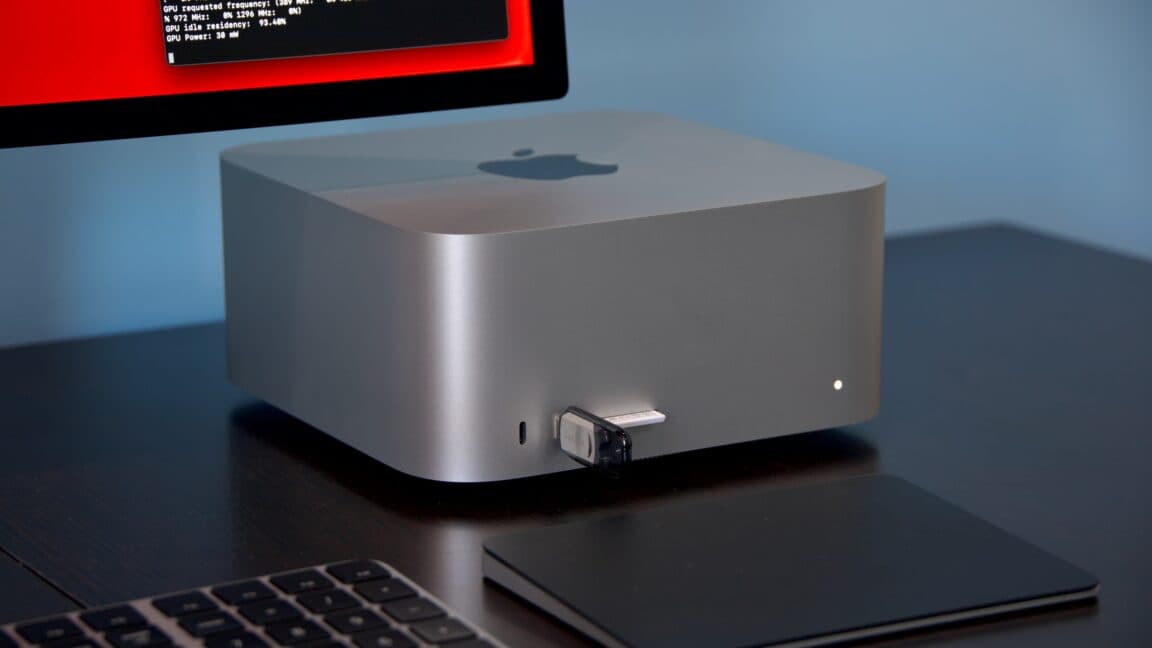
According to Ars Technica’s reporting on Apple’s Q2 2026 earnings, the Mac mini and Mac Studio have become increasingly hard to buy throughout 2026. Many configurations on Apple’s online store are marked as unavailable, while others show delivery estimates of several weeks or even months. A top‑tier Mac Studio configuration with 512 GB of memory has disappeared from the store entirely.
On the earnings call, CEO Tim Cook linked the constrained supply partly to higher‑than‑expected demand from people running AI agents and other local AI workloads on these desktops, on top of component shortages. He also mentioned limited availability of advanced manufacturing capacity for Apple’s SoCs at its foundry partner, widely understood to be TSMC.
Ars Technica notes that Apple is also expected to refresh both machines with M5‑series chips later this year, which historically tends to stretch shipping times as inventories wind down. Meanwhile, the newer MacBook Neo is seeing strong sales but relatively stable availability. Despite the desktop bottlenecks, Apple reported 17 percent year‑on‑year revenue growth, with Mac revenue up 6 percent.
3. Why this matters
On the surface, this looks like a familiar Apple story: popular products plus tight chip supply equals long waits. Underneath, it’s the clearest proof yet that local AI is no longer a niche for researchers and hardcore tinkerers.
Who wins?
- Apple, obviously: its desktop line is validated as serious AI hardware, not just creative workstations.
- Developers building Mac‑first AI tools: a growing installed base of users who care about on‑device agents is a gift.
- Privacy‑conscious users and regulated industries, for whom running AI locally instead of in opaque clouds is a feature, not a quirk.
Who loses?
- Anyone trying to buy high‑memory Macs in the next few months: prices on the second‑hand and gray markets are almost guaranteed to rise.
- Cloud‑only AI platforms: every Euro spent on local AI hardware is, at the margin, one less Euro locked into proprietary APIs.
- Smaller hardware vendors: when the best “AI PC” marketing narrative belongs to Apple, Windows OEMs look slow and fragmented by comparison.
The immediate implication is that Apple mis‑forecast how quickly AI enthusiasts, indie developers, and even small labs would adopt Apple Silicon desktops as mini inference servers. The unified memory architecture makes high‑RAM configurations uniquely attractive for running open‑source models locally, and the community has figured that out faster than Apple’s supply chain could react.
The shortage doesn’t just constrain Apple’s Q3 Mac revenue. It slows down experimentation at the edge – in home labs, startups, and small studios – precisely where some of the most interesting AI use cases tend to emerge.
4. The bigger picture
This story sits at the intersection of three larger trends.
1. The pivot from cloud‑only AI to hybrid and local AI.
The last two years were dominated by massive cloud models and GPU clusters. Now, open‑source models and efficient runtimes (think Ollama, llama.cpp, MLX) have made running large language models and image generators on consumer hardware surprisingly practical. Apple Silicon, with its strong CPU/GPU/Neural Engine balance and unified memory, has quietly become one of the best platforms for this.
What we’re seeing is the first mass‑market signal that this isn’t just a geek hobby: demand is bending Apple’s supply chain.
2. A global crunch in advanced manufacturing and memory.
TSMC’s cutting‑edge nodes are heavily booked by smartphone SoCs, data‑center CPUs, and AI accelerators. When Cook says he has less room to maneuver with the foundry, that’s shorthand for a broader geopolitical and industrial bottleneck: the world has more AI ideas than advanced fabs.
Layer on top of that an industry‑wide RAM squeeze – driven by AI servers gobbling up high‑bandwidth memory and DRAM suppliers exercising pricing power after years of oversupply – and Apple’s high‑memory Macs become doubly constrained. Ars Technica notes Apple is explicitly warning about higher memory costs ahead.
3. Product cycles colliding with AI hype.
The Mac mini and Mac Studio are due for M5‑series upgrades later this year. As usual, Apple winds down production of outgoing models. The difference this time is that AI demand has filled the gap faster than expected. The result is a “perfect storm”: intentional production tapering meets unplanned AI enthusiasm.
Compared to Windows PC vendors, Apple finds itself in a rare position: instead of trying to convince users that “AI PCs” are useful, it’s struggling to supply machines people already know how to push to their limits.
5. The European / regional angle
For European users and companies, the shortage lands at an awkward time.
The EU AI Act, combined with GDPR and sector‑specific rules, pushes organisations toward data minimisation and privacy‑preserving AI. Running models locally – on workstations in an office in Berlin, Ljubljana, or Barcelona – is often easier to justify than shipping sensitive data to US‑hosted clouds.
Apple Silicon desktops have quietly become a favourite among European developers, designers, and data scientists for this exact reason: they offer strong local‑AI performance while fitting neatly into existing Mac‑centric workflows.
Long lead times therefore hit:
- Startups and agencies that want to build on‑device assistants for clients but can’t easily expand their hardware fleet.
- Universities and public sector bodies that prefer Macs for security and energy‑efficiency reasons and now face procurement delays.
- Freelancers and small studios across the EU, where a single high‑RAM machine often doubles as both creative workstation and AI lab.
At the policy level, this is an uncomfortable reminder that Europe’s digital ambitions still rely heavily on a supply chain centred in the US and East Asia. The EU Chips Act aims to change that in the long run, but in 2026, a bottleneck at TSMC’s advanced nodes instantly translates into longer waits for AI‑capable hardware on the continent.
The upside: the scarcity may nudge European buyers to look more seriously at local or regional alternatives – from Linux workstations with AMD GPUs to smaller x86 vendors – especially in organisations already wary of vendor lock‑in.
6. Looking ahead
Over the next 6–12 months, three things are worth watching.
1. The M5 generation and how “AI‑first” it really is.
If Apple frames the next Mac mini and Mac Studio as explicitly designed for AI workloads – bigger Neural Engines, more memory options, maybe even specialised accelerators – the current shortage will look like the prelude to a full‑blown “local AI on Mac” campaign. If, instead, Apple downplays AI and focuses on generic performance, it may miss a rare opportunity to own the narrative.
2. Apple’s pricing and configuration strategy.
With memory costs rising, will Apple keep high‑RAM configurations accessible for indie developers, or will 128 GB and above become effectively enterprise‑only options? That choice will shape who gets to experiment with serious local models: a broad maker community, or only well‑funded teams.
3. The reaction from the PC ecosystem.
Expect Microsoft and major OEMs (Lenovo, Dell, HP, Asus) to double‑down on “AI PC” branding, bundling NPUs and local‑AI features into Windows machines. But marketing alone won’t be enough; they’ll need compelling developer tooling and a story that matches the simplicity of “buy a Mac Studio, run your models.”
Unanswered questions remain. How much of the demand spike is sustainable versus short‑term AI enthusiasm? Will supply constraints push some developers back to the cloud despite regulatory headwinds? And can Apple avoid alienating pro users if it prioritises iPhone silicon over Mac during tight foundry windows?
There’s also a risk that Apple over‑corrects, flooding the channel with high‑end desktops just as the AI hype curve flattens. But if local AI continues its current trajectory, the bigger risk is the opposite: under‑investing in the one part of the Mac line that’s clearly ahead of the industry.
7. The bottom line
Apple’s struggle to keep Mac mini and Mac Studio in stock is less about poor logistics and more about an unexpected AI inflection point: local models have gone mainstream faster than Apple’s supply chain and product planning assumed. That’s good news for on‑device AI and bad news if you need a high‑RAM Mac tomorrow.
For developers, teams, and policymakers in Europe and beyond, the question now is simple: will the next wave of AI run mostly in distant data centres, or on the machines we keep on (and under) our desks—and who controls access to that hardware?