Headline & intro
Microsoft publishing the earliest known DOS source code looks, at first glance, like pure nostalgia: dusty assembly listings, an IBM PC, and a handful of grey‑beard hackers cheering on GitHub. But treating this as a retro curiosity misses the point. This release isn’t just about honouring the past; it’s a signal about how we handle the source of our digital civilisation. In this piece, we’ll unpack why Microsoft’s move matters for developers, historians and regulators, how it fits into a broader shift toward opening legacy code, and what it could mean for Europe’s own digital memory.
The news in brief
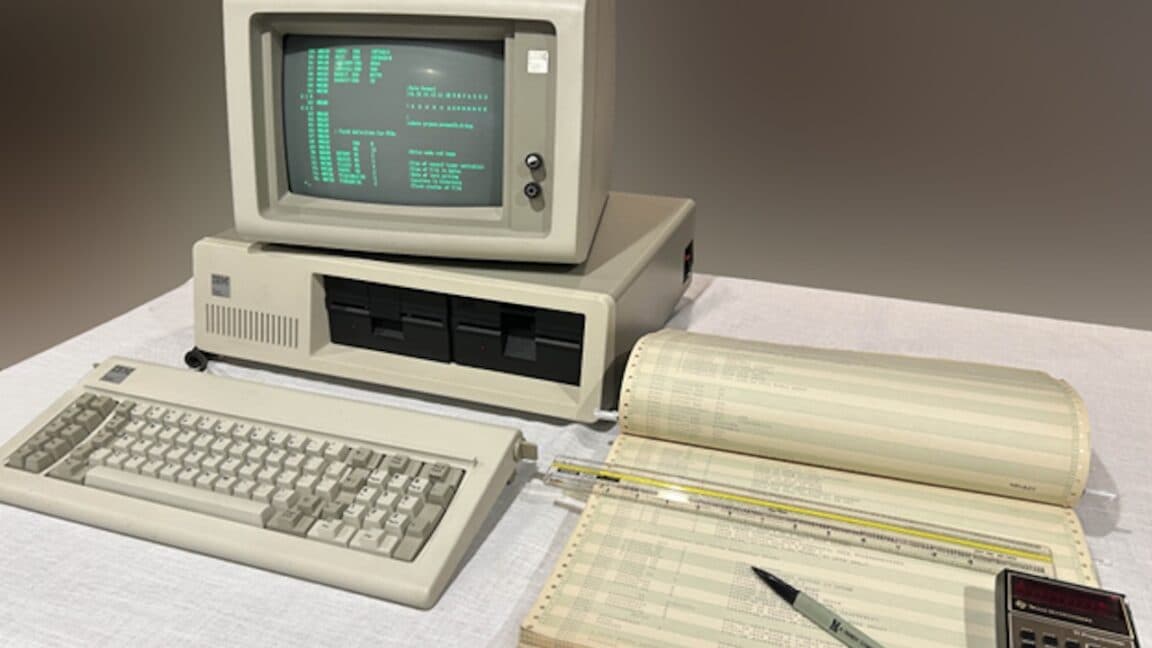
According to reporting by Ars Technica, Microsoft has released what it describes as the earliest DOS source code discovered so far. The publication notes that the code predates the MS‑DOS branding and covers the kernel of 86‑DOS 1.00, several development snapshots of the IBM PC‑DOS 1.0 kernel, and utilities including the early version of CHKDSK.
The material originates from work done by programmer Tim Paterson for Seattle Computer Products, before Microsoft licensed and later acquired the software, turning it into MS‑DOS and PC‑DOS for the IBM PC ecosystem.
Because no digital copies were preserved, a volunteer group calling itself the “DOS Disassembly Group” reconstructed the code from decades‑old paper printouts supplied by Paterson. They scanned and manually corrected the listings, since modern OCR struggled with the quality. Microsoft has now published these sources and accompanying documentation on GitHub, alongside previously open‑sourced MS‑DOS 1.25, 2.0 and the unusual MS‑DOS 4.0 release.
Why this matters
This looks like a tiny footnote in computing history, but several constituencies have something very real to gain.
For historians and archivists, this is gold. We finally get a clearer, primary‑source view of the operating system that effectively bootstrapped the IBM PC era. Until now, much of early DOS history relied on second‑hand accounts, partial binaries and reconstructed disassemblies. Having an official, readable code base lets researchers trace design decisions, verify timelines and debunk myths about who built what and when.
Developers—especially those interested in operating systems, compilers and low‑level performance—gain a rare teaching tool. This is code written for a world where 64 KB of RAM wasn’t a worst‑case edge, it was the envelope. You see explicit trade‑offs around size, speed and hardware constraints that are almost invisible in today’s cloud‑first, memory‑abundant world. That perspective has direct value for systems programming, embedded work and even performance‑sensitive cloud services.
For Microsoft, the benefits are strategic rather than commercial. There is no new DOS business to be made; the money is in Azure, Office and AI. What this release buys them is credibility in three areas: as a steward of computing history, as a company that increasingly plays well with open source, and as a platform that wants GitHub to be the canonical archive for both modern and historical code.
Losers? The risk is minimal. Any patents are long expired, and DOS‑compatible clones already exist. If anything, the only “loser” is the argument that early software should remain locked away as proprietary IP indefinitely.
The bigger picture
Viewed in isolation, the 86‑DOS source looks like a charming museum piece. Viewed in context, it fits a much larger trend: big tech slowly opening the vault on legacy software.
Microsoft has been gradually releasing older assets for more than a decade—MS‑DOS 1.25 and 2.0, early games like Zork it once distributed, and even curiosities like 3D Movie Maker. In parallel, it has open‑sourced substantial living technologies: the .NET runtime, Visual Studio Code, large chunks of its JavaScript stack and more. The company that once called open source a “cancer” now runs one of the world’s largest open‑source platforms.
Other companies have walked a similar path, particularly in gaming. id Software famously released the engines for Doom and Quake, enabling ports to everything from smartwatches to refrigerators. These moves don’t just generate goodwill; they cement the company’s work into the cultural and technical canon. People build on what they can see.
There is also a defensive logic. By positioning GitHub as the place where important code—old and new—lives, Microsoft reinforces its role as the archive and infrastructure layer of software development. In a world where AI models are trained on code at massive scale, being the default home of that code is strategically powerful.
The 86‑DOS release is also a quiet warning about the “digital dark age.” Here we have software that changed the world, and the original digital artifacts are gone. Only paper printouts and the dedication of hobbyist historians saved it. If that can happen to DOS, what about early mobile operating systems, early web services, or proprietary formats used in European administrations in the 1990s? The lesson: if code isn’t actively preserved and legally shareable, it can simply evaporate.
The European and regional angle
From a European perspective, this is more than American nostalgia about IBM PCs.
First, Europe has its own rich PC and microcomputer heritage: Amiga, Atari ST, Sinclair, various Eastern Bloc machines, and a vibrant demoscene that UNESCO has begun recognising as cultural heritage in some countries. DOS was the layer on which much of Europe’s business and public‑sector computing ran through the 1980s and 1990s. Having early, legal source access helps museums, universities and hobbyist groups document how those systems were actually put together.
Second, the release intersects with Europe’s regulatory agenda. The EU talks constantly about data as a public good, about interoperability and about avoiding lock‑in—see the Digital Markets Act and the Digital Services Act. Open, historical source code is an extreme form of interoperability: it allows future systems to emulate, migrate or at least understand old data and processes. That matters when, for example, a municipality still has archives in obscure DOS‑era formats.
Third, this offers teaching opportunities for European universities and technical schools. Instead of only explaining low‑level concepts via toy examples, lecturers can point students at real‑world, production code that ran on millions of machines. Institutions from Berlin to Ljubljana, from Madrid to Zagreb, can integrate this into courses on operating systems, computer architecture, and software history.
Finally, Europe has strong public‑funded digitisation initiatives and archives (Europeana, national libraries, computer history museums in Paderborn, London, Ljubljana and beyond). A major US vendor explicitly licensing foundational code for study and reuse sets a precedent: public money can justify asking European vendors to do the same for their obsolete platforms.
Looking ahead
This release raises an obvious question: what else is sitting in corporate basements, aging quietly on tapes and printouts?
In Microsoft’s case, don’t expect Windows NT or modern Office to be open‑sourced any time soon; those systems are too close to current products. But early, discontinued components—old utilities, SDKs, drivers, maybe even pre‑release versions of Windows 1.x or 2.x—are plausible candidates over the next decade, especially if there’s community interest and no real IP risk.
For readers, several developments are worth watching:
- Licensing details and contributions. How permissive is the license in practice, and will Microsoft accept documentation fixes, comments and annotations from the community, turning the repo into a living historical resource rather than a static dump?
- Educational uptake. Do universities and coding bootcamps actually adopt this code in curricula, or does it remain a niche curiosity for retro‑computing fans?
- Regulatory spillover. As the EU finalises the AI Act and continues to refine digital‑heritage policies, we may see more explicit encouragement—or even requirements—for publicly relevant, discontinued software to be archived and made studyable.
There are risks. Over‑romanticising old code can lead to a kind of technological nostalgia that ignores past failings: lack of security models, poor accessibility, brittle design. And open‑sourcing does not automatically guarantee long‑term preservation; that still requires institutions and funding. But overall, the opportunity to treat code as a first‑class cultural artifact far outweighs the downsides.
The bottom line
Microsoft open‑sourcing the earliest known DOS code is less about reviving an ancient OS and more about reshaping how we think about software history. It strengthens Microsoft’s open‑source narrative, gives developers and historians a rare primary source, and nudges the industry toward treating code as cultural heritage, not just corporate property. The real question is whether this remains a one‑off curiosity—or whether governments, universities and other vendors join in and start opening their own vaults before more of our digital past disappears.