Amazon’s AI Phone: Ambitious Trojan Horse or Second Fire Phone?
Amazon is reportedly planning a return to the smartphone market with an AI‑centric device codenamed Transformer. On paper, it sounds like the perfect 2026 buzzword cocktail: no traditional app store, deep Alexa integration, and shopping built into the core experience. But underneath the hype sits a bigger strategic question: is this really a new category, or just another attempt to lock users into a commerce funnel with extra AI glitter?
In this column, we’ll unpack what’s actually known so far, why Amazon might be willing to risk another Fire Phone moment, what this says about the direction of AI hardware, and what it could mean for European users and regulators.
The news in brief
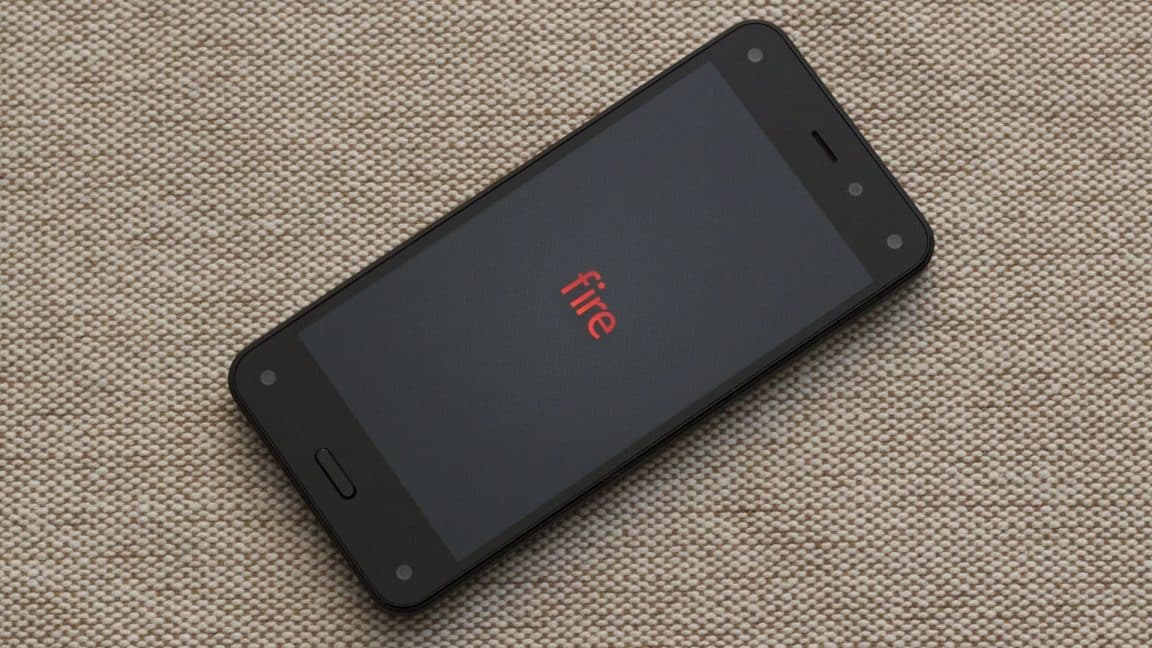
According to a report from Reuters, cited by Ars Technica, Amazon is developing a new smartphone more than a decade after discontinuing the Fire Phone. The project is internally codenamed Transformer and is described as an AI‑centric device that leans heavily on Amazon’s services.
Reuters’ anonymous sources say:
- Amazon considered a simpler “dumbphone” before pivoting to a smartphone.
- The device is designed around Amazon services: shopping, food delivery via partners like Grubhub, and streaming via Prime Video and Prime Music.
- Alexa could potentially act as the phone’s operating system or core interface, though details are unclear.
- A key idea is to use AI instead of a traditional app store, with inspiration taken from minimalist devices like the Light Phone.
The phone could still be cancelled for financial or strategic reasons, and Amazon declined to comment on the report when contacted by Ars Technica.
Why this matters
If Transformer ships, it won’t just be “another Android phone.” Amazon appears to be testing whether the app store itself is obsolete in an AI‑mediated world. That is a direct challenge to the logic of both iOS and Android.
For Amazon, the motivation is obvious: the smartphone is still the most powerful commerce device ever invented. Echo speakers and Fire TV sticks are useful, but they live at the edges of our attention. A phone lives in our pocket. Embedding shopping, food delivery, and media into the primary interface is Amazon’s dream of a permanent, portable checkout button.
On the winners’ side, if this works:
- Amazon gains a tighter funnel from discovery to purchase, and a platform to push its paid “Alexa+” assistant.
- Carriers might get a differentiated, low‑cost device to bundle, assuming Amazon subsidises hardware to drive service revenue.
But there are clear losers and risks:
- App developers lose visibility if users interact via generic AI requests rather than app icons and stores. The “home screen” becomes an LLM prompt.
- Google risks erosion of its control over Android distribution if an Amazon phone bypasses the Play Store and Google services.
- Users may end up in an even more closed, commerce‑driven ecosystem than Apple’s — just one that’s disguised as a conversational assistant.
In the short term, the bigger question is not technical but behavioural: will mainstream users trust an AI front‑end enough to give up familiar apps and icons? The Fire Phone failed partly because it solved problems nobody had. An AI phone without an app store risks repeating that mistake at a higher level of abstraction.
The bigger picture
Transformer fits neatly into a broader post‑app, AI‑first device narrative. Over the last years, we’ve seen:
- Dedicated AI gadgets like Humane’s AI Pin and Rabbit’s R1 promising to replace apps with natural language agents.
- Big‑tech assistants (Alexa, Google Assistant, Siri) being reimagined around generative AI instead of simple voice commands.
- Talk of “AI PCs” and “AI phones” where large models run locally or in tight integration with cloud services.
Most of these efforts are trying to answer the same question: If AI can understand intent, do we still need to tap through rigid app UIs? Amazon’s twist is to ground that experiment in a device designed from day one as a commerce machine, not as a general‑purpose productivity tool.
Historically, Amazon has succeeded with hardware when the business model was crystal clear: Kindles sell books, Fire TV sells content, Echo sells… well, that’s exactly the problem. Voice assistants never turned into the shopping engines Amazon hoped for. Reuters and Ars Technica both point to long‑running financial struggles in Amazon’s devices division.
Seen through that lens, an AI phone is not just innovation — it’s a salvage operation for Alexa. If Transformer makes Alexa (and especially a paid Alexa+) unavoidable, Amazon gets:
- recurring subscription revenue; and
- a way to justify its enormous sunk costs in voice tech.
Competitively, this edges Amazon closer to Apple and Google’s territory. Those companies use phones to defend their ad and services revenue. Amazon would be using a phone to defend (and expand) its commerce empire. Whether users want to live in three overlapping walled gardens on one device is another story.
The European angle
For Europe, Transformer is more than a quirky US hardware play. It lands in a regulatory environment that is actively hostile to exactly the kind of vertical integration Amazon seems to be chasing.
If Amazon ships its own smartphone OS or fork, and tightly couples it to shopping and media services, it risks triggering Digital Markets Act (DMA) scrutiny as a gatekeeper platform. Brussels is already wary of Amazon’s dual role as marketplace and retailer; adding a hardware and OS layer on top only sharpens those concerns.
Then there is data protection. An AI‑centric phone that leans on Alexa inevitably processes huge amounts of voice, behavioural, and transactional data. Under GDPR and the upcoming EU AI Act, Amazon would need to demonstrate:
- strict purpose limitation for all that data;
- transparency around the use of generative AI; and
- safeguards against profiling that crosses the line into manipulation.
European users are also more privacy‑sensitive than the US average, particularly in markets like Germany and the Nordics. A phone that feels like a shopping agent constantly listening in may struggle to achieve trust.
On the flip side, there is an opportunity: if Amazon can offer strong on‑device processing and clear privacy guarantees, it might position Transformer as a more private alternative to ad‑driven Android phones, especially in price‑sensitive Central and Eastern European markets where Amazon is still growing its footprint.
But any EU launch would likely lag the US and face immediate regulatory and consumer‑protection scrutiny.
Looking ahead
The most likely near‑term scenario is that Transformer continues as a quiet, experimental project. Amazon will probe three big unknowns before committing to a full launch:
- User behaviour: In tests, do people really prefer conversational AI over apps for everyday tasks like messaging, maps, or banking? Or do they constantly fall back to familiar icons?
- Economics: Can an AI‑heavy phone be sold at mass‑market prices once you factor in cloud inference costs, or does Amazon need to subsidise it via Prime, Alexa+ or bundled services?
- Platform risk: How far can Amazon deviate from conventional Android and the app‑store model without triggering user backlash and regulatory headaches?
Watch for signals such as:
- deeper integration of generative AI into existing Alexa devices;
- new subscription bundles that tie Alexa+ to Prime or shopping perks; and
- any job listings or organisational changes indicating a dedicated “AI phone” or “post‑app” platform group.
There’s also a non‑trivial chance this never ships. Amazon has killed plenty of hardware concepts internally. If early prototypes show that users simply don’t give up apps, Transformer could quietly join the graveyard alongside the Fire Phone.
If it does launch, expect a US‑first rollout, partnerships with one or two carriers, aggressive pricing, and heavy marketing around simplicity (“just ask, don’t tap”). A European release would come later, if at all, after regulatory groundwork and localisation.
The bottom line
Amazon’s reported AI phone is less about hardware and more about control of the funnel between intent and purchase. If Transformer works, it could accelerate a shift away from app icons towards AI intermediaries that decide which services we actually use. If it fails, it will be remembered as Fire Phone 2.0 with added buzzwords. The real question for readers is simple: do you want your next phone to be a neutral tool — or a salesperson that lives in your pocket?