Headline & intro
Apple’s most unassuming computers have quietly become some of its most strategic. While MacBooks are plentiful and heavily marketed, the Mac mini and Mac Studio are slipping into backorder limbo, with some configurations simply not orderable at all. That’s not just a routine pre-refresh lull. It exposes how Apple is juggling three powerful forces at once: its upgrade cycle, an AI-driven memory crunch, and a slow shift in how people deploy desktop Macs. In this piece we’ll unpack what’s really behind the shortages, who is getting squeezed, and what this likely signals about Apple’s desktop and AI strategy over the next year.
The news in brief
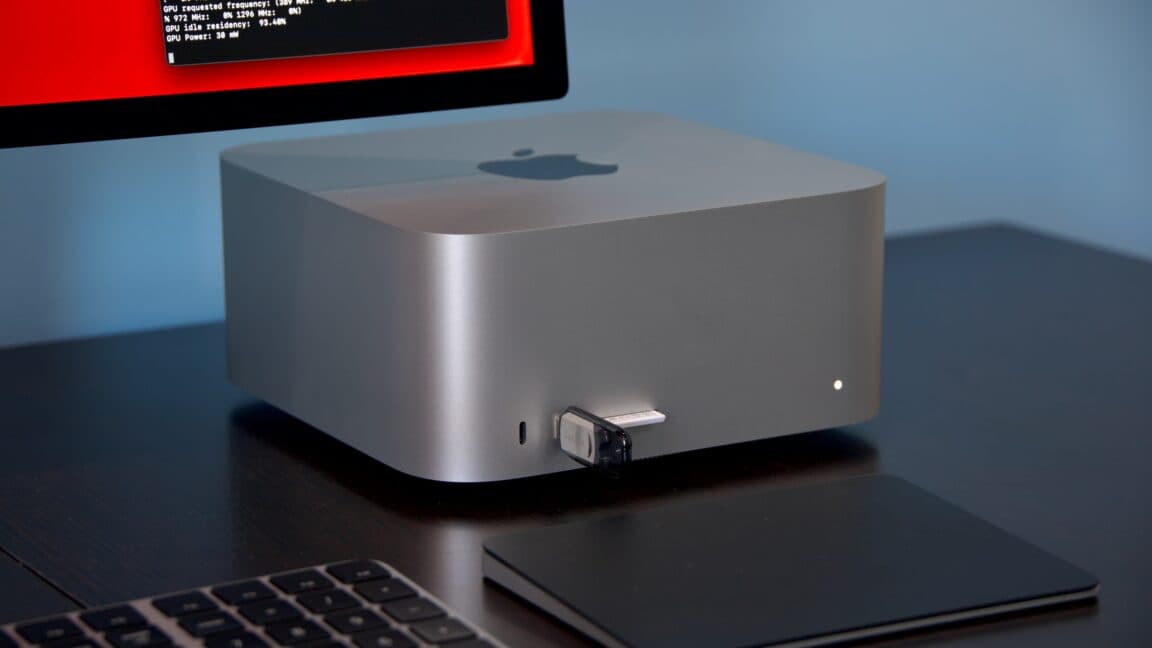
According to Ars Technica, many configurations of Apple’s current-generation Mac mini and Mac Studio have become extremely difficult – or impossible – to buy over the last few months.
Apple has removed at least one Mac Studio configuration (the 512 GB M3 Ultra model) from its online store. For the remaining Mac mini and Mac Studio options, estimated delivery has stretched from a few days to between five and twelve weeks, depending on the exact chip, RAM and storage combination.
Some variants are marked simply as “currently unavailable,” including all M4 Mac minis with 256 GB of storage, all M4 minis with 32 GB of RAM, all M4 Pro minis with 64 GB of RAM, and Mac Studio models with 128 GB or 256 GB of RAM. Even third‑party retailers show widespread stock-outs.
Laptops are not affected in the same way: recent MacBook Pros and the MacBook Neo are generally shipping in two to three weeks, and most M4 iMacs remain available within normal timeframes.
Why this matters
On the surface this looks like a routine pre-refresh slowdown: Apple winds down production of current models ahead of M5-based desktops, so channel inventory doesn’t pile up. That is almost certainly part of the story – the Mac mini and Mac Studio are both due for their next silicon bump.
But the pattern is too specific to be written off as normal. The hardest-hit machines are precisely the ones that combine relatively affordable pricing with high unified memory and decent storage. Those are the sweet-spot boxes for developers, small studios and AI tinkerers who want lots of local compute without paying Mac Pro prices.
In other words, the Mac mini and Mac Studio have accidentally become Apple’s entry-level AI workstations.
That makes the winners and losers clearer. Short term, Apple benefits from running lean: less risk of discounting old models and more flexibility to pivot to AI-focused marketing for the refresh. Large enterprise buyers, who tend to lock in configurations early, can usually work around long lead times.
The people who lose are everyone else: indie developers, small video and audio studios, AI researchers, and home lab enthusiasts who rely on these machines as relatively affordable, power-efficient compute nodes. For many of them, waiting three months isn’t an option – and the lack of stock at third‑party retailers kills the usual escape route of buying off-the-shelf from Amazon or a local reseller.
The shortages also blunt one of Apple’s most underrated advantages: the ability to scale from laptop to desktop within the same Apple Silicon ecosystem. If the desktop tier becomes unpredictable to buy, some teams will quietly standardise on x86 boxes for workloads that might otherwise have gone to Mac.
The bigger picture
Seen in isolation, backordered Macs are just an annoyance. Seen against the backdrop of the AI hardware land grab, they look more like a symptom.
Two elements stand out in Ars Technica’s reporting. First, desktops are suffering while MacBooks and iMacs are largely fine. Second, it’s not just ultra‑high‑end configurations that are missing; mid‑range memory options are vanishing too.
That lines up uncomfortably well with broader industry pressures. Over 2023–2024, cloud providers and AI companies hoovered up high-performance DRAM and fast SSDs for GPU servers. The same LPDDR and NAND manufacturing capacity underpins everything from laptops to phones to compact desktops. When demand spikes, vendors triage.
If you’re Apple and you need to decide where scarce high‑bin memory modules go, the answer is simple: into high-margin MacBook Pros, flagship iPhones, and perhaps your own internal AI clusters – not into relatively low-margin, headless Macs that many buyers use as cheap compute.
There’s also a product-strategy angle. The Mac mini and Mac Studio blur lines that Apple usually likes to keep sharp. A stack of Mac minis can replace a small x86 server, and a well-specced Studio edges uncomfortably close to workloads Apple would prefer to push to the Mac Pro or, in the future, to cloud‑based Apple services.
We’ve seen echoes of this tension before. Intel‑era Mac minis went through long, awkward gaps between updates. Similarly, the first Apple Silicon transition saw some desktop form factors (notably the high-end Mac mini and Mac Pro) lag laptops by many months. When Apple is rethinking where a product sits in the line-up, supply gets weird.
Combine AI‑driven memory pressure, margin‑driven allocation and strategic hesitation about desktops, and you get exactly what we’re seeing: stretched lead times, missing mid‑tier configurations, and a lot of guesswork from buyers.
The European / regional angle
For European users and organisations, this isn’t just a question of patience; it’s a question of planning.
SMEs, agencies and public-sector bodies across the EU have spent the last few years moving creative and developer workloads to Apple Silicon because it combines strong performance with low power consumption – a good fit for both energy costs and the EU’s climate ambitions. The Mac mini and Mac Studio, in particular, have become staples in audiovisual studios from Berlin to Barcelona.
Unpredictable availability undermines that momentum. Procurement teams that need to comply with public tender rules or multi-year IT plans cannot base their infrastructure on products that may suddenly need a 10–12 week lead time with no clear end date.
Regulation adds another twist. Under the EU’s Digital Markets Act and upcoming AI Act, developers building and testing compliant apps and AI systems need stable, local test environments. Mac minis are popular as CI servers and build agents for iOS and macOS apps. If those boxes are hard to source, some teams will fall back to x86 servers running macOS in ways Apple doesn’t officially support – or will simply move their tooling to Linux and Windows.
There is also a competitiveness angle. European hardware makers, from specialist workstation builders in Germany to smaller OEMs in Eastern Europe, can exploit this gap with compact AMD and Intel-based desktops optimised for AI frameworks. They lack Apple’s unified memory architecture, but they can ship now – and can be more easily repaired and upgraded in line with the EU’s right-to-repair push.
In short: Apple’s desktop wobbles create an opening for the broader European PC ecosystem at exactly the moment Brussels is trying to reduce dependence on a handful of US and Asian tech giants.
Looking ahead
What happens next depends on which of the three drivers is dominant.
If this is mainly an orderly run‑down ahead of M5-based desktops, we should see a familiar pattern: a launch event, heavy emphasis on on‑device AI performance, and then a gradual normalisation of lead times over the subsequent quarter. In that scenario, by the time we reach the end of the year, buying a Mac mini or Studio should feel boring again.
If, however, the real bottleneck is memory and storage rather than chip packaging, the pain may linger at the high‑RAM end of the range. Apple could use the refresh to quietly reshape configurations – for example, raising base RAM and prices, trimming the number of mid‑tier options, or nudging serious AI and pro users towards even more expensive models.
The most interesting – and least visible – question is what Apple itself is doing with its own silicon. If the company is building significant internal AI capacity, it will be competing with its customers for the same DRAM and NAND at scale. In that case, desktop Macs will continue to lose out to iPhones, MacBook Pros and Apple’s own racks of servers.
For readers, the pragmatic advice is simple:
- If you can wait, do. A refresh is coming, and stock should improve afterwards.
- If you can’t, look seriously at refurbished units, or at compact x86 desktops for AI and server‑style workloads.
- If you run a business, assume that “just-in-time” Mac desktop procurement is dead for now; plan for long lead times or alternative platforms.
The bottom line
Apple’s Mac mini and Mac Studio shortages are not a random hiccup; they are where product strategy, AI hype and component economics collide. Desktops that quietly powered indie studios and home AI labs are now squeezed between Apple’s margin priorities and a global scramble for memory. Unless Apple pairs its next desktop refresh with a clear commitment to availability – especially for higher‑RAM configurations – it risks pushing its most demanding users toward more open, PC-based ecosystems. The question is whether Apple is comfortable with that, or whether it’s about to rediscover the strategic value of the humble desktop Mac.