1. Headline & intro
Apple didn’t hold a press conference to announce it, but the most extreme version of its most powerful desktop just vanished. The 512GB unified memory configuration of the M3 Ultra Mac Studio has quietly disappeared from Apple’s store, right as AI workloads are pushing local hardware to its limits. This isn’t just a niche spec change for rich power users. It’s a visible crack in the illusion that big tech can somehow glide above the global AI-driven memory shortage. In this piece, we’ll look at what Apple’s move signals for high‑end desktops, on‑device AI – and why European creators and researchers should pay attention.
2. The news in brief
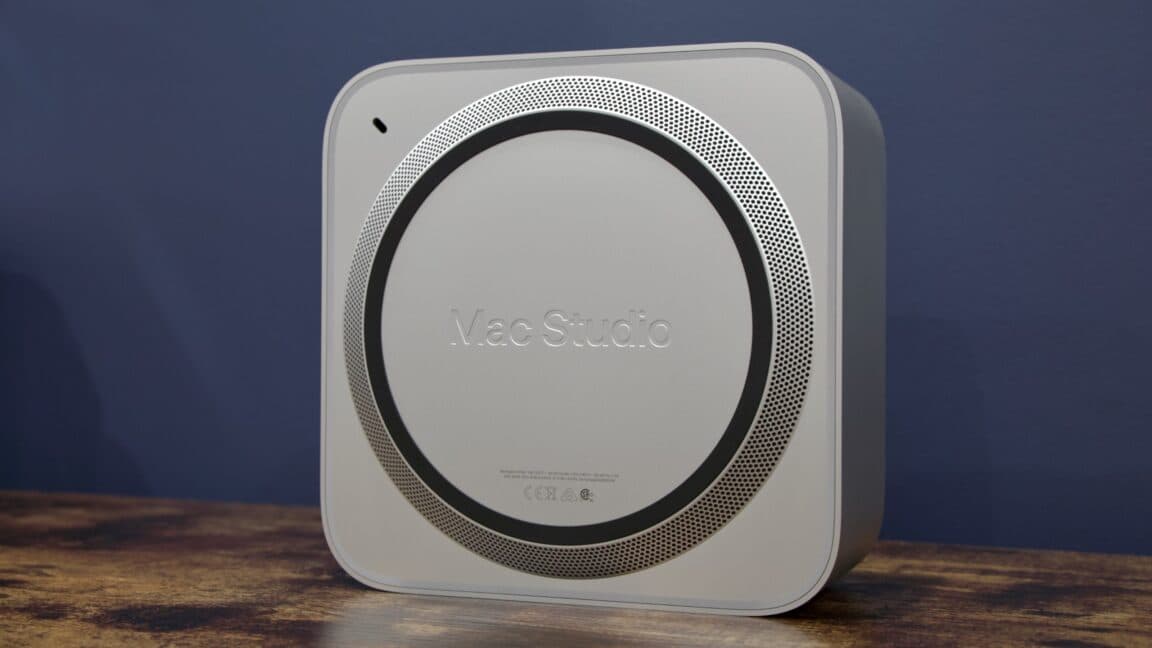
According to Ars Technica, Apple has removed the 512GB unified memory option for its top‑tier M3 Ultra Mac Studio sometime between 4 and 6 March 2026. The official tech specs page still lists the configuration, but it is no longer orderable in the Apple Store. At the same time, the price of the 256GB configuration has reportedly risen from $1,600 to $2,000.
The 512GB option was never mainstream: it required the most expensive M3 Ultra chip and pushed the system price to around $9,499. But for workloads that need huge amounts of GPU‑accessible memory – including running large language models locally – that configuration was uniquely attractive because of Apple’s unified memory design.
Ars Technica also notes that macOS Tahoe 26.2 added a feature allowing Thunderbolt 5‑equipped Macs like the Studio to act as a single compute cluster, pooling memory across machines. Meanwhile, RAM supplies are tight because manufacturers are prioritising high‑bandwidth memory (HBM) for data‑centre AI accelerators, leaving less traditional DRAM for PCs and devices. Apple has not publicly commented on the missing configuration.
3. Why this matters
On paper, Apple has merely removed a configuration that almost no consumer will ever buy. In practice, this is a signal flare.
The 512GB Studio sat at the intersection of three important trends:
- the shift to unified memory on Apple Silicon, where RAM capacity is fixed at purchase and directly tied to GPU capability;
- the growing desire to run serious AI workloads locally, from large language models to diffusion models;
- a historic memory squeeze driven by hyperscaler demand for AI infrastructure.
Take away that 512GB tier, and Apple has effectively capped the memory ceiling for single‑box Mac workstations, at least for now. For some 3D, video and AI workflows, 256GB is comfortable. For frontier‑scale local models and massive scene data, it isn’t.
The quiet price increase for the 256GB option tells another story. Apple is famous for using its scale to lock in component supply and smooth out volatility. If even Apple is raising prices mid‑cycle, the cost pressure on DRAM is intense. Smaller PC makers and workstation vendors will have far less room to shield customers; some are already cutting default RAM or storage or delaying new models.
Winners and losers? Memory manufacturers and cloud AI providers come out ahead. When local high‑RAM machines become scarcer and more expensive, it nudges enterprises, labs and even ambitious indie developers toward rented GPU clusters. Losers are exactly the people the Mac Studio was pitched at: creative studios, AI startups and researchers who wanted predictable, on‑prem compute instead of battling for cloud GPU quotas.
Most importantly, this move shows that the AI hardware crunch is no longer something that happens far away in data centres. It’s on your desk now.
4. The bigger picture
The missing 512GB Mac Studio fits into a broader pattern we’ve seen across the industry over the last two years.
As Ars Technica notes, DRAM makers have been retooling capacity toward high‑bandwidth memory used in AI accelerators like Nvidia’s H200. HBM is more profitable and in ferocious demand from cloud providers, but every wafer devoted to HBM is a wafer not producing conventional DRAM for laptops, phones and desktops.
We’ve already watched the GPU market go through a similar phase: gaming and workstation cards became collateral damage of AI demand, with prices and availability distorted for everyone. Memory is now in the same position, but with an added twist: you can’t run modern systems without it. A PC can ship with a weaker GPU; it can’t ship with zero RAM.
Historically, Apple has reacted to component shortages by stretching shipping times rather than pulling options. The fact that it has removed a top‑tier configuration altogether suggests either extremely limited supply at reasonable cost, or a strategic decision that running this SKU would erode margins too much, especially after CEO Tim Cook already warned investors that memory pricing could pressure profits.
Contrast this with typical PC workstations from Dell, HP, Lenovo or boutique builders. They use socketed or slot‑based RAM, making it possible to sell a base configuration and let customers add memory later as budget allows or prices normalise. Apple’s unified, soldered approach delivers performance and efficiency, but it also ties users to Apple’s reading of the component market at the moment of purchase. When Apple decides 512GB is no longer viable, there is no aftermarket escape hatch.
Looking forward, this move underlines a key direction of travel: AI hardware is bifurcating. Data‑centre gear races ahead with exotic memory stacks and eye‑watering budgets, while client devices fight over a constrained pool of more conventional components, even as we ask them to do more on‑device inference. That tension will define the next few hardware generations.
5. The European / regional angle
For European users, this isn’t just a story about an expensive American desktop disappearing.
European creative studios, engineering firms and research labs have been among the most enthusiastic adopters of Mac Studio systems. In sectors like video post‑production, architecture and music, Macs remain deeply entrenched. For teams that were counting on 512GB unified memory to host large models or ultra‑complex projects locally – partly to stay compliant with GDPR by keeping data on‑prem – that path just became harder and more expensive.
Yes, macOS now supports pooling memory across multiple Thunderbolt 5‑equipped Macs, but in Europe that means buying two already‑premium machines, each with high VAT and often slower channel availability. For many budgets, that crosses from “painful but doable” to “we’ll just rent more cloud GPUs.” That in turn raises new data‑sovereignty and AI Act compliance questions, especially for sensitive sectors like healthcare and public institutions.
Europe’s own industrial policy also lurks in the background. The EU Chips Act aims to grow semiconductor manufacturing on the continent, but memory production – especially HBM – remains concentrated in Asia and the US. The Mac Studio episode is a very tangible reminder that Europe’s digital ambitions, from AI research hubs in Berlin and Paris to startups in Tallinn or Barcelona, still ride on components made elsewhere.
For privacy‑conscious European consumers, fewer high‑RAM Macs also means slower progress toward fully local AI assistants that don’t have to phone home to US‑based clouds. When hardware ceilings are lowered, cloud dependency tends to rise.
6. Looking ahead
So what happens next?
The most obvious scenario is that the 512GB tier stays gone for this Mac Studio generation and potentially returns – or is replaced by something even bigger – only when Apple moves to a future Ultra chip on a more favourable memory cost curve. That could coincide with next‑generation DRAM or packaging that helps Apple secure higher densities without wrecking margins.
In the meantime, expect more subtle shifts rather than headline‑grabbing removals. We may see:
- further quiet price adjustments on high‑RAM options across the Mac lineup;
- other vendors trimming their top‑end memory configs or reserving them for enterprise channels;
- stronger marketing around clustering and distributed workflows instead of single‑box “monster” machines.
On the software side, the pressure will intensify to make AI and media workloads leaner. Techniques like model quantisation, smarter caching and streaming, and hybrid local/cloud execution suddenly matter a lot more when 256GB is the practical ceiling on a high‑end desktop.
For European organisations, the key watchpoints are supply and lead times for high‑RAM systems, and how that interacts with new regulatory frameworks. If the EU AI Act nudges more institutions toward on‑prem inference for sensitive data, but hardware availability lags, that disconnect will become a policy problem as well as a technical one.
The wild card is how quickly DRAM makers rebalance their production between HBM and conventional memory. If AI demand keeps climbing faster than expected, today’s 512GB Mac Studio disappearance may be the first of many quiet retreats from ultra‑high‑RAM desktops.
7. The bottom line
Apple dropping the 512GB Mac Studio isn’t a one‑off oddity; it’s an early casualty of the AI memory rush. When even Apple can’t justify keeping its most extreme RAM configuration alive, everyone planning serious local AI or heavy creative workflows should rethink their hardware assumptions. Do you double down on fewer, larger machines, embrace clusters, or accept deeper cloud dependence? The answer will shape how – and where – Europe builds its next generation of AI‑powered tools.