Apple adding ads to Maps might look like a minor tweak to a free app, but it’s actually a clear signal about where the company is heading. Maps is one of the few daily-use Apple apps that still feels largely “clean” compared to the ad-choked experiences on Android, Windows, or smart TVs. Turning it into an ad surface is less about local cafés buying promotion and more about Apple quietly rewiring its business model around services, data and recurring revenue.
In this piece, we’ll unpack what Apple has announced, why Maps is such a strategic placement, what this means for competition with Google, and how this move collides with increasingly aggressive European regulation on big tech and advertising.
The news in brief
According to Ars Technica, Apple has confirmed that its Maps app will start displaying paid placements to users in the US and Canada “this summer.” Businesses will be able to claim their physical locations, upload images and then pay to have their venue shown more prominently.
Those ads will appear at the top of relevant search results inside Maps and in a "Suggested Places" area. Functionally, they resemble the existing paid search slots in the App Store: businesses compete for attention within a constrained, Apple‑controlled marketplace.
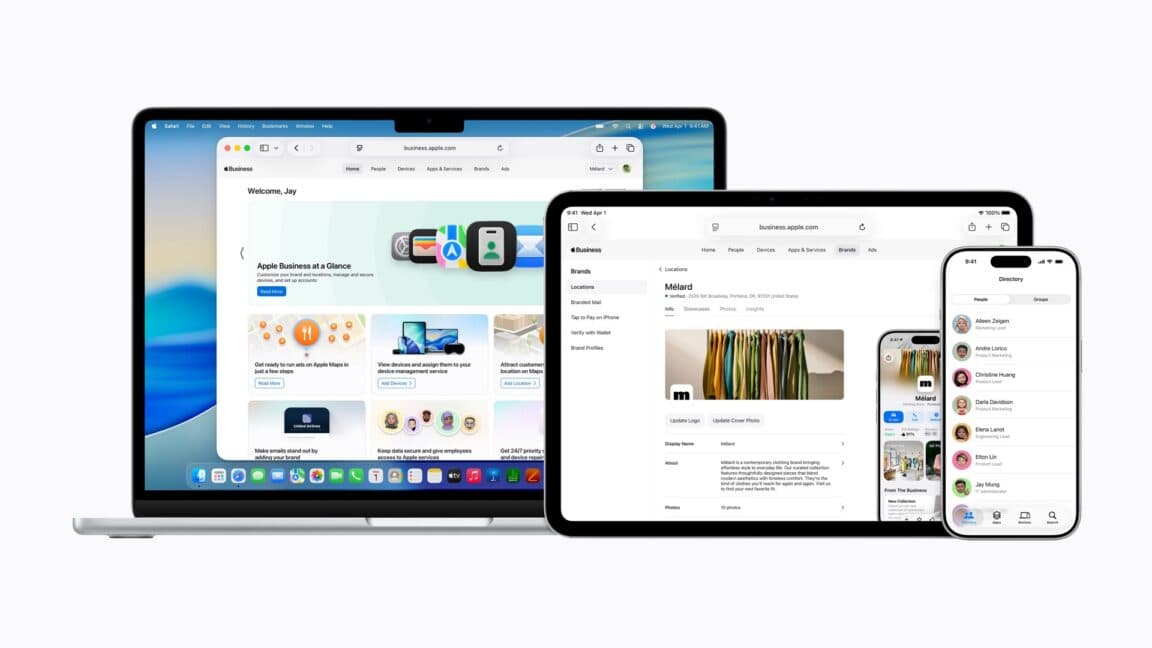
The Maps ad product is being positioned as one element of a broader new offering called "Apple Business," which launches on 14 April. Apple Business will provide company-managed Apple accounts, tools for managing fleets of Apple devices, and streamlined distribution of internal apps. Apple says the service can integrate with Google Workspace and Microsoft Entra ID, indicating it wants to sit alongside, not replace, existing enterprise identity systems.
Apple stresses that Maps ad targeting will still rely on on‑device processing, that personal data will not be shared with third parties, and that ad interactions in Maps won’t be tied to a user’s Apple ID or long‑term location history.
Why this matters
On its own, a few sponsored pins in Maps won’t drive users away from the iPhone. The significance lies elsewhere: this is Apple conceding that even its “core” system apps are now fair game as inventory for the Services division.
Services is already Apple’s second‑largest business line after the iPhone and the primary growth engine when hardware sales flatten. There are only a few levers left to keep those numbers climbing: higher subscription prices, more aggressive cross‑selling, and more advertising. Ads in Maps are the cleanest of those levers because they can be sold as beneficial to small businesses (“discoverability”) and compatible with Apple’s privacy story.
The winners:
- Apple gets a new, high-intent ad surface: when you search for “coffee near me,” the click‑through potential is enormous.
- Businesses that can afford bids in premium locations may see more foot traffic, especially in dense urban areas.
The losers:
- Smaller or budget‑constrained merchants risk being pushed below paid placements in key categories, even if they are closer or better rated.
- Users face creeping commercialization of spaces that used to be purely functional. The line between what Maps “recommends” and what someone paid for becomes blurrier.
Strategically, this also edges Apple closer to the logic that governs Google: if Maps becomes an ad product, decisions about UX, ranking and data collection will increasingly be filtered through revenue optics. That’s a subtle but important shift from a company that has long sold itself as the premium, privacy-first alternative.
The bigger picture
There are three overlapping trends this move slots into.
1. The slow pivot from hardware margins to recurring revenue.
Apple has squeezed astonishing margins out of hardware for over a decade, but mature smartphone markets leave limited room for unit growth. Services—from iCloud to Apple Music to extended warranties—have filled the gap. Adding Maps to the ad portfolio gives Services another growth vector at precisely the moment investors are asking how long subscription and commission revenue can keep expanding.
2. UI real estate is being monetised everywhere.
Microsoft is fielding a wave of complaints over promotional banners, upsells and “recommendations” inside Windows. Streaming platforms increasingly push paid recommendations in home screens. Google Maps has steadily expanded sponsored pins and “promoted” listings. Apple held the line longer than most, but the economic gravity is the same: any frequently visited surface will eventually be evaluated as potential ad space.
3. The competition with Google is shifting from devices to ecosystems.
Google Maps has long been the default discovery layer for the physical world, especially on Android. By turning Apple Maps into a proper performance‑marketing channel for brick‑and‑mortar businesses, Apple is no longer just catching up on navigation quality; it’s challenging Google’s dominance in local advertising.
For merchants, this creates another walled garden to manage. Today they juggle Google Business Profiles, Meta ads, Instagram, TikTok, maybe Yelp or regional platforms. Apple Business adds yet another console—appealing because of the affluent iOS user base, but also fragmenting the market and favouring those with enough marketing sophistication to play all sides.
Underneath all of this is a cultural risk: Apple has carefully cultivated an image of restraint. Every "Try Apple Music," "Add AppleCare," or purple subscription button in Pages chips away at that. Maps ads won’t cause an exodus, but they nudge Apple closer to the Microsoft problem: users who feel the OS is constantly asking them to buy something.
The European angle
For now, Apple Maps ads are limited to the US and Canada, but it would be naïve to assume they’ll stay there. Europe is too important a Services market, yet it is also the most constrained by regulation.
Under the EU’s GDPR, any form of personalised advertising requires a lawful basis, typically explicit consent. Apple’s emphasis on on‑device processing and non‑linked identifiers is clearly designed to argue that Maps ads are contextual rather than behavioural. That distinction will be tested if and when the product crosses the Atlantic.
Then there is the Digital Markets Act (DMA), where Apple is now officially a “gatekeeper.” The DMA takes a dim view of self‑preferencing and opaque ranking in core platform services. If Apple starts to sell premium placement inside Maps, regulators will want clarity on:
- How organic vs paid ranking is displayed and differentiated.
- Whether Apple gives its own properties any privileged treatment.
- What transparency merchants have around pricing and visibility.
European users are also, on average, more privacy‑sensitive than US users—and Apple has leaned heavily on that in its marketing. Introducing ads into a core utility like Maps therefore carries higher reputational risk. Any perception that location data is being monetised, even if technically anonymised and device‑side, could collide with that brand promise.
For European SMEs, especially in tourism‑heavy regions, Apple Maps ads could eventually be attractive: iPhone users over‑index in spending power. But uptake will depend on pricing, tooling in local languages, and integration with existing EU‑based ad and analytics stacks. There is also competition from mapping providers like HERE and regional directories that already comply with EU rules and may pitch themselves as the less intrusive option.
Looking ahead
The near‑term roadmap is easy to sketch: Apple will likely treat the North American rollout as a live A/B test. Expect several iterations on:
- How aggressively ads are surfaced (one sponsored listing vs a full “suggested” carousel).
- Labeling and visual design that keeps regulators and users satisfied while still delivering clicks.
- Bidding models and categories that prove most lucrative (restaurants, retail, services, tourism).
If adoption is strong and backlash muted, a staged expansion to other English‑speaking markets seems plausible next, followed by carefully selected EU countries where Apple’s Maps usage is strongest. That could realistically start in late 2026 or 2027, depending on how DMA enforcement unfolds.
Watch for three signals:
- Deeper integration with Apple Pay and Wallet. If Maps ads evolve from discovery to full transaction flows (reserve, pay, loyalty), the ad product becomes vastly more valuable—and more sensitive from a competition and data perspective.
- Tighter coupling with Apple’s own subscriptions. Imagine Apple Fitness‑promoted gyms or Apple Card cash‑back partners featured more prominently. That’s where self‑preferencing questions become acute.
- Regulatory noise in Brussels and national capitals. Early position papers or information requests from EU or national competition authorities will tell us how far Apple can go.
The risk is not just regulatory fines; it’s user fatigue. If too many core experiences—from Maps to Settings—start to feel like sales funnels, Apple erodes one of its biggest intangible assets: the perception that you pay a premium up front so you can be left alone afterwards.
The bottom line
Apple turning Maps into an ad surface is not a catastrophe, but it is a clear inflection point. It confirms that no high‑traffic Apple interface is sacred when Services growth is on the line. For businesses, it opens a powerful new channel—but one that will likely favour those with budget and marketing sophistication. For regulators, it is yet another proof point that “gatekeepers” are drifting into vertically integrated, ad‑driven ecosystems.
The real question for the coming years is simple: how much advertising are Apple users willing to tolerate before the premium promise starts to ring hollow?