- HEADLINE & INTRO
DJI’s lawsuit against the US Federal Communications Commission (FCC) is not just another chapter in Washington’s security spat with Chinese tech. It is a test case for how far governments can stretch national‑security arguments to reshape entire hardware markets. If the world’s dominant consumer drone maker can be effectively locked out of the US by an agency that normally worries about spectrum and routers, every category of connected device is on notice. In this piece, we’ll unpack what actually happened, what is at stake for the drone ecosystem, and why Europe should pay very close attention.
- THE NEWS IN BRIEF
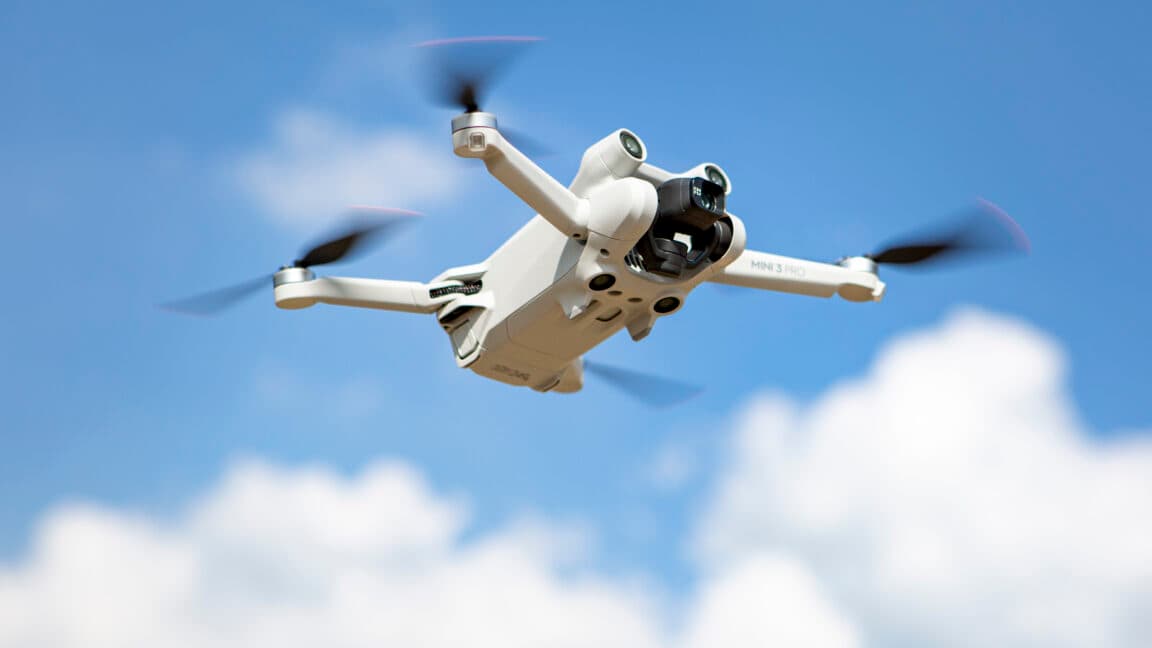
According to Ars Technica, DJI has filed a petition with the US Court of Appeals for the Ninth Circuit seeking to overturn the FCC’s decision to place the company on its so‑called Covered List. That listing triggered an import ban on new foreign‑made drones into the US as of 23 December 2025, which in practice hits China‑based DJI hardest.
DJI argues the FCC exceeded its legal authority, skipped required procedures, and violated US constitutional protections by adding its products to the list. The company says it repeatedly asked US authorities to audit its devices but never got a meaningful chance to respond to specific concerns.
Ars Technica reports that the FCC has granted temporary exemptions for a limited set of foreign‑made drones from Europe and some key components from Japanese and South Korean firms such as Sony, Panasonic, and Samsung—while excluding any drones or parts manufactured in China. In parallel, DJI is also appealing a separate US Department of Defense decision that labelled it as linked to the Chinese military.
- WHY THIS MATTERS
This fight is about much more than one brand of flying camera. DJI controls a dominant share of the global consumer drone market and a significant slice of professional and industrial use. Freezing its latest products out of the US instantly rewrites the economics of the sector: US rivals gain breathing room, smaller competitors see an opening, and thousands of American small businesses lose access to the tools they actually use.
The immediate winners are domestic and non‑Chinese drone makers—think US firms in inspection, public safety, and defense niches, as well as a handful of European manufacturers that now enjoy a de‑facto preference under the FCC’s exemptions. They can raise prices, accelerate enterprise sales, and pitch themselves as the “safe” alternative.
The losers are not only DJI and its American dealers. Aerial photographers, surveyors, construction firms, emergency services, and farmers that built workflows around DJI hardware now face uncertainty: older models remain in circulation, but innovation is effectively throttled. The rumored Avata 360, for instance, may never officially reach US customers if the ban holds.
More strategically, the case matters because it stretches the concept of “communications equipment” to cover complex robotics. The FCC’s Covered List was originally framed around telecom infrastructure and networking gear. Pulling drones into this bucket is a precedent that could later touch cars, industrial robots, medical devices—anything with sensors, radios, and cloud links.
If courts bless this expansive reading of national‑security powers, regulators worldwide will feel emboldened to weaponise certification and import controls as tools of industrial policy. DJI’s lawsuit is, in effect, a referendum on how far that can go.
- THE BIGGER PICTURE
DJI is walking a path already trodden by Huawei, ZTE, and to a lesser degree TikTok. The pattern is familiar: a Chinese tech champion dominates a market; US security agencies warn about potential data exfiltration or foreign influence; political pressure mounts; and agencies leverage whatever statutory instruments they have to constrain that company’s access to the US.
In telecoms, the focus was on 5G base stations. In social media, on recommendation algorithms and data localisation. With DJI, the vector is physical access to airspace and critical sites, plus the telemetry and imagery such drones collect. Each case pushes the perimeter of what counts as “strategic infrastructure.”
What’s different this time is the combination of agencies involved. The Department of Defense has already placed DJI on a list of entities it portrays as tied to the Chinese military, and a US district court largely sided with the Pentagon’s process. Now the FCC is using that broader national‑security environment to justify its own, more sweeping import controls—without having to prove a specific technical backdoor in DJI’s products.
This reflects a broader trend: risk is being defined less by demonstrated vulnerabilities and more by geopolitical origin. If you are a large Chinese hardware vendor in any semi‑sensitive category—drones, surveillance cameras, networking gear—you are increasingly treated as risky by default.
Competitors are reorganising around this reality. US drone startups are rapidly pivoting from niche industrial use cases into broader categories once dominated by DJI. Defense‑oriented platforms are trying to move “down‑market” into public‑safety and even prosumer segments, arguing that security justifies higher cost and lower feature parity.
The industry direction is clear: more fragmentation, more duplication of R&D, and less global interoperability. Whether that ultimately produces more secure systems is still an open question.
- THE EUROPEAN/REGIONAL ANGLE
For Europe, DJI’s clash with the FCC is a warning shot on multiple fronts. First, EU regulators are already under pressure—from Washington and from some member states—to take a tougher line on Chinese hardware in sensitive domains. We have seen this with 5G vendors; drones are the next logical candidate.
Unlike the US, the EU has not issued a bloc‑wide ban on DJI or other Chinese drone makers. European agencies and municipalities still buy DJI systems for everything from disaster response to infrastructure inspection, while hobbyists overwhelmingly fly DJI consumer models. But as the Digital Services Act and emerging security frameworks around critical infrastructure bite, policymakers will be tempted to copy‑paste US‑style restrictions under the banner of “digital sovereignty.”
At the same time, Europe has genuine industrial ambitions in unmanned aviation. German firms are pushing into defense and long‑range mapping; French and Nordic players target inspection and logistics; smaller startups across Central and Eastern Europe specialise in niche sensors, autonomy, or swarm control. For them, an American crackdown on DJI is an unexpected opportunity—provided EU regulators do not simultaneously suffocate their own market with over‑broad bans or compliance overhead.
European privacy culture, embodied in GDPR, also complicates matters. A blanket ban framed around national origin may sit uneasily with a legal tradition that demands proportional, evidence‑based interventions. If Washington cannot point to concrete technical exploits in DJI’s products, it will be harder to justify similar measures under EU law.
- LOOKING AHEAD
The Ninth Circuit case will likely take many months, possibly years, to fully resolve. In the near term, nobody should expect the import ban to disappear; US courts are historically reluctant to second‑guess national‑security assessments, especially when multiple agencies and the White House are aligned.
Most plausible is a partial outcome: the court might narrow the FCC’s authority or criticise its process, forcing more transparent criteria or a clearer appeal mechanism, without fully restoring DJI’s free access to the US market. That alone would be meaningful, setting guardrails for how other agencies and countries design their own covered‑entity regimes.
Watch for three signals. First, how aggressively US agencies push allied governments—especially in NATO and the Five Eyes—to adopt parallel restrictions on Chinese drones. Second, whether DJI doubles down on on‑device processing, local data storage, and region‑specific firmware to blunt security criticisms. Third, how quickly Western competitors can actually scale production; if they fail to meet demand, political pressure from US businesses may soften the stance.
There are real risks. If governments keep escalating blanket bans based on corporate nationality, we could end up with a balkanised drone ecosystem where cross‑border operations, standards, and innovation suffer. On the other hand, there is an opportunity for Europe to define a more nuanced model: demanding technical assurance, transparency, and strong data‑protection guarantees from all vendors—Chinese, American, or European—rather than simply choosing geopolitical sides.
- THE BOTTOM LINE
DJI’s lawsuit against the FCC is less about one company’s sales and more about who gets to define security in a world of connected machines. The US is clearly using national‑security tools to nudge the drone market away from a Chinese champion, with uncertain benefits for actual resilience. Europe now faces a choice: follow Washington’s origin‑based bans, or build a more evidence‑driven, standards‑focused approach. As drones become part of everyday infrastructure, which model would you rather live under—and who do you trust to be flying overhead?