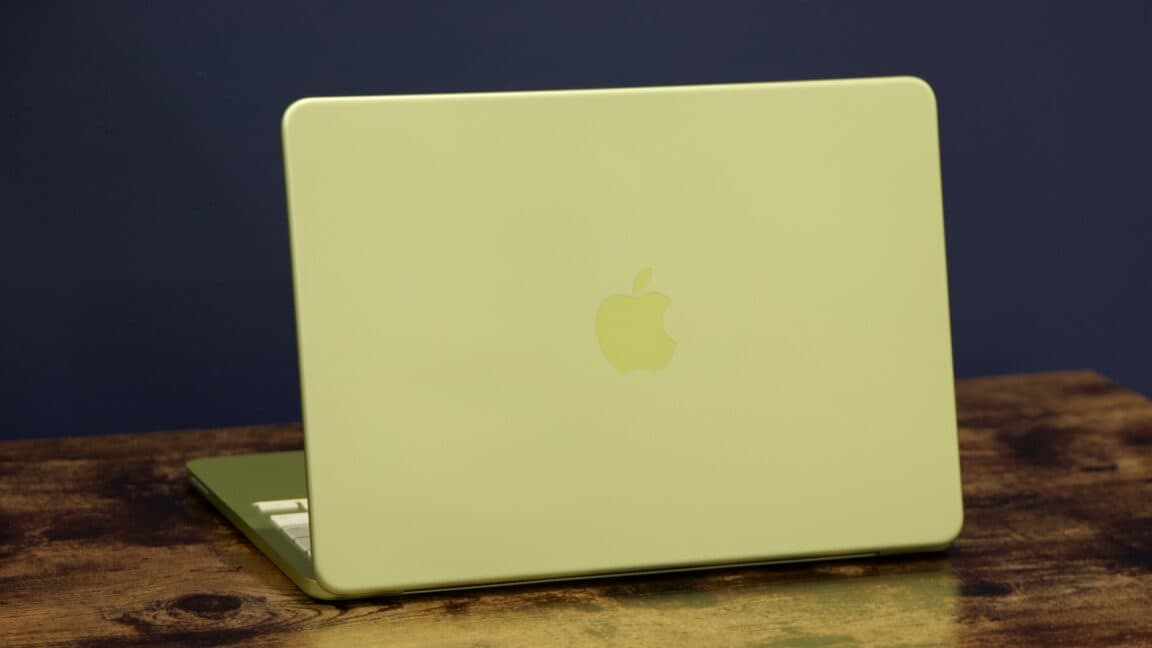
Windows on a $600 Mac: clever hack or strategic turning point?
Apple’s new MacBook Neo is supposed to be the “cheap Mac for the web,” not a workhorse laptop. Yet Parallels has quickly stepped in to say: yes, you can run Windows 11 on it. Not elegantly, not for 3D CAD, but enough for Office, accounting tools and basic engineering apps.
This is more than a compatibility footnote. It’s the latest chapter in a quiet but important battle: who owns the low‑end productivity laptop market—Chromebooks, cheap Windows PCs, or now, entry‑level Macs with virtualized Windows? And for European students, freelancers and SMEs who still live in mixed Mac/Windows worlds, it might be the difference between buying one device or two.
In this piece, we’ll unpack what Parallels’ support really means, where the limits are, and why this “good enough” Windows experience could matter far beyond the Neo.
The news in brief
According to Ars Technica, Parallels has officially certified Apple’s $600 MacBook Neo as supported for running Windows 11 via Parallels Desktop. The Neo uses Apple’s A18 Pro Arm-based chip and ships with 8 GB of unified memory in its base configuration.
Parallels’ own testing, as reported by Ars, positions the Neo as suitable for “lightweight” Windows workloads: everyday productivity, web apps, Microsoft Office, accounting software like QuickBooks Desktop, some lighter engineering tools such as AutoCAD LT and MATLAB, and various Windows-only educational applications.
In single-core performance inside the Windows virtual machine, Parallels found the Neo to be roughly 20% faster than a Dell Pro 14 with Intel’s Core Ultra 5 235U. However, the device still struggles with sustained multi-core workloads, GPU-heavy tasks, and anything that demands large amounts of RAM. Parallels’ documentation explicitly advises against heavy CAD, 3D rendering and graphics-intensive Windows apps on the Neo, and recommends at least 16 GB of RAM for smoother dual-OS usage.
Because this is Arm Windows running on Apple Silicon, legacy x86 Windows apps must pass through Microsoft’s Prism translation layer, adding additional overhead—though far less than in early Arm Windows attempts.
Why this matters
On paper, this sounds like a niche story: a virtualization vendor updates its compatibility matrix. In practice, it hits several pressure points in today’s PC market.
1. The single‑device dream for light professionals
Many people in Europe and beyond still live in a hybrid world: macOS for creativity and UX, Windows for that one accounting package, that one industrial control tool, or their university’s legacy courseware. For them, Parallels effectively says: you can buy the cheapest modern Mac and still access those Windows‑only islands.
That’s a direct challenge to low‑end Windows laptops and even to Chromebooks, which have been trying to capture schools and budget‑conscious buyers with web-first workflows. If the Neo can deliver better single‑core performance than a midrange Intel Ultrabook even inside a VM, it becomes a compelling BYOD option for students and freelancers.
2. Apple’s 8 GB problem becomes a business problem
Apple insists that 8 GB of unified memory is “enough” for many users. Parallels’ own support notes quietly undermine that narrative: running macOS and Windows side by side really wants 16 GB or more. For anyone considering the Neo as their main work machine, this makes the base configuration feel like a false economy.
That tension is strategic. Apple wants to hit a $600 price point without cannibalising MacBook Air sales. But the exact buyers most tempted by a cheap Mac—students in technical fields, small businesses stuck on Windows-only apps—are also the ones most likely to run a VM. They’re being pushed, implicitly, into pricier configurations or more capable models.
3. Virtualization becomes a feature, not an afterthought
On Intel Macs, dual‑booting Windows via Boot Camp was a major selling point. Apple Silicon killed that. For years, Parallels has been patching the gap, but this is the first mass‑market, truly mainstream Apple laptop that ships in Chromebook territory and is marketed as VM‑capable for light Windows use.
The losers? OEMs selling generic €500–€800 Windows laptops on the promise of “it runs Office and some CAD.” If a fanless, ARM-based Mac can do the same—sometimes faster—even through the overhead of virtualization, they must work harder on price, battery life, or specialised features.
The bigger picture
Three broader trends converge in this announcement.
1. ARM laptops are finally credible for Windows work
The original Windows on ARM attempts were infamous for compatibility headaches and sluggish x86 emulation. Now we have three maturing pillars:
- Apple Silicon with Parallels + Arm Windows
- Qualcomm Snapdragon X Elite PCs launching with much stronger performance
- Microsoft’s Prism translation layer, which—while not perfect—has reached “good enough for many apps” status
Parallels certifying even Apple’s cheapest ARM Mac for usable Windows work is a quiet vote of confidence in this ecosystem. ARM is no longer just for tablets and fanless curiosities; it’s becoming mainstream for productivity.
2. The rise of "good enough" compute
The MacBook Neo is not designed for Blender, Unreal Engine or complex FEM simulations. But a growing share of business users do 90% of their work in a browser, mail client, chat and office suite. For them, the bottleneck is often single-core responsiveness and battery life, not peak multi‑core throughput.
That’s exactly where the Neo shines. The fact that it can also handle a virtualized Windows environment for that last 10% of legacy tasks illustrates a new reality: we’re optimising for “good enough across two OSes” rather than “maximum performance in one.”
3. Platform lock‑in vs. pragmatic interoperability
Apple has every incentive to keep users inside the macOS and iPadOS universe. Microsoft would prefer you buy a Surface or Windows laptop. Yet both silently tolerate—if not openly encourage—Parallels’ bridge.
We’ve seen this story before. In the 2000s, Boot Camp helped Mac adoption in universities and businesses that still relied on Windows software. Now Parallels is playing the same role in the ARM era, but with more technical complexity and higher stakes: cloud PCs, SaaS, and regulatory scrutiny over gatekeeping.
Competitively, this nudges Apple a bit closer to “we are a hardware company that happens to run multiple OSes,” and pushes Microsoft toward “Windows is a service that should run wherever users are.” Neither will say that out loud, but user behaviour is pushing them there.
The European/regional angle
For European users, this move lands in a very specific context.
Mixed environments are the norm
European universities, public administrations and SMEs frequently standardise on Windows software—especially for accounting, tax, industrial control and government portals. At the same time, students and creative professionals increasingly prefer Macs.
Parallels on the Neo offers a politically convenient compromise: IT departments can keep their Windows‑only tools, while users buy Macs with their own money. In BYOD-heavy countries like the Netherlands, Nordic markets or parts of DACH, this can reduce friction.
Regulation quietly favours interoperability
The EU’s Digital Markets Act (DMA) and Digital Services Act (DSA) both push against hard ecosystem lock‑in. While they don’t directly regulate virtualization, the broader climate in Brussels is pro‑interoperability and wary of gatekeeping.
Apple’s and Microsoft’s tacit acceptance of Parallels as the “officially unofficial” Windows bridge on Apple Silicon is in line with that trend: better to enable a semi‑sanctioned path than to risk regulatory heat for blocking it.
Local ecosystems can build around this
For Slovenian, Croatian, German or Spanish SaaS providers, the takeaway is simple: if you still ship a Windows-only client, your Mac customers now have a slightly more viable escape route even at the low end of the Mac range. That may buy you time—but it’s also a warning shot. As web-based apps and cross‑platform clients mature, "you can always run a VM" stops being a strong argument for ignoring macOS or the browser.
Looking ahead
A few things are worth watching over the next 12–24 months.
1. Does Apple quietly fix the 8 GB ceiling?
If the Neo sells well but buyers hit memory limits with Parallels, Apple has two options: upsell aggressively to higher‑RAM configurations, or nudge the base model to 12–16 GB in a future revision while keeping the price roughly stable. The latter would instantly make the Neo a far more credible dual‑OS machine.
2. Will Microsoft formalise Windows-on-ARM for Macs?
Right now, the situation is murky: Parallels has official blessing to run Arm Windows on Apple Silicon, but Microsoft still doesn’t treat Macs as a first‑class Windows-on-ARM platform. If Qualcomm’s Snapdragon X PCs take off and ARM becomes a serious mainstream option, pressure will grow for Microsoft to normalise licensing and support across vendors—including Apple.
3. Can Parallels optimise further for constrained hardware?
The Neo is an extreme test case: modest RAM, strong single‑core, thermally constrained. Expect Parallels to use it as a real‑world lab for more aggressive memory sharing, smarter scheduling and perhaps per‑app virtualisation scenarios where you run a Windows app without feeling the full weight of a second OS.
4. Cloud PCs vs. local VMs
There’s also the question whether this is just a stopgap before everything moves to Azure Virtual Desktop, Windows 365 or other cloud PC offerings. For many European users—on trains, with patchy mobile data, under strict data residency rules—local VMs will remain important for years. But if connectivity and regulation change, “Windows in the cloud, accessed from a cheap Mac” might become the next iteration.
The bottom line
Parallels blessing the MacBook Neo as “good enough” for light Windows work is less about squeezing an OS into a cheap laptop and more about preserving user choice in an increasingly locked‑down ecosystem world. It makes the Neo a surprisingly viable single device for students and small businesses—if they avoid heavy CAD and spring for more than 8 GB of RAM.
The open question is whether Apple and Microsoft will embrace this hybrid reality more openly, or continue to rely on third parties to do the interoperability dirty work. As a buyer, would you trust your critical Windows apps to a virtual machine on a budget Mac—or is it still safer to keep one native Windows PC around?