1. Headline & intro
The US government just tried something genuinely new in the long war over surveillance: it attempted to create invisible, constantly moving no‑fly zones around unmarked immigration‑enforcement vehicles—and it largely got away with it until a single freelance drone pilot, backed by press‑freedom lawyers, pushed back.
This isn’t just a local Minneapolis story. It’s a preview of how states will try to control the airspace layer above protests, borders and cities as drones turn every bystander into a potential aerial broadcaster. In this piece, we’ll unpack what happened, why it matters for anyone who flies a drone or films the police, and what Europe should learn before similar rules quietly appear on this side of the Atlantic.
2. The news in brief
According to Ars Technica, the US Federal Aviation Administration (FAA) issued a temporary flight restriction on 16 January 2026 (NOTAM FDC 6/4375) that massively expanded drone no‑fly zones. The rule barred drones from flying within roughly 900 meters horizontally and 300 meters vertically of many federal facilities. For the first time, it also treated ground vehicles of the Department of Homeland Security—including Immigration and Customs Enforcement (ICE) and Customs and Border Protection (CBP)—as protected “mobile assets,” even when the vehicles were unmarked, moving and on undisclosed routes.
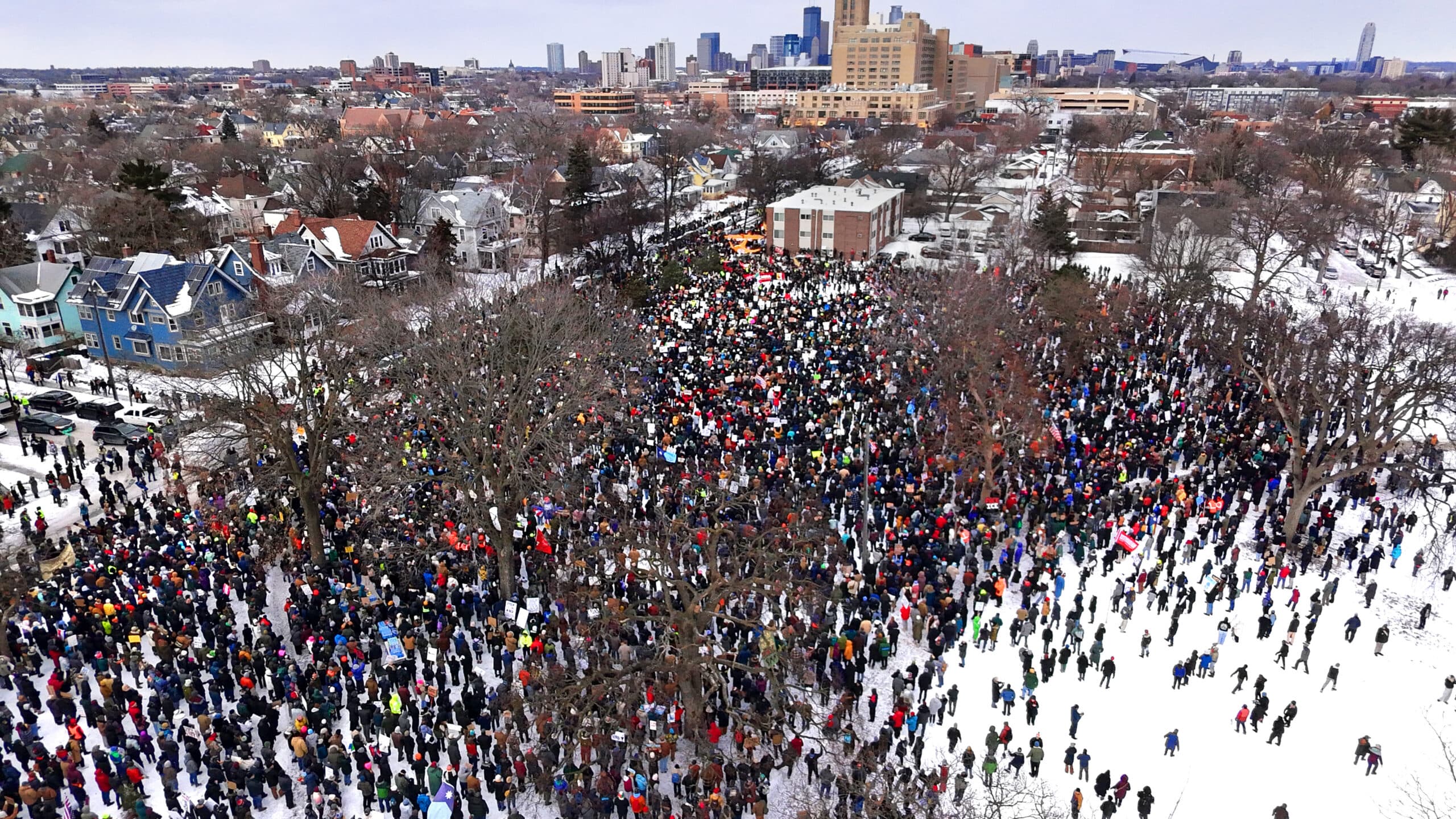
Drone pilots were warned that authorities could seize or destroy drones deemed a security threat and that civil and even criminal penalties could follow. The rule landed amid protests in Minneapolis after ICE and CBP officers killed two local residents.
Rob Levine, a long‑time Minneapolis photojournalist and licensed drone pilot, stopped flying and, with the help of the Reporters Committee for Freedom of the Press, sued the FAA in March. While the case was pending, the FAA quietly replaced the ban on 15 April with a softer “national security advisory” (NOTAM FDC 6/2824) that merely urges pilots to avoid certain federal operations but no longer imposes an outright prohibition.
3. Why this matters
The most important detail is not that the FAA backed down; it’s that such a rule was issued at all—and designed in a way that made compliance practically impossible.
Winners and losers are clear. Homeland security agencies gained an unprecedented bubble of de facto secrecy around their movements in cities, just as protests against immigration enforcement were intensifying. Journalists, activists and perfectly ordinary commercial operators—surveyors, construction firms, wedding videographers—suddenly had to worry that an unmarked SUV they couldn’t possibly identify would turn their lawful flight into a federal offense.
From a technical perspective, the rule weaponised the asymmetry built into modern drone regulation. In the US (and increasingly worldwide), pilots must register drones, broadcast Remote ID beacons and often file flight plans via approved apps. Authorities can see where drones are at any moment. But there is no equivalent feed for pilots to see where “protected” government assets are.
That is a civil‑liberties nightmare: the state becomes omniscient in the low‑altitude airspace layer, while citizens are kept deliberately blind. “National security” becomes a magic phrase to carve out pockets of unaccountable activity directly above public streets.
The immediate chilling effect was obvious. Levine stopped documenting protests from the air; others likely did the same. Even now, the revised advisory still tells pilots their drones can be seized or destroyed if deemed a threat—language guaranteed to scare risk‑averse operators away from filming immigration raids or heavy‑handed policing. You don’t have to formally ban aerial journalism if you can make it feel legally and physically dangerous.
This is why the case matters beyond drones: it’s a test of whether infrastructure‑level rules can be used to mute scrutiny of state power, without ever saying “you can’t film the police.”
4. The bigger picture
The FAA’s experiment slots into a wider pattern: using technical and safety regulation to achieve political goals that would be hard to pass through explicit free‑speech laws.
We’ve seen this before. During major US protests in the 2010s, temporary flight restrictions around cities like Ferguson and Baltimore made it harder for news helicopters to document police tactics. Around stadiums, summits and wildfires, drone bans have long been justified on safety grounds. The January 2026 rule stretched that playbook to its logical extreme: the protected area was no longer a stadium or a fixed federal building—but any vehicle that federal agents happened to sit in.
This also collides with a second trend: the normalisation of Remote ID and geofencing. In the US and EU alike, regulators are building a drone ecosystem where:
- Every compliant drone advertises its identity and position.
- Manufacturers hard‑code no‑fly zones provided by authorities.
- Low‑altitude airspace becomes a kind of networked infrastructure layer, managed by APIs.
In that world, the temptation is obvious: if you don’t want to be watched, you don’t argue with journalists—you draw a circle in software around yourself.
China has gone furthest down this path, with extensive geofencing and real‑name registration for consumer drones. Europe is building similar foundations under the EASA and U‑space frameworks, albeit with stronger legal safeguards. The US, with its fragmented mix of FAA notices and homeland security carve‑outs, risks inventing something more opaque: invisible, roving no‑fly bubbles that exist primarily in bureaucratic instruments and firmware.
For competitors and innovators in the drone industry, this kind of regulatory volatility is poison. If entirely lawful operations can suddenly become risky because an undisclosed law‑enforcement convoy might drive past, serious businesses will hesitate to build services on top of that airspace. The players that benefit most are not startups but security agencies and established defence contractors who thrive in murky, security‑driven procurement ecosystems.
5. The European / regional angle
For European readers, this case is a warning shot rather than a distant oddity. The ingredients already exist here.
The EU’s common drone rules (open/specific/ certified categories, mandatory registration, remote identification) create the same structural asymmetry as in the US: regulators and, increasingly, police can track compliant drones far more easily than citizens can track state aerial assets. U‑space, the EU concept for managing low‑altitude traffic via digital services, will only deepen that.
At the same time, European governments are steadily expanding police drone use over demonstrations, football matches and border regions. France has repeatedly pushed the limits of protest surveillance; Spain’s “gag law” has chilled the recording of police on the ground; several EU states flirted with restrictions on publishing images of officers. Courts and data‑protection authorities have pushed back, but the political appetite clearly exists.
Legally, a US‑style, moving, unmarked no‑fly zone would run into EU principles of legal certainty and proportionality, as well as the Charter’s free‑expression protections. GDPR also makes it difficult to justify blanket bans on citizen recording while the state records everything. But that doesn’t mean it can’t happen de facto.
The more drone control is shifted into manufacturer firmware and real‑time airspace services, the easier it is to exclude drones around “sensitive operations” with little transparency. A policing unit doesn’t have to ask parliament for a new law; it can ask the aviation authority or a U‑space provider to add a transient restriction. Unless lawmakers insist on audit trails, public notice, and clear rights to challenge such measures, Europe could end up in a softer version of the same place: technically legal, practically chilled.
6. Looking ahead
The Levine v. FAA lawsuit is not over, and that is crucial. If the case simply ended with the FAA swapping a hard ban for a soft advisory, the precedent would be dangerous: agencies could roll out sweeping speech‑impacting rules, then quietly withdraw them whenever a court challenge looms, avoiding any binding judgment on their authority.
The DC Circuit now has an opportunity to say something much more consequential: that if aviation rules materially burden newsgathering and the right to record public officials, they must meet a higher bar of clarity, necessity and narrow tailoring. Even a narrowly worded opinion on ambiguity and due process would echo far beyond drones.
Expect three things over the next 12–24 months:
- A push for more formal powers. If courts slap down ad‑hoc notices, homeland security agencies may lobby Congress for explicit statutory authority to create moving protected zones or to neutralise drones near operations.
- Pressure on manufacturers. DJI and its rivals already implement static geofencing; regulators may want dynamic feeds that let them draw temporary exclusion circles in real time. That shifts the battleground from law to firmware.
- European copy‑and‑paste attempts. As EU member states operationalise police drones and U‑space, some interior ministries will be tempted to ask for similar “security advisories” or time‑limited geofenced bubbles around operations.
For journalists, activists and commercial pilots, the response should be coordinated: demand transparency APIs for all restrictions, insist on independent oversight when “national security” is invoked, and treat control of the airspace layer as a core civil‑rights issue, not a nerdy regulatory detail.
7. The bottom line
The FAA’s retreat from moving, invisible no‑fly zones is a win, but a fragile one. It took a single determined drone pilot, backed by specialist lawyers and civil‑liberties groups, to stop a rule that was already chilling legitimate aerial reporting.
As drones become the default tool for seeing what authorities would rather keep out of view, the real battle will be fought not just in streets and courts, but in airspace notices, APIs and firmware updates. The question for readers—especially in Europe—is simple: who do you want drawing the digital boundaries of the sky above your protests, your cities and your borders?