1. Headline & intro
Galaxy S26: Samsung’s “agentic AI” phone is really about ecosystem lock‑in
Samsung’s Galaxy S26 launch isn’t about bezels, cameras, or even charging speeds. It’s about who gets to own the AI layer that will sit between you and every app you use. With the S26 family, Samsung is betting that “agentic AI” and tight Google partnerships will matter more than titanium frames or periscope zooms. If that’s true, the Android market is about to consolidate even further around a small club of AI gatekeepers. In this piece, we’ll unpack what actually changed, why prices jumped, and how this shifts power between Samsung, Google, regulators, and—last and least—users.
2. The news in brief
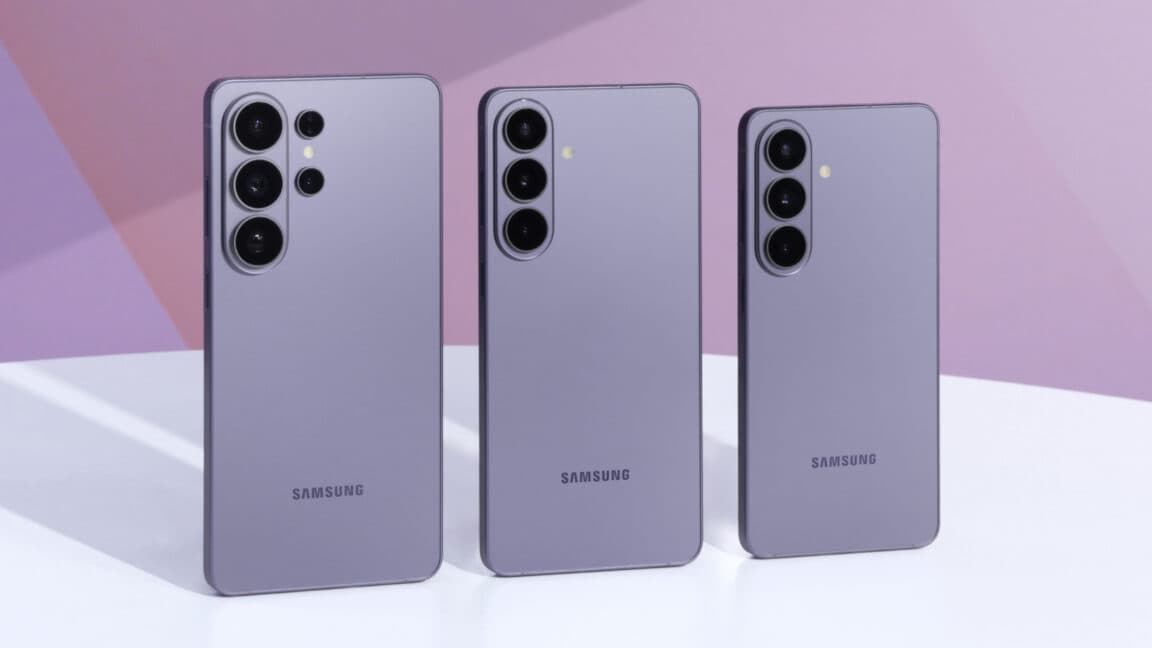
According to Ars Technica, Samsung has unveiled the Galaxy S26, S26+, and S26 Ultra, with preorders open now and deliveries starting around March 11. Hardware changes are modest: all three use a customized Snapdragon 8 Elite Gen 5 (3 nm) with upgraded CPU, GPU, and NPU, plus slightly tweaked batteries and thermals. The Ultra keeps its 200 MP main camera and S Pen but drops titanium for aluminum, while the base S26 gets a small battery increase.
The big story is software. Samsung is branding these as its first “Agentic AI phones”, with AI woven throughout the UI. New features include a Privacy Display mode using Black Matrix “narrow pixels” to reduce viewing angles, expanded on‑device AI for context‑aware suggestions (“Nudges”), an upgraded Now Brief assistant, and deeper Google Gemini integration that can perform multistep tasks in third‑party apps. There’s also a Perplexity‑powered “Ask AI” in Samsung’s browser and stronger AI photo editing with visible watermarks. Prices rise by $100 for the S26 and S26+, while the Ultra stays at $1,300.
3. Why this matters
The S26 launch confirms a shift we’ve seen building since 2023: the battle for smartphones is moving from hardware specs to AI orchestration. Samsung’s message is blunt—if phones can no longer meaningfully differentiate on screens, cameras, and chip performance, they will compete on how smart and proactive your “phone agent” is.
Who benefits?
- Samsung gains a clearer story for charging laptop‑class prices in a saturated market. It can keep hardware changes incremental while pointing to a growing list of AI features that cost more to run and license.
- Google quietly wins too. Gemini agents that can order an Uber or food in the background don’t just make Android “smarter”; they make Google the default broker for more of your daily transactions and app interactions.
Who loses?
- Smaller Android OEMs that lack deep AI partnerships or their own large‑scale models are being pushed into irrelevance. If “agentic AI” becomes the key selling point, access to top‑tier models and data will matter more than industrial design or a slightly bigger battery.
- Users pay higher upfront prices and become test subjects for early‑stage agents that even Google says should be “closely supervised”. You’re asked to hand over more context and more autonomy to systems that are still statistically guessing.
The Privacy Display is the rare truly user‑centric innovation here. In an era of banking apps, health data, and corporate email all on one slab of glass, a hardware‑level way to fight shoulder‑surfing is genuinely valuable—especially on public transport and in open offices. Ironically, the only clearly privacy‑protecting feature in this launch is not AI at all.
4. The bigger picture
The S26 sits at the intersection of several trends that have been building for years.
First, it continues the AI‑first phone arc that started with things like Google Assistant, Bixby, and later generative features on the Galaxy S24 and Pixel 8 series. The difference now is ambition: we’re moving from “smart replies” and photo magic erasers to systems that can act on your behalf—placing orders, coordinating between apps, and making decisions without you tapping anything.
Google’s Pixel 10 line, mentioned in the Ars Technica piece, is experimenting in the same direction with features like Magic Cue and multi‑object Circle to Search. What Samsung is doing with Gemini agents on the S26 is essentially importing that Pixel playbook into the mainstream Android flagship line that actually sells in volume.
Second, this reflects the plateau of smartphone hardware. By 2026, 120 Hz OLED, high‑end camera stacks, and absurdly fast SoCs are table stakes. Samsung can’t justify annual premium prices with “10% faster” anymore; instead, it needs a narrative that your current phone is missing key capabilities you’ll genuinely feel. AI that emails your boss, books your taxi, and recaps your notifications is far easier to market than a slightly wider aperture.
Third, the S26 underlines the convergence of OS and cloud AI. Historically, Android was the platform and Google’s cloud services were just apps. With Gemini agents performing workflows inside other apps, that boundary blurs. Your phone OS, your browser, and your AI agent are starting to merge into one experience layer—and whoever controls that layer controls distribution, data, and monetization.
This is exactly why Apple is racing to frame its own AI push around “on‑device” and privacy, and why Microsoft is embedding Copilot into Windows. Samsung doesn’t own a frontier model, so it’s choosing alliance over autonomy—and hitching its future to Google’s cloud.
5. The European / regional angle
For European users, the S26 is a case study in how the new EU AI Act, GDPR, and the Digital Markets Act (DMA) will collide with the AI‑phone vision.
On the plus side, Samsung’s emphasis on on‑device processing for features like Now Brief and Nudges plays well with GDPR. If the data that fuels your context‑aware assistant never leaves the device, many of the thorniest consent and cross‑border transfer issues are reduced. Expect Samsung’s EU marketing to lean heavily on this angle.
But the story is more complex with Gemini agents and Perplexity’s “Ask AI”. These features almost certainly rely on cloud‑based large models, which brings in AI Act transparency requirements and GDPR obligations around profiling and automated decision‑making. If your phone agent orders a taxi to the wrong address or misinterprets a message from your bank, who’s accountable—the OEM, the model provider, or the app? European regulators will want clear answers.
The DMA adds another wrinkle. Google is a designated gatekeeper in the EU, which limits how it can bundle services and steer users. If Gemini becomes the de facto orchestrator of tasks in apps like Uber or food‑delivery services, competition authorities will examine whether rivals get equal access to this “agent layer” or whether it becomes a new kind of default that disadvantages smaller players.
For European carriers and retailers, Samsung’s move is double‑edged. On one hand, premium AI positioning helps justify high contract prices. On the other, sales staff will now have to explain opaque concepts like “agentic AI” and regulatory fine print instead of showing off cameras and screens.
6. Looking ahead
Over the next 12–24 months, the S26 will be our first large‑scale test of how comfortable people really are with delegating actions to AI agents on a phone.
Three things to watch:
- Reliability and trust. Early agent demos look slick when ordering fast food or calling a car. The real question is how they handle edge cases—mixed‑language chats, last‑minute changes, or anything involving money and legal commitments. One or two high‑profile failures could sour users on “auto‑pilot phones” for years.
- Data controls and defaults. Power users will dive into settings to disable or tightly scope what the agent can see and do. The average person won’t. How aggressive Samsung and Google make the default nudges, data sharing, and automation will determine whether regulators step in or let the experiment run.
- Trickle‑down to midrange devices. Today, “Agentic AI phone” is a flagship slogan. But genuine ecosystem change only happens when these features arrive in €400–€600 phones that dominate sales in Europe and emerging markets. That will stress test whether on‑device NPUs are really ready, or whether cloud fees make full‑fat AI a luxury feature.
Expect Samsung to ship multiple waves of feature updates during the S26 lifecycle, gradually expanding the set of apps Gemini can drive and the complexity of tasks it can handle. Parallel to that, we’ll almost certainly see guidance from Brussels and national regulators clarifying how AI agents on consumer devices must disclose their actions, log decisions, and respect data‑minimization.
The big risk for Samsung is user fatigue: if “AI everywhere” translates into nagging prompts, half‑baked nudges, and unexplained background actions, people will hunt for the off switch—and cheaper phones without the AI tax will look more attractive.
7. The bottom line
The Galaxy S26 series is less about faster chips and more about who mediates your digital life. Samsung is trading bold hardware moves for a bet on AI agents tightly coupled to Google’s ecosystem—and asking you to pay more for the privilege. Whether that gamble pays off depends on a fragile mix of reliability, transparency, and regulatory tolerance. Before you upgrade, ask yourself a simple question: how much of your daily decision‑making are you really ready to outsource to a black‑box model in your pocket?