Headline & intro
TV shoppers have been drowning in alphabet soup for years: QLED, NanoCell, ULED, Neo QLED, Mini-LED, QNED. Now a German court has effectively said: one of those labels, at least in TCL’s case, went too far. By banning TCL from advertising certain models as “QLED”, judges in Munich have turned a long‑running nerd debate about quantum dots into a mainstream consumer‑protection story.
This piece looks at why the ruling matters far beyond Germany, how it could reshape the TV spec-sheet arms race, and what it tells us about the coming collision between marketing creativity, materials science, and increasingly assertive regulators.
The news in brief
According to Ars Technica, a court in Munich has prohibited TCL from marketing some of its televisions as QLED (quantum dot light‑emitting diode) sets in Germany. The decision follows a lawsuit filed by Samsung, which argued that certain TCL models sold in Europe, including the QLED870 series, did not use quantum dots in a way that actually improves color performance.
The court reportedly concluded that TCL employed only very small amounts of quantum dot material on a diffusion plate, and that this did not deliver the color enhancement a consumer would reasonably expect from a QLED product.
The ruling comes after earlier, Samsung‑commissioned tests by Intertek suggested that several TCL models contained minimal levels of cadmium and indium—elements typically associated with quantum dot implementations. In parallel, TCL and Hisense face class‑action lawsuits in the US over similar QLED marketing claims. TCL did not comment to Ars Technica on the German decision.
Why this matters
The Munich ruling is more than a skirmish between two TV giants; it’s a direct challenge to how the industry has been allowed to talk about advanced display tech.
For consumers, the core issue is simple: you pay a premium for “QLED” because you expect a clearly better picture—wider color gamut, higher brightness, more accurate colors. If a TV only sprinkles trace amounts of quantum dot material into a conventional LCD stack, and the color performance is basically that of a standard LCD using phosphors, then the premium label becomes a tax on ignorance.
For TCL, this is strategically dangerous. The company has been moving aggressively upmarket, positioning itself as a credible alternative to Samsung and LG not just in budget segments but also for higher‑end sets. Negative headlines around misleading QLED claims undermine that upgrade narrative just as TCL is trying to convince buyers (and retailers) that it belongs on the same shelf as the Korean and Japanese incumbents.
For Samsung and others, the decision is a double‑edged sword. In the short term, Samsung looks like the defender of “real” quantum dots. But the same logic can and likely will be applied to every vendor: if a supposedly QLED TV relies mostly on cheaper phosphors, heavy picture processing, or “vivid” picture modes rather than genuine quantum dot advantages, it is now a legal and reputational risk.
The immediate implication: TV brands will have to align their marketing much more closely with measurable materials and performance characteristics, not just clever acronyms.
The bigger picture: the end of buzzword inflation?
The TCL case is the latest chapter in a long history of TV marketing stretching technical terms until they snap.
We’ve seen this movie before: “LED TVs” were, and still are, LCD TVs with LED backlights. “HDR” ranges from truly impressive implementations to barely perceptible differences. Motion smoothing labels often describe aggressive interpolation rather than native panel speed. Each time, a real technology breakthrough gets diluted as more and more products try to ride the same brand halo.
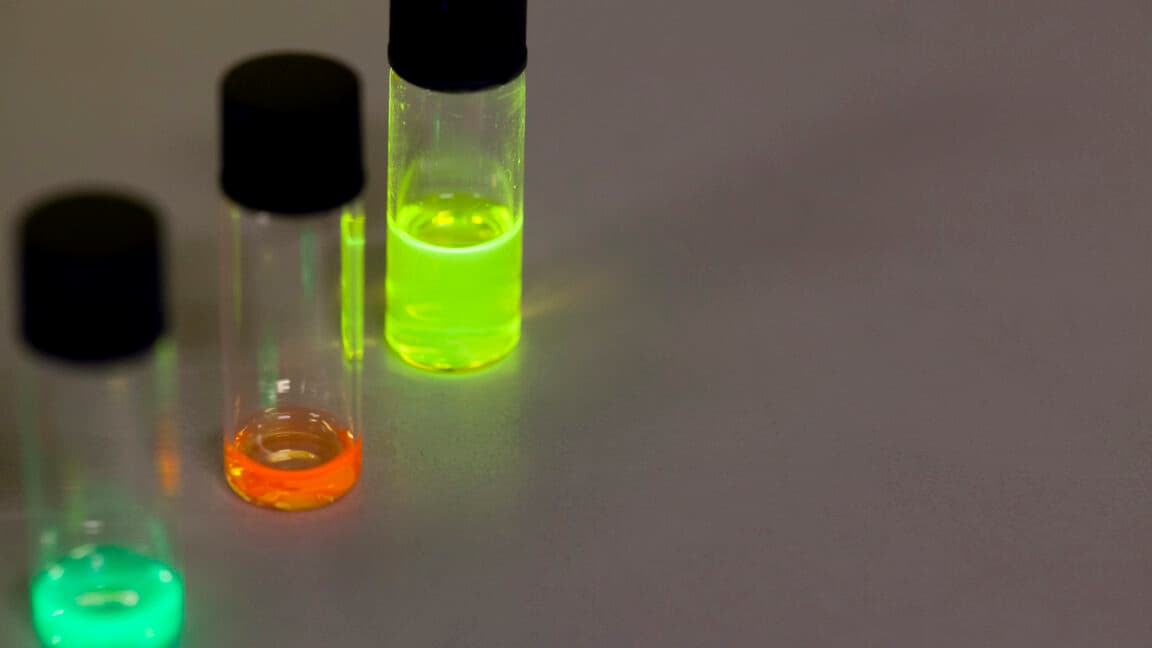
Quantum dots were supposed to be different: an actual materials‑science innovation that, when used properly, delivers narrow, precisely tuned spectra and therefore richer, more stable colors. TÜV Rheinland and quantum dot supplier Nanosys have already argued that a “true” QD display should be defined by both material concentration and observable optical behavior—color volume at high luminance, spectral precision, and stability over time, not just a headline color‑gamut percentage.
The German verdict implicitly supports that direction of travel. If courts start asking not “Is there any quantum dot powder in here?” but “Does this implementation produce the benefits that consumers associate with quantum dots?”, then the industry is being pushed toward performance‑based definitions instead of chemistry‑based loopholes.
Competitively, this matters because display tech is converging around a few big camps: OLED (and QD‑OLED), high‑end LCD with mini‑LED and quantum dots, and everything else. If QLED as a label becomes more tightly policed, it could sharpen the differentiation between these camps, making it harder for low‑cost LCDs with only cosmetic enhancements to masquerade as premium.
In other words, we may be entering the hangover phase of a long buzzword binge.
The European angle: from energy labels to "display truth"
Europe is uniquely positioned to turn this German case into a broader reset of TV marketing.
EU consumer law already treats misleading commercial practices as a serious offence, and Germany has a long tradition of strict enforcement of unfair competition rules. If German courts are now willing to dissect quantum dot stack designs and color‑gamut measurements, it is not a big leap to imagine similar cases elsewhere in the EU—or a coordinated push from Brussels for clearer, harmonised definitions.
There is also a precedent: the EU’s energy‑efficiency label. For all its quirks, it forced manufacturers to design around a standardised, testable metric and gave consumers a simple A–G scale. Something analogous for display performance—minimum criteria for using terms like QLED, QD‑OLED, or Mini‑LED—would fit neatly into the EU’s wider agenda on green claims, digital fairness, and platform transparency under the Digital Services Act.
For European buyers and retailers, this is not academic. The European TV market is both price‑sensitive and highly informed. Chains and e‑commerce players already have to juggle dozens of overlapping branding schemes from Korean, Chinese, Japanese, and European manufacturers. A clearer, enforceable technical baseline would reduce returns, simplify staff training, and make comparison tools more meaningful.
And for European challengers in the display supply chain—materials firms in Germany, France, or the Nordics—stricter definitions of what counts as “real” quantum dots could reward genuine innovation rather than clever packaging.
Looking ahead: from courtrooms to spec sheets
The most likely short‑term outcome is more litigation and behind‑the‑scenes negotiation. The German ruling strengthens the hand of plaintiffs in the US class‑action cases against TCL and Hisense, where the central question is essentially the same: did buyers pay for QLED performance that they did not receive? Expect those cases to cite the Munich decision heavily in settlement talks.
If regulators smell a pattern, we could see national consumer‑protection authorities or the European Commission step in. Within the next two to three years, I would not be surprised to see:
- Industry‑backed certification labels: similar to “Calman Ready” or THX Video certifications, but focused on quantum dot implementation and measurable color‑volume behavior.
- Stricter voluntary standards from testing houses like TÜV, Intertek, or UL, which retailers and premium brands can adopt to signal trustworthiness.
- Updated guidance on misleading environmental or performance claims, extending the EU’s existing work on greenwashing into the gadget space.
For TV brands, the opportunity is to turn transparency into a selling point. Imagine spec sheets that clearly state: type of backlight, whether quantum dots are used for color conversion, measured color volume at a given luminance, and optional independent certification. That’s more work than slapping on a three‑letter logo—but it’s also a way to stand out as the noise level rises.
The risk, of course, is that the industry responds with even more confusing micro‑labels instead of fewer, better ones. If every vendor invents its own definition of “true QLED”, we’re back where we started, just with extra paperwork.
The bottom line
Germany’s decision to strip the QLED badge from some TCL TVs is a warning shot to the entire TV industry: buzzwords are no longer free. When marketing terms tied to specific technologies become detached from actual materials and performance, courts and regulators are increasingly willing to step in.
For consumers, this is good news—but only if it leads to simpler, verifiable information, not another round of branding games. The open question is whether TV makers will voluntarily converge on honest, testable standards for labels like QLED, or wait until Europe writes those standards for them.