1. Headline & intro
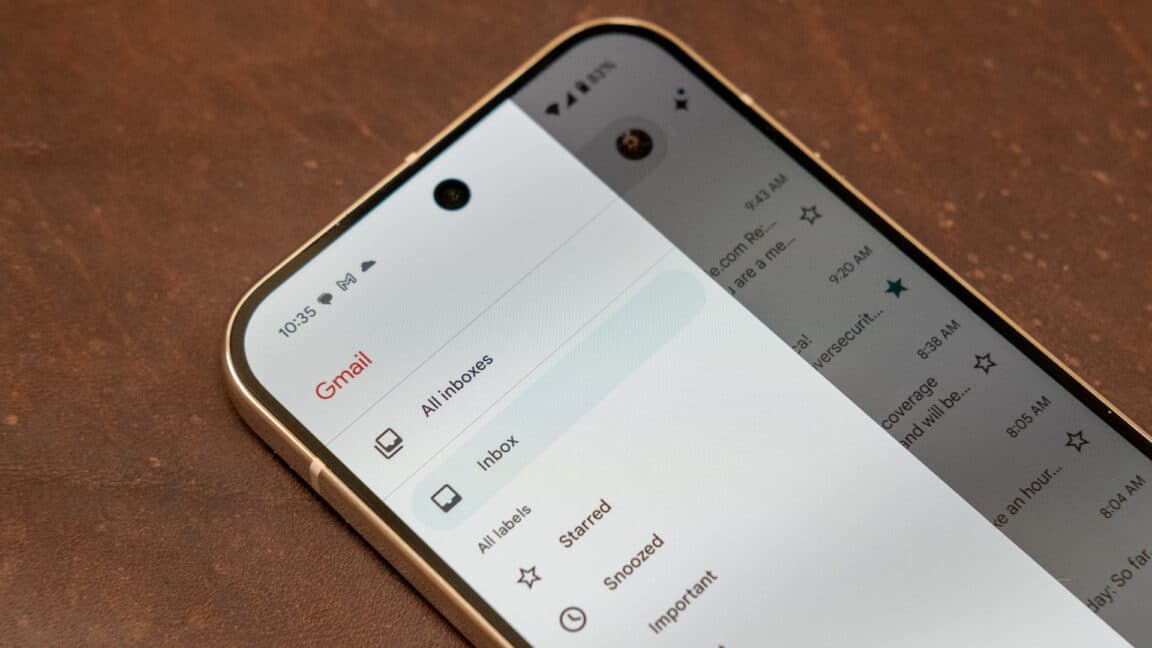
For more than two decades, your Gmail username has been effectively carved in stone. If you picked something goofy in 2004, the only serious way to fix it was to abandon that account entirely. Google is now finally relaxing that rule – starting in the US – and letting people change the actual @gmail.com address tied to their main account.
On the surface this is a quality‑of‑life tweak for anyone saddled with an embarrassing handle. Underneath, it’s a strategic move in how Google thinks about identity, lock‑in, and its obligations as a global gatekeeper. Let’s unpack what’s really changing here – and what it means if your digital life runs on a Gmail login.
2. The news in brief
According to Ars Technica, Google has started rolling out a long‑requested feature that lets users in the US change the username portion of their Gmail address – the part before @gmail.com – without creating a new account. The rollout began on 31 March 2026, coinciding with Gmail’s 22nd anniversary.
Key points:
- The feature is appearing on Google’s account management page for US‑based users, with a gradual rollout.
- You can choose a new Gmail address, keep all existing data (emails, Drive files, purchases, etc.), and continue receiving mail sent to the original address.
- Both the old and new addresses can be used to log in.
- Google currently limits changes to once every 12 months, likely as an anti‑abuse measure.
- Some services – including parts of Google’s own ecosystem and third‑party apps – may still display the original address for a while.
- There are technical caveats: Chromebook users must sign out and back in, and Chrome Remote Desktop pairings need to be re‑set.
The change was previously tested on a smaller scale in the US and some international markets, but full availability outside the US remains unclear.
3. Why this matters
This is one of those deceptively small product changes that touches almost everything. Your Gmail address is not just an inbox – it is the login for your phone, your app store purchases, your YouTube history, your smart home, your cloud documents, and thousands of third‑party services that rely on “Sign in with Google”.
The obvious winners are people whose lives have changed faster than their usernames: professionals who outgrew teenage nicknames, people who changed their names after marriage or transition, and small businesses that started life on a personal @gmail.com account and now want a more serious identity without breaking everything.
But the less‑obvious winner is Google itself. One of the few frictions that could push a heavy Gmail user to switch providers was the need to start over with a fresh account. By letting you refresh your address without losing any data or logins, Google removes that pressure point. You keep the same account spine, just put a new face on it.
That has consequences:
- Lock‑in is strengthened. Changing your digital identity while staying inside Google’s walls becomes easier than leaving for Outlook, Proton Mail or a custom domain.
- Third‑party developers pay the tax. Many older systems still treat an email address as the primary key for a user account. Those services now have to handle changing Gmail identifiers gracefully – or face support headaches when users appear to “change identity” overnight.
- Abuse and impersonation risks shift. A once‑per‑year limit curbs rapid cycling through identities, but more flexible naming means more scope for confusingly similar addresses and potential phishing attempts.
In short: users gain much‑needed flexibility, but the structural power of the Google account as a near‑permanent identity layer only grows.
4. The bigger picture
Zoom out, and this move fits a broader trend: the gradual separation of identity from addresses in consumer tech.
Microsoft has long allowed Outlook.com users to create aliases and even promote one to be the primary sign‑in name, without losing access to the old address. Apple lets you change the Apple ID email used for login, while keeping purchases and iCloud content intact. Social networks like X (Twitter), Instagram and TikTok let you change your handle without losing followers.
Google has been unusually rigid by comparison. For years you could tweak the display name on your account, but the actual @gmail.com address was treated as untouchable. The main reason is technical: deep inside Google and across the wider web, that string of characters is hard‑coded as the unique identifier for billions of users. Changing it without breaking logins, sharing links, calendar invites and API connections is non‑trivial.
The new feature signals that Google has now built a more robust aliasing model under the hood: one primary identifier for internal systems, and one or more human‑readable addresses that can float on top. That architecture unlocks more than just vanity changes. It’s the same kind of plumbing you’d need for:
- multi‑person identities (family accounts, shared home accounts),
- better separation of work and personal profiles on one device,
- and, eventually, more portable identities that can plug into third‑party ecosystems under regulatory pressure.
This change also lands in a moment when regulators and users are questioning the power of “logins as leverage”. If your email address and sign‑in method are welded to one giant platform, it’s harder to leave. Making that identity layer more flexible can be framed as user‑friendly – but it can just as easily be a pre‑emptive adaptation to the new regulatory climate.
5. The European / regional angle
Although the full rollout is currently US‑only, the implications for Europe are hard to ignore. Gmail is deeply embedded across the EU as the de‑facto identity layer for everyday life: from Android phones and YouTube to school portals and small‑business workflows.
On the regulatory side, several themes intersect:
- GDPR and data accuracy. People whose legal name or gender marker has changed have long faced friction keeping their digital identifiers consistent. A more flexible Gmail address helps reduce that gap between “official” and “platform” identity.
- Digital Markets Act (DMA). Google is classified as a gatekeeper in the EU. One of the DMA’s core goals is to reduce switching costs and prevent platforms from locking users in. Seen through that lens, address changes are double‑edged: they give users more control inside Google’s ecosystem, but also make it less attractive to switch away entirely.
- Interoperability and data portability. The more tightly your Google account is bound to work, education and government‑adjacent services, the more important it becomes that identifiers can be managed, corrected and – eventually – ported.
If and when this feature reaches EU users, the framing will matter. Regulators may see it as a positive step toward user agency, but they could just as plausibly argue that it makes structural dependence on a single US‑based identity provider even harder to unwind.
For European enterprises and public institutions that rely on Gmail or Google Workspace, there’s also a governance angle: clearer policies will be needed on when employees or citizens can change the email address tied to key records, and how audit trails remain intact.
6. Looking ahead
Several open questions make this more than a one‑day headline.
First, scope. Google’s wording suggests this is not a mere alias, but a true switch of the primary address with the old one remaining attached. What happens if, over a decade, a user changes addresses multiple times? Ars Technica notes that Google says you cannot delete the new addresses. Do we end up with sprawling chains of undeletable aliases, each of which might appear in someone’s inbox history, contact lists or old invoices?
Second, policy. A once‑per‑year limit is a crude but understandable anti‑abuse shield. Over time we should expect more nuanced rules: perhaps higher limits for verified accounts, or stricter controls in sensitive contexts like Workspace domains, education tenants or child accounts.
Third, global rollout. Given how central Gmail is outside the US, limiting this feature permanently to one country would be hard to defend. A reasonable guess is a phased expansion: English‑speaking markets first, then wider availability once Google has seen how often people actually change addresses and what breaks in the process.
From a user’s perspective, the strategic advice is simple:
- Treat an address change as a serious event, not cosmetic tinkering. You may not get another shot for a year.
- Use the opportunity to separate professional and personal identities if you’ve been mixing them.
- Keep an eye on critical third‑party services (banks, tax portals, healthcare, government logins) to ensure they respond correctly to your new address.
The real risk is subtle: users may feel freer to reshape their digital identity without ever questioning whether they should diversify away from a single platform as their sole login to the internet.
7. The bottom line
Allowing Gmail users to change their address without throwing away an entire account is overdue, humane and technically impressive. It will fix countless awkward CVs and out‑of‑date identities. But it also reinforces Google’s role as the backbone of personal identity online, making it even harder – psychologically and practically – to walk away.
If you could redesign your digital identity from scratch today, would you still build it entirely on one company’s login? Or is this the moment to use Google’s new flexibility as a trigger to rethink how many eggs you keep in that particular basket?