1. Headline & intro
Streaming was supposed to kill the cable bundle and save us money. Instead, many households now juggle half a dozen subscriptions, rising prices, and more ads than ever. In that environment, Roku’s Howdy – a $3 per month, ad‑free service built mostly from older movies and series – looks almost like a bug in the matrix.
According to new estimates, this very modest offering has quietly passed 1 million subscribers. That milestone matters far beyond Roku. It challenges the assumption that only blockbuster originals and fresh releases win. In this piece, we’ll unpack what Howdy’s early success says about price, content, and where the streaming market is really heading.
2. The news in brief
As reported by Ars Technica, citing research firm Antenna, Roku’s Howdy subscription video service has surpassed the one‑million‑subscriber mark roughly six months after launch.
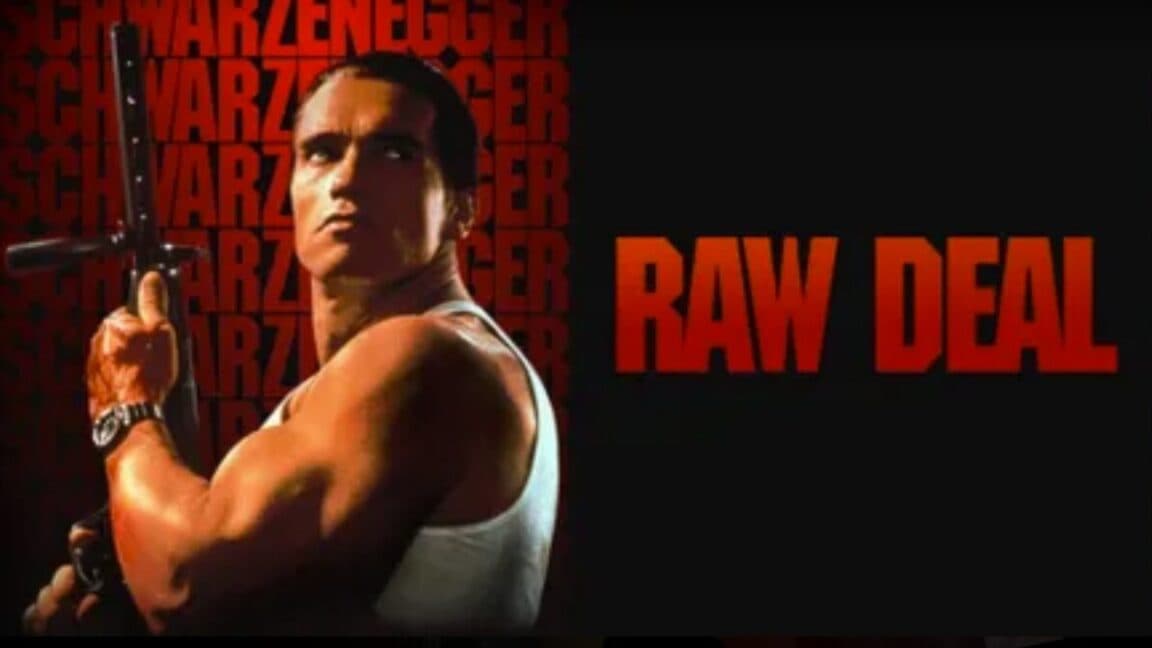
Howdy debuted in August 2025 at $2.99 per month in the US. It offers an ad‑free catalogue that leans heavily on older films and TV shows rather than current cinema releases or prestige series. According to Antenna’s estimates, around 300,000 users joined at launch, with roughly 100,000 additional sign‑ups each month afterward.
Initially, Howdy was available only inside The Roku Channel, Roku’s free, ad‑supported streaming environment. In March 2026, distribution widened: users could subscribe via Amazon Prime Video Channels and through standalone iOS and Android apps.
Antenna’s data also suggests Howdy is keeping users: just over half of those who joined in the first two months were still paying six months later, outperforming average retention rates for both broad “premium” and niche streaming services. Roku has not confirmed the figures but has publicly described Howdy’s early performance as encouraging.
3. Why this matters
Howdy is not impressive on paper. Its catalogue is dominated by back‑catalogue titles from the 80s, 90s and 2000s. There are no water‑cooler originals, no weekly social‑media frenzies. Yet people are paying for it and, crucially, not cancelling at the usual rate.
That tells us several important things about the current streaming moment.
First, price sensitivity is real. After years of relentless price hikes and the spread of ad‑supported tiers, a sub‑$3, ad‑free subscription hits a psychological sweet spot. It sits firmly in the “why bother cancelling?” zone. This is visible in the retention data: at such a low price, the annoyance of a forgotten subscription is lower than the annoyance of micromanaging it.
Second, "good enough" content is massively underrated. There is a large audience that wants something to watch in the evening, not necessarily the latest premium release. A deep bench of older but recognisable titles is more than adequate when the cost is closer to a cup of coffee than to a full meal.
Third, Howdy is strategically valuable to Roku beyond direct revenue. It deepens engagement inside Roku’s own ecosystem, especially among users of The Roku Channel who are already used to free, ad‑supported viewing. Howdy converts some of those viewers into paying customers without forcing them to leave Roku’s environment for Netflix or Disney+.
The losers here are the mid‑tier services that are neither cheap nor essential. If you charge $10–$15, show ads, and lack must‑see content, Howdy’s growth is a warning sign: a portion of viewers is willing to downshift from “almost premium” to “good enough and cheap.”
4. The bigger picture
Howdy’s early traction fits into several broader industry trends.
Over the past two years, the big names – Netflix, Disney+, Hulu, HBO Max/Max, Paramount+, Peacock – have all raised prices, pushed ad‑supported plans, or both. At the same time, they have tightened password sharing and pulled back on risky content investments. The dream of "all the TV you want for $8" is gone.
Parallel to this, free ad‑supported streaming television (FAST) platforms like Pluto TV, Tubi, and The Roku Channel itself have grown quickly. These services lean heavily on library content presented as themed channels: crime dramas, classic films, 90s sitcoms, and so on. People clearly like inexpensive, lean‑back viewing, even with ads.
Howdy sits squarely between these two poles. It is a paid service but priced closer to free than to premium. It offers the same kind of library you might see on a FAST channel, but without the ad load. In other words, it monetises the same long‑tail content twice: once with ads on free platforms, and a second time as a low‑cost, ad‑free upgrade.
Historically, this is closer to the “basic cable” tier of old than to the Netflix era of originals. Cable bundles always had a large slab of channels that nobody subscribed to individually, but which filled hours of background viewing. Howdy is that layer, unbundled into a tiny, cheap product.
Competitively, this should worry both premium streamers and hardware makers. Amazon and Apple already use their own channels infrastructure to sell third‑party services; Roku is going further by building its own budget SVOD brand on top. If Howdy scales, expect others to copy the playbook: repackage existing catalogues into ultra‑cheap, ad‑free micro‑subscriptions designed to reduce churn and secure more wallet share.
5. The European / regional angle
Roku’s footprint in Europe is still patchy compared to North America, and Howdy is currently a US‑focused experiment. But the underlying model is highly relevant for European markets.
European households are at a similar crossroads: multiple subscriptions, rising prices, and growing fatigue. Local champions such as RTL+ and Joyn in Germany, Canal+ and myCanal in France, SkyShowtime in various markets, or Rakuten TV and Movistar+ in Spain are all grappling with how to keep users from canceling between seasons of flagship shows.
A Howdy‑style offer – very cheap, ad‑free, built from older local and US catalogues – could act as a stabiliser layer in these portfolios. It could be bundled into telecom offers, or used as an upsell from free, ad‑supported services that many European broadcasters already run.
Regulation adds extra spice. Under EU rules like the Audiovisual Media Services Directive, streamers must carry a quota of European works. That actually makes the Howdy approach easier: older European films and series can be relicensed relatively cheaply to fill out a catalogue. Meanwhile, the Digital Services Act (DSA) and GDPR constrain how aggressively platforms can profile viewers for ads, which increases the appeal of a low‑price, ad‑free tier that doesn’t depend on hyper‑targeted advertising.
For European users, the big question is whether local players – or eventually Roku itself – decide to experiment with this model. In lower‑income regions of the EU and in neighbouring markets like the Balkans or Eastern Europe, a genuinely affordable, ad‑free library could be more attractive than yet another premium service.
6. Looking ahead
Howdy is still tiny compared to the giants, but it’s an instructive test case. Over the next 12–24 months, several scenarios are worth watching.
First, pricing. Can Roku hold the $2.99 line as it adds somewhat newer titles, as its content chief has hinted, or will the classic streaming pattern repeat: improved catalogue, then higher prices, then eventually an ad tier? If that happens, Howdy risks losing the very differentiation that made it interesting.
Second, bundling. Roku already uses The Roku Channel as a hub for aggregating third‑party services. Howdy gives it one more lever for bundle experiments: hardware plus Howdy, or Howdy plus premium partners at a small discount. If those bundles work, expect Amazon and telecom operators to respond with their own ultra‑cheap, ad‑free add‑ons.
Third, international expansion. Rights are complicated, and Roku has been cautious outside North America, but the economics of library‑heavy services are actually favourable for global roll‑outs. The same film from 1995 can be relicensed in multiple territories at a fraction of the cost of producing new content. If Howdy appears in the UK, Germany or Latin America in the next wave, that’s a sign Roku sees this as more than a side project.
The main risk is complacency. A service like Howdy works precisely because it is simple, cheap and unpretentious. If it chases the prestige arms race, it will be swallowed by it. The opportunity lies in the opposite direction: becoming the default subscription you never cancel because it quietly fills the gaps between your must‑have shows.
7. The bottom line
Howdy’s early success doesn’t mean the streaming wars are over; it means they’re fragmenting. There will still be room for Netflix‑scale giants and for free, ad‑stuffed platforms. But Howdy proves there is also space in the middle: no‑frills, low‑cost services built on "good enough" content.
For viewers, the practical question is simple: would you rather cut one pricey subscription and keep a couple of cheap, boring but reliable ones instead? The next phase of streaming may be decided less by the hottest new series and more by how we answer that.