Headline & intro
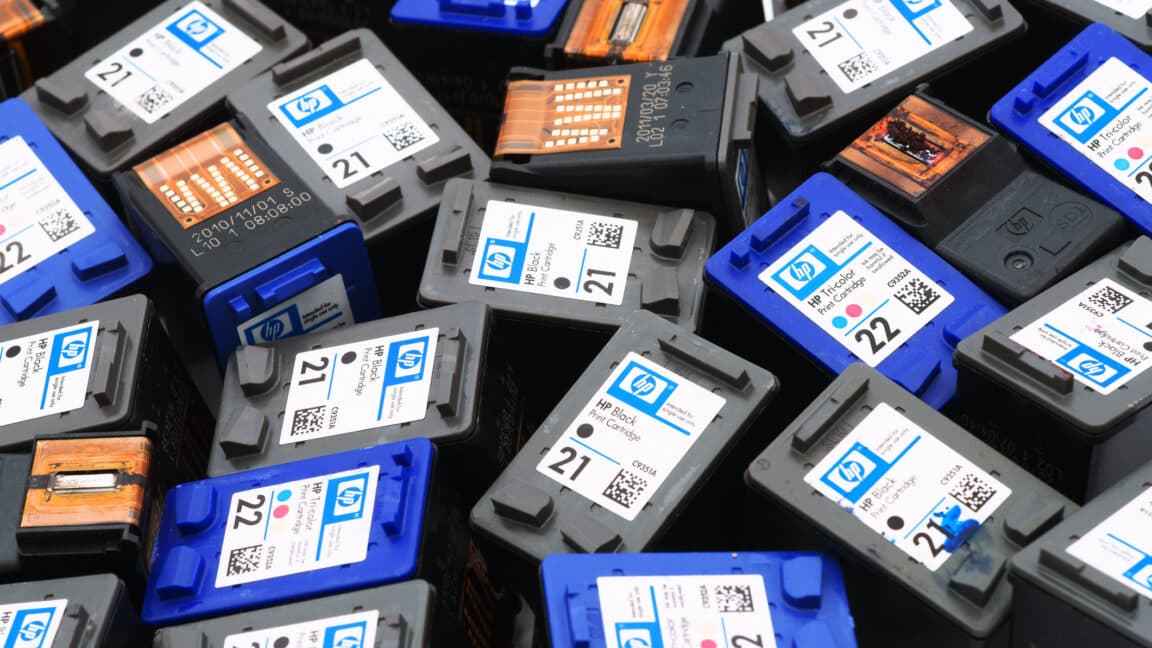
HP’s long-running war on third‑party ink has mostly been a PR headache and a consumer annoyance. EPEAT 2.0 turns it into something more dangerous: a potential business liability. If sustainability labels start to penalise vendors that remotely disable compatible cartridges, the economics of printer DRM begin to shift. In this piece, we’ll unpack why a niche-sounding standards update could matter far beyond printer nerds, what it reveals about HP’s strategy, and how it might reshape the market for everything from office MFPs to your home inkjet.
The news in brief
According to Ars Technica, a US trade association, the International Imaging Technology Council (Int’l ITC), has accused HP of pushing new firmware that disables third‑party ink and toner in several printer models.
HP markets this behaviour under the label Dynamic Security, and has used it for years: a software update checks cartridges’ chips and refuses to work with those it doesn’t like. The latest update, firmware 2602A/B, was rolled out in late January 2026 across around a dozen models, including older OfficeJet Pro devices.
The timing matters because a revised sustainability registry, EPEAT 2.0, went live in December 2025. Its criteria explicitly say that products on the registry must not use updates to block remanufactured cartridges. The Int’l ITC argues HP’s behaviour runs directly against the spirit of those rules. HP did not comment to Ars.
Why this matters
On the surface, this looks like just another round in the eternal ink price war. In reality, it is a test of whether sustainability frameworks have teeth when they collide with highly profitable business models.
HP’s consumer printer margins increasingly depend on the classic razor‑and‑blades strategy: sell hardware cheap, recoup profit on original cartridges or subscription ink services. Anything that preserves that lock‑in – like firmware that rejects rival chips – directly protects revenue. The losers are obvious: consumers paying more for ink, independent remanufacturers, and the environment, which absorbs the waste of cartridges that could have had a second or third life.
EPEAT 2.0 changes the calculus. While today there are only a small number of products listed under the new criteria and no printers yet, the scheme is influential in public procurement and large corporate buying, especially in North America but increasingly abroad. Governments and enterprises like EPEAT because it lets them outsource part of their due diligence on energy use, materials and circularity.
If Dynamic Security is seen as incompatible with EPEAT 2.0, HP risks more than social‑media backlash. It risks losing access to high‑volume, high‑margin institutional contracts that explicitly require EPEAT compliance or equivalent. That is a much more powerful incentive to adjust behaviour than angry Reddit threads about bricked ink.
From a security and trust perspective, the story also matters. HP justifies these lockouts using the vocabulary of safety and cyber risk. When a security update quietly enforces a business model instead, customers learn to distrust updates. That is bad for the broader ecosystem at a time when we actually need users to install patches quickly.
The bigger picture
HP is not alone in using software to control hardware after it leaves the factory. From tractors that refuse unauthorised repairs to cars that brick features when subscriptions lapse, post‑sale control is one of the defining corporate impulses of this decade. Printer firmware is simply one of the most visible and user‑hostile incarnations.
The backlash is growing. Right‑to‑repair legislation from the US to the EU is chipping away at vendors’ ability to use software locks to block independent service and compatible parts. Consumer regulators have begun to question whether advertising a printer as accepting third‑party cartridges, then later disabling them via update, drifts into deceptive practice.
Within printing, we are also seeing alternative models gain ground. Tank‑based ink systems from several manufacturers, which ship with large refillable reservoirs, reduce the temptation to play extreme margin games on tiny cartridges. Some office‑grade devices now expose open interfaces specifically designed to support remanufactured consumables as part of corporate sustainability drives.
Compared with competitors, HP has doubled down unusually hard on DRM‑style controls and subscription ink. That may have pleased investors in the short term, but it also makes HP the natural lightning rod for standards bodies, NGOs and regulators looking for an example.
The EPEAT 2.0 dispute signals a broader shift: sustainability labels are moving from vague green badges to prescriptive, testable requirements. Once a criterion explicitly says “you may not use updates to disable remanufactured cartridges,” vendors can no longer hide behind glossy sustainability reports while quietly bricking third‑party supplies in firmware release notes.
The European and regional angle
For European buyers, this fight is less about North American trade associations and more about how different frameworks start to reinforce each other.
The EU’s Ecodesign and upcoming Right to Repair rules, plus national eco‑labels like Germany’s Blue Angel, already push printers toward repairability, long‑term support and reuse of consumables. EPEAT 2.0 pulls in the same direction. Even if EPEAT is a US‑based registry, many European institutions recognise it in green procurement policies, or map its criteria onto their own.
If a future HP printer wants to tick all the boxes – EPEAT 2.0, Blue Angel, compliance with new EU circular‑economy rules – aggressive firmware lockouts on cartridges become hard to justify. That is particularly true for public tenders, where procurement documents increasingly demand demonstrable support for remanufactured parts and low lifetime environmental impact.
For European SMEs, schools and households, the practical issue is cost and predictability. Third‑party or remanufactured cartridges are often the only way to keep running costs manageable. A surprise firmware update that turns a working set of cartridges into e‑waste is not just annoying; it’s a direct hit to already stretched budgets.
This also creates opportunity for vendors that choose a different path. A printer brand that can credibly say “we will not remotely disable compatible cartridges on EPEAT‑listed models” gains a strong selling point in Europe’s environmentally conscious, regulation‑heavy market.
Looking ahead
The most likely short‑term scenario is not an overnight U‑turn from HP, but segmentation. Expect HP to explore a dual strategy: tightly controlled consumer and SOHO devices that keep Dynamic Security, and a separate line of enterprise or public‑sector printers designed to be EPEAT 2.0‑compliant and friendlier to remanufactured supplies.
Watch three things over the next 12–24 months:
- The first printers to appear on the EPEAT 2.0 registry. Which vendors move quickly, and what commitments do they make around firmware and third‑party consumables?
- Public procurement language in the EU and North America. Do large buyers start referencing EPEAT 2.0 cartridge clauses directly?
- Regulatory signals. Consumer‑protection or competition authorities could decide that remote disabling of previously functional cartridges, especially when justified as “security,” crosses a line.
For users, the safest move right now is to treat firmware updates on lock‑in‑heavy devices with caution, and to factor cartridge policies into purchasing decisions. Meanwhile, remanufacturers and independent repair shops should be preparing to use EPEAT 2.0 and upcoming EU rules as legal and marketing tools.
The unresolved question is cultural: will we accept that companies can keep rewriting the rules of ownership after we’ve paid for a device? Or will sustainability and repairability frameworks finally put boundaries around that behaviour?
The bottom line
HP’s latest firmware controversy is less about one company’s printers and more about whether sustainability labels and right‑to‑repair principles can restrain post‑sale control. If EPEAT 2.0 and similar schemes are enforced robustly, they could force HP and its rivals to rethink DRM‑heavy ink strategies, at least on flagship and institutional models. The next time you buy a printer, will you treat its firmware as part of the contract – or as a potential future negotiation you never agreed to?