Headline & intro
Desktop PC buyers spent the last year in a strange limbo: Intel’s Arrow Lake chips were cooler and more efficient, yet older Intel CPUs – and AMD’s cache-heavy Ryzen X3D parts – often stayed faster in games. Intel’s new Core Ultra 200S Plus processors don’t rewrite that story, but they quietly fix the part that hurts most in 2026: value.
In this piece, we’ll look at what actually changed in the “Plus” refresh, why Intel is suddenly more generous with cores and pricing, how its new Binary Optimization Tool fits into the CPU–GPU–console triangle, and what this all means for European PC gamers and system builders.
The news in brief
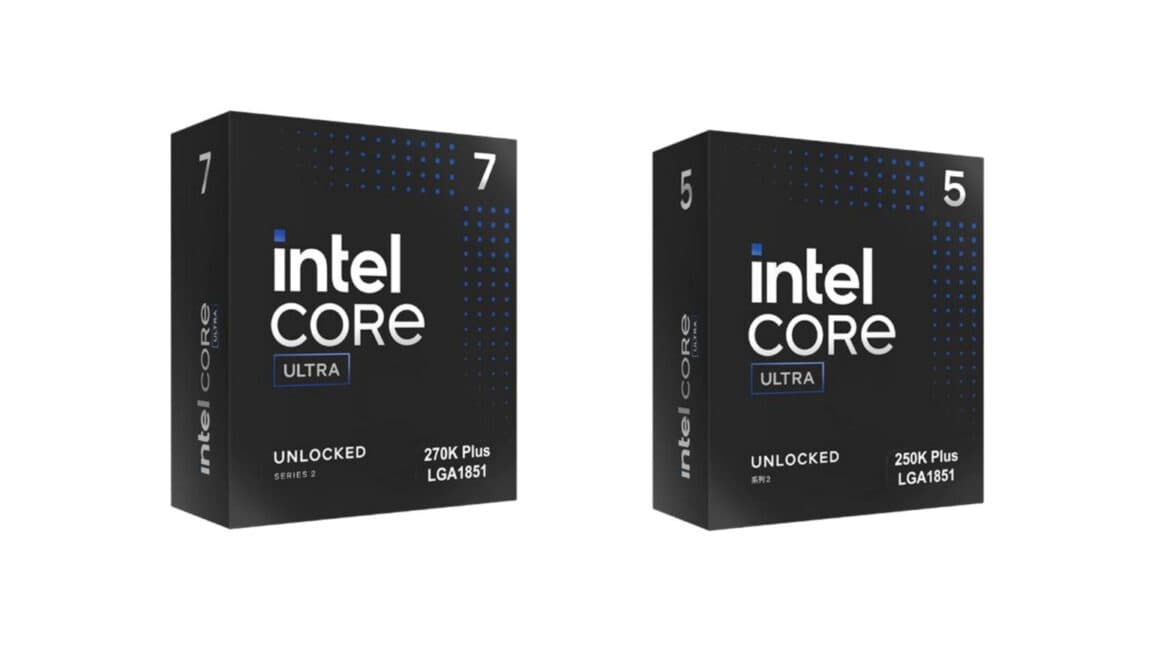
According to Ars Technica, Intel is refreshing its Arrow Lake desktop lineup with new Core Ultra 200S Plus chips – sometimes called “Arrow Lake Refresh.” The headline models are the Core Ultra 7 270K Plus / 270KF Plus and Core Ultra 5 250K Plus / 250KF Plus.
The Ultra 7 270K Plus gains four additional efficiency cores over the previous 265K, for a total of 24 cores (8 performance + 16 efficiency), a configuration that previously required stepping up to an Ultra 9. The Ultra 5 250K Plus similarly adds four efficiency cores, reaching 6 performance + 12 efficiency cores.
Intel also increases the internal interconnect frequency by 900 MHz and officially supports faster DDR5-7200 memory. Otherwise, these are the same Arrow Lake dies using the existing LGA 1851 socket and 800‑series chipsets, compatible via BIOS updates.
The chips retain a small integrated GPU with four Xe cores and a 13 TOPS NPU, below Microsoft’s 40 TOPS Copilot+ threshold. Suggested US pricing is $299 for the 270K Plus and $199 for the 250K Plus, roughly matching the street prices of the older models at launch. Intel is also introducing a new Intel Binary Optimization Tool aimed at improving performance in selected games, especially those initially tuned for other x86 architectures.
Why this matters
The 200S Plus refresh is less about raw innovation and more about Intel repairing the price–performance equation of Arrow Lake desktop.
First, the core counts. Moving 24 cores down into the Core Ultra 7 tier is a strategic concession: Intel is effectively admitting that, at 2024 pricing, Arrow Lake K‑series parts didn’t look compelling next to AMD’s Ryzen X3D chips or even Intel’s own 13th/14th‑gen gaming stalwarts. By increasing efficiency cores and bumping the interconnect and memory support, Intel can claim a roughly 15% average gaming uplift without a new architecture.
The winners are mainstream gamers and DIY builders. The 270K Plus at $299 and 250K Plus at $199 mean more cores and slightly better performance at prices that align with real‑world market conditions rather than optimistic launch MSRPs. For OEMs and system integrators, the refresh makes it easier to configure “Intel Gaming” SKUs that aren’t obviously poor value compared to AMD.
The losers are early Arrow Lake adopters and anyone who paid near‑launch prices for the 265K or 245K. They now own chips that look like an awkward first draft.
There’s also a subtle shift in philosophy. Intel is doubling down on its hybrid design – more E‑cores, same P‑cores. That’s good news for multi‑threaded workloads and background tasks, but it won’t magically erase AMD’s gaming advantage from giant L3 caches on Ryzen X3D. Intel’s answer on the gaming side is increasingly software, not silicon, which is where the Binary Optimization Tool comes in.
The bigger picture
Viewed in context, Core Ultra 200S Plus is part of a broader industry pattern: stretching architectures with “refresh” cycles while process roadmaps catch up and real next‑gen designs bake.
We’ve seen this film before: Intel’s 14th‑gen Raptor Lake Refresh, AMD’s Ryzen 5000XT series, and multiple GPU “Super” or “Ti” releases. When manufacturing and architectural leaps slow down, vendors squeeze more life from existing designs through binning, small frequency or cache tweaks, and – crucially – better pricing.
What’s newer here is Intel’s explicit push into game‑specific software optimization on the CPU side. The Intel Binary Optimization Tool, as described by Ars Technica, sounds like a targeted binary translation and tuning layer for titles originally optimized around other x86 designs – in practice, often AMD, especially for console ports.
If that interpretation is broadly right, Intel is trying to solve a console‑era legacy: a decade of developers tuning for AMD APUs in PlayStation and Xbox. GPUs have had this vendor‑specific optimization culture for years – via drivers, shader compilers, and upscalers like DLSS, FSR, and XeSS. CPUs largely remained “transparent.” Intel is signaling that era is over; it wants its own middleware layer between game and hardware.
This raises interesting questions. How many games will be supported? How transparent will the performance gains and trade‑offs be? What happens with anti‑cheat systems and stability? A bad optimization in a GPU driver gives you a glitchy frame; a bad one in CPU instruction handling can crash your match.
It also underscores how fragmented the “PC platform” has become. Between GPU vendor tech, AI upscalers, and now CPU‑side translation tools, two PCs with nominally similar specs may behave very differently depending on whose stack you’re running.
The European angle
For European users, this refresh intersects with three local realities: high energy prices, VAT‑inflated hardware costs, and increasingly assertive digital regulation.
Arrow Lake’s core advantage over 13th/14th‑gen Intel has been efficiency and thermals. In countries where electricity prices spiked and never fully normalized, shaving tens of watts under load and reducing the need for aggressive cooling is a real selling point, especially in smaller flats or shared student housing where noise matters. The Plus chips keep that efficiency while improving performance and value.
Pricing is just as important. A nominal US price drop from $399 to $299 might translate, after VAT and distribution margins, into a difference of well over €100 on the shelf. That can be the line between a mid‑range and high‑end GPU, or between 16 GB and 32 GB of RAM. For system builders in Germany, Poland, or the Nordics – where PC gaming is a major hobby but budgets are finite – better‑positioned Intel SKUs make Intel platforms more competitive against AMD’s X3D‑centric offerings.
Regulation is the wild card. Tools like Intel’s Binary Optimization Tool blur the line between application, driver, and platform. Under the EU’s emerging AI and digital market rules, there will be growing pressure for transparency when software layers materially influence performance or behavior. If CPU‑side translation starts involving machine‑learning models or per‑game profiles tied to cloud services, questions around data collection, telemetry, and interoperability will follow – especially in privacy‑sensitive markets like Germany.
Finally, the AI narrative looks different here. With just 13 TOPS of NPU performance, Arrow Lake desktop will lean heavily on cloud‑based AI assistants rather than on‑device Copilot+‑style features. That pushes more data into remote inference, where GDPR and the upcoming AI Act impose stricter consent and usage controls – something European enterprises are watching very closely.
Looking ahead
Core Ultra 200S Plus is unlikely to flip the desktop market, but it should stop the bleeding for Intel in gaming‑focused segments.
In the next 6–12 months, the key variable will be independent benchmarks. Intel’s claimed 15% average gaming uplift can hide a wide spread: a few well‑behaved titles may see 20–25%, while others barely move. How the 270K Plus and 250K Plus stack up against AMD’s Ryzen X3D chips at common European resolutions (1080p/1440p) will determine whether OEMs shift configurations or simply treat these as minor SKU bumps.
The Binary Optimization Tool is the real wildcard. If Intel can steadily expand game support, avoid nasty bugs, and demonstrate consistent frame‑time improvements in popular console ports – think big open‑world titles and live‑service shooters – it could blunt AMD’s long‑standing “we are what consoles use” advantage. If, however, adoption stalls or the tool feels like a confusing extra toggle that occasionally breaks games, it risks becoming yet another preinstalled utility users disable.
Looking further out, the refresh highlights a gap between the AI‑PC marketing wave and actual desktop silicon. To fully participate in the Copilot+ class – or whatever its cross‑platform successor becomes – Intel will need desktop parts with significantly stronger NPUs and a clearer story around local vs cloud AI workloads. That next major step, not Arrow Lake Refresh, will define Intel’s desktop trajectory for the second half of the decade.
For buyers, the calculus is straightforward: if you’re on 10th/11th‑gen Intel or older, or building new, 200S Plus finally makes Arrow Lake K‑series a sensible option. If you already own a well‑tuned 13th/14th‑gen Intel or a recent Ryzen, this is more of a curiosity than a must‑upgrade.
The bottom line
Core Ultra 200S Plus is Intel doing what it arguably should have done at Arrow Lake’s original desktop launch: ship more cores and better pricing to stay credible in gaming. It’s a welcome correction, not a breakthrough. The more intriguing story is Intel’s move into CPU‑side game optimization with the Binary Optimization Tool – a sign that even CPUs are becoming part of a messy, vendor‑tuned software stack. The question for readers is simple: how much hidden optimization are you comfortable relying on when you choose your next platform?