1. Headline & intro
Intel has finally done what PC builders have been asking for: put serious multi-core performance into CPUs that don’t cost a fortune. Unfortunately, it has done it in the single worst market for “budget” PC parts in years. AI data centers are hoovering up the same RAM, flash and GPUs that gamers and creators need, turning a €1,000 build into a €1,500–€1,600 exercise. In this piece, we’ll look at what the new Core Ultra 270K Plus and 250K Plus actually get right, why they still matter, and how they expose a deeper problem: the budget desktop is becoming an endangered species.
2. The news in brief
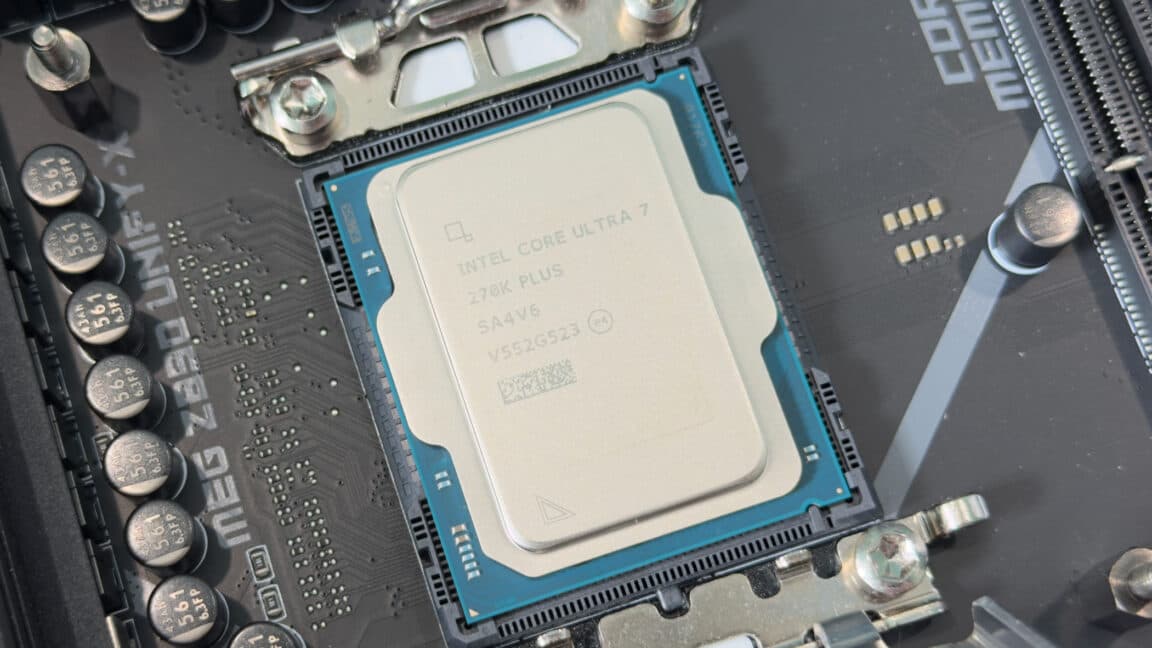
According to Ars Technica’s review, Intel has launched two refreshed Arrow Lake desktop CPUs: the Core Ultra 5 250K Plus at $199 and the Core Ultra 7 270K Plus at $299. Both use the existing LGA 1851 socket and keep the same 125 W base power rating as earlier Arrow Lake chips, with a 159 W maximum for the 250K Plus and 250 W for the 270K Plus.
The main change is core count. Each model gains four additional E-cores compared with its predecessors, giving the 250K Plus a 6P/12E configuration and the 270K Plus 8P/16E. Intel also certifies official support for faster DDR5-7200 memory, though testing shows only marginal gains versus DDR5-6000.
Benchmarks reported by Ars Technica show substantial multi-core performance increases over the original Arrow Lake parts and competitive or superior results versus similarly priced AMD Ryzen 7000/9000 non‑X3D CPUs. However, gaming performance still trails AMD’s X3D lineup, and Intel’s LGA 1851 platform is effectively a dead end, with next‑gen Nova Lake expected to use a new LGA 1954 socket.
3. Why this matters
If you look only at the CPU, this is some of Intel’s most compelling desktop pricing in years. The 250K Plus obliterates AMD’s current six‑core options in multi‑threaded tasks at around the same price, and the 270K Plus nudges into territory that used to be reserved for far more expensive “flagship” chips. For streamers, hobbyist video editors and anyone who occasionally runs heavy workloads, this level of performance at $199–$299 would normally be a slam dunk.
But CPUs no longer dominate the bill of materials. As Ars Technica highlights, memory and SSD prices have effectively tripled versus mid‑2025, and GPUs in the true midrange sit in the $350–$1,000 band. Shaving $50–$100 off the processor matters much less when the rest of the build has quietly added $500–$600.
There are clear winners and losers here.
Winners:
- OEMs and system integrators who buy RAM and storage at scale can still build attractive “performance per euro” towers using these chips.
- Multi‑threaded users on a strict budget get workstation‑like throughput if they accept the dead‑end socket.
Losers:
- Upgraders, because LGA 1851 offers no forward path. Buying into this platform in 2026 almost guarantees a full board + CPU replacement next time.
- Pure gamers, who still get more frames per euro from AMD’s X3D parts when paired with high‑end GPUs.
The uncomfortable conclusion: Intel fixed its part of the value equation just as the rest of the PC ecosystem stopped caring about value.
4. The bigger picture
These CPUs are symptoms of a broader realignment of the PC industry around AI workloads and data centers. The same DRAM and NAND fabs that used to serve gamers and office PCs are now racing to supply GPU‑packed racks for training and inference. That means consumer DDR5 and SSD prices are increasingly hostage to hyperscaler capex cycles.
We’ve seen distorted component markets before—crypto‑driven GPU spikes in 2017 and 2021, or DDR4 price surges around 2017–2018. The difference now is breadth. It’s not just one part; it’s memory, flash and accelerators at the same time, pulled upward by AI demand that actually ships and generates revenue.
On the CPU side, Intel and AMD are converging on a similar playbook: many small efficiency cores, aggressive turbo, and modest IPC gains each generation. Intel’s Plus refresh, like its 13th‑gen refresh before it, leans on dropping more cores onto roughly the same architecture. AMD plays a different game: keep AM5 stable, offer 3D V‑Cache models for gamers, and rely on platform longevity as a selling point.
That contrast is crucial. A 250K Plus might beat a Ryzen 5 in Blender today, but an AM5 motherboard can plausibly see at least one more major CPU generation. The LGA 1851 platform? Intel is already signalling the exit. From a silicon perspective, Arrow Lake Plus is smart; from a platform perspective, it looks like inventory clean‑up before the real architectural reset with Nova Lake.
All of this reinforces a trend: the consumer desktop is no longer the main battlefield. AI accelerators, servers and laptops (where Intel desperately needs design wins) are increasingly where strategy is decided. Desktop parts like the 250K Plus and 270K Plus are now side effects of decisions made for those higher‑margin segments.
5. The European / regional angle
For European builders, the pain is amplified. VAT, higher logistics costs and weaker exchange rates have always made components pricier than in the US; an AI‑driven memory boom simply stacks onto that baseline. A “budget” build that might have been €900–€1,000 in 2025 can easily push towards €1,400 once you price in 32 GB of DDR5 and a 2 TB SSD at today’s rates.
At the same time, the EU is pushing a policy mix that implicitly favours longer‑lived platforms. The Right to Repair movement, e‑waste reduction targets and the broader Green Deal all incentivise systems that can be upgraded instead of discarded. In that context, a dead‑end socket like LGA 1851 is culturally and politically out of step, whereas AMD’s AM5 story aligns better with the EU’s sustainability narrative.
Local system builders in Germany, Poland, the Nordics or the Balkans are caught in the middle. They can market the 250K Plus as “workstation power for less”, but they must also explain to customers that a future CPU upgrade will likely mean a new motherboard—and maybe new RAM if standards move again. For many, that will push them towards AM5 or even used/refurbished platforms, which remain strong in Europe thanks to price sensitivity and environmental awareness.
Meanwhile, the EU’s own Chips Act aims to build more regional capacity in semiconductors, but any meaningful relief on memory pricing is years away. In the short term, European consumers are price takers on a global AI supply chain they don’t control.
6. Looking ahead
The big question is whether the current spike in memory and SSD prices is a transient bubble or the new normal. If hyperscaler AI spending flattens, DRAM and NAND producers will eventually overshoot, and prices for consumers should correct—as they have after every previous boom. In that scenario, the 250K Plus and 270K Plus suddenly look like minor classics: cheap, cool‑running chips that age gracefully.
If, however, AI demand keeps compounding and more verticals deploy local inference, we may simply be at the start of a structurally more expensive era for high‑performance PC parts. In that world, spending a bit more upfront on a platform with a future (AM5, or whatever socket Nova Lake settles on) becomes rational, because the cost to replace everything later will be brutal.
For buyers today, a few practical signals to watch:
- Memory and SSD spot prices. Any sustained decline is a green light for builders who can wait six–twelve months.
- Intel’s Nova Lake desktop disclosures. If Intel unexpectedly offers backward compatibility (unlikely, but worth watching), it could change the LGA 1851 calculus.
- AMD’s next AM5 refresh and X3D pricing. If AMD cuts prices on V‑Cache parts, Intel’s gaming weakness becomes more visible.
- Intel’s Binary Optimization Tool adoption. If this actually gains traction, these chips could quietly pick up a few percent in real‑world apps.
Until those pieces move, the most rational strategies are either: buy once, cry once (spend more on a durable platform), or sit tight with what you have and let the AI hangover arrive.
7. The bottom line
Intel’s Core Ultra 250K Plus and 270K Plus are technically the midrange miracle many builders wanted: lots of cores, solid efficiency and aggressive pricing. But they land in a market where RAM, storage and GPUs have eaten the entire “budget” category, and on a socket with no real future. They’re great CPUs in a bad ecosystem. The real decision isn’t whether these chips are good—they are—it’s whether you should tie yourself to a short‑lived platform just as PC hardware is becoming more expensive and less disposable.