1. Headline & intro
Linux fans like to say the kernel "runs on everything." That was never literally true, but the decision to finally drop Intel 486 support comes close to an official admission. When the most hardware‑friendly mainstream OS decides that a once‑iconic CPU is no longer worth a single developer second, it tells us a lot about how open‑source projects age, what "long‑term" support really means, and where the PC ecosystem is heading. In this piece, we’ll look beyond the nostalgia and examine what this change reveals about priorities, trade‑offs, and the quiet raising of the minimum bar for modern computing.
2. The news in brief
According to Ars Technica, Linux kernel maintainers are moving ahead with a long‑discussed plan to remove support for Intel’s 80486 processor family. Code changes already merged indicate that Linux 7.1 will be the first kernel version that can no longer be built for the 486 at all, with further cleanup of leftover 486‑specific code expected in later releases.
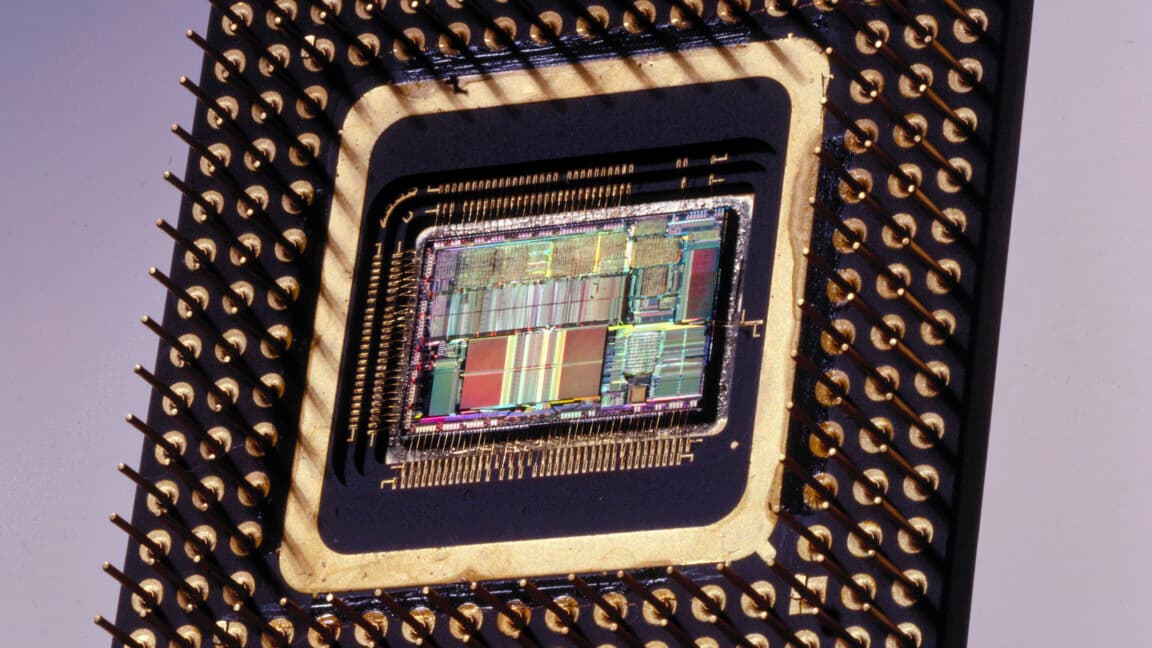
The 486, introduced in 1989 and superseded by the original Pentium in 1993, was finally discontinued by Intel in 2007. Linux has supported it for decades, including 486‑compatible chips from other vendors. Kernel developers argue that the maintenance burden of keeping 486‑era compatibility workarounds in modern x86 code is no longer justified, given that almost no current Linux distributions still target this hardware. Users who really need 486 support will be able to stay on older kernels or use alternative operating systems that still support such legacy CPUs.
3. Why this matters
On paper, removing support for a CPU most of us haven’t seen powered on since the dial‑up era looks trivial. In practice, it’s a symbolic line in the sand for Linux.
The kernel’s reputation is built on breadth: from smartphones and Raspberry Pis to supercomputers and mainframes. That reputation carries an implicit promise – that old hardware won’t be casually abandoned. Stripping out 486 support doesn’t break current mainstream systems, but it does openly acknowledge a reality: there is a lower hardware bound below which upstream Linux no longer cares.
The winners here are kernel maintainers and, indirectly, everyone running Linux on newer hardware. Ancient compatibility paths add complexity to the x86 codebase, complicate testing and occasionally introduce bugs on modern systems. Every workaround you keep for a 1989 CPU is another branch, another config combination, another thing that can go wrong. Less legacy code means easier refactoring, better chances of adopting new security features, and fewer obscure corner cases.
The losers are a small group: retro‑computing enthusiasts who insist on running a current Linux kernel on 486 machines, and any truly ancient embedded or industrial systems that still rely on such chips and want modern kernels. In most industrial deployments, though, the kernel is already frozen at a known‑good version and never updated unless something breaks.
What this change really ends is not practical usage, but a feeling: that Linux, unlike commercial OSes, might keep supporting your hardware forever if volunteers cared enough. The 486’s eviction makes clear that even in open source, engineering time is finite and sentimentality loses.
4. The bigger picture
This isn’t the first time Linux has cut loose an old Intel generation. Support for the 80386 disappeared back in the early 2010s, and no one seriously argues that was a mistake. Since then, the quiet trend has continued: many popular distributions have stopped shipping 32‑bit x86 userlands at all, focusing solely on 64‑bit, while maintaining just enough 32‑bit support to run legacy applications.
In parallel, most PC‑class CPUs sold in the last two decades ship with features – from PAE to SSE2 and modern paging/security extensions – that kernels and toolchains can increasingly take for granted if they are willing to drop very old chips. Windows did this years ago by mandating newer instruction sets for various versions; the Linux community tends to move slower, partly out of habit and partly because of its massive embedded footprint.
Meanwhile, the center of gravity is shifting away from old x86 entirely. Arm now dominates smartphones and is rapidly gaining share in laptops and servers. RISC‑V is emerging as a credible alternative in embedded and, slowly, in PCs. Apple’s move to Arm‑based Apple Silicon forced macOS developers to modernize assumptions about CPU features in one abrupt jump.
Seen in that light, retiring the 486 is not radical – it’s Linux finally catching up with a decade of industry reality. The real question is what follows. At some point, we’ll see a similar debate around generic 32‑bit x86 support, older Arm variants, and other architectures that exist mainly on paper and in museums. The 486 change is a small but clear signal that the kernel community is more willing to trim its tree than it used to be.
5. The European angle
For European users and organisations, the direct impact of this particular decision is almost zero. Any school, NGO or public office in Europe still relying on 486‑class hardware in 2026 has much bigger problems than kernel version numbers.
But the pattern matters. The EU’s Green Deal, circular‑economy rules and "right to repair" debates all assume that we can – and should – keep hardware in service for longer. Software support is the invisible counterpart: a PC is only as sustainable as the operating system that still runs on it.
In practice, the real European reuse story is about Pentium 4‑era desktops in schools, Core 2 Duo laptops re‑imaged for remote workers, and refurbished thin clients in municipalities from Portugal to Poland. These machines are well above 486 capability, but they are still sensitive to software bloat and changing requirements. The Linux ecosystem’s gradual raising of minimums – more RAM for popular distros, stricter CPU baselines – will hit these devices long before anyone misses 486 support.
For European SMEs and public bodies that depend on long lifecycles, the lesson is strategic: do not confuse "open source" with "indefinite support." If you need a system to run for 15+ years, you either budget for professional long‑term maintenance (Red Hat, SUSE, Canonical or local providers) or accept that you’ll freeze on a specific stack and stop chasing upstream.
6. Looking ahead
The 486 decision will land quietly, but it raises awkward questions the Linux world can’t dodge forever. How long should an architecture be supported after the last major vendor stops shipping it? Ten years? Twenty? Until the last enthusiast on a mailing list gives up?
Expect future debates to focus on:
- 32‑bit x86 as a whole. Many mainstream distros already treat 32‑bit as a legacy compatibility layer rather than a first‑class target. At some point, the kernel will follow, at least for the PC‑class 32‑bit subset.
- Old Arm generations. Some early Armv5/v6 devices are still floating around in routers and consumer gadgets. Their maintainers may face the same hard choice: either maintain your own fork or accept that upstream eventually moves on.
- Security and hardening. New mitigation techniques are easier to implement when you can assume certain CPU features. Each legacy cut allows more aggressive defaults for everyone else.
In the next few kernel cycles, the change will mostly manifest as boring cleanup patches that nobody outside kernel‑dev circles notices. The more interesting developments will be policy discussions: should the kernel publish clearer deprecation timelines for whole architecture classes? Should there be a formal process linking EOL decisions to CPU vendors’ roadmaps?
The risk is fragmentation if niche communities start maintaining fossilized forks just to keep ancient hardware alive. The opportunity is a leaner, more maintainable kernel that can evolve faster – which, in turn, keeps Linux competitive on the architectures that actually define Europe’s and the world’s digital future.
7. The bottom line
Dropping 486 support won’t brick anyone’s daily driver, but it quietly punctures the idea that Linux will run forever on everything. This is a healthy, overdue acknowledgement that developer time is finite and the future matters more than museum pieces. The harder question – for users, vendors and policymakers alike – is where we collectively want to draw the next line. How old is too old for modern software, and who gets to decide?