1. Headline & intro
Apple hasn’t reinvented the MacBook Air with the M5 chip – it hasn’t needed to. Instead, Apple has quietly turned the Air into something more powerful: the de facto “default computer” for millions of people. While Windows manufacturers talk up “AI PCs” and experimental form factors, Apple is shipping a boringly excellent laptop that most buyers can pick without thinking too hard. In this piece, we’ll look beyond the benchmarks and ask what the M5 MacBook Air really signals: about Apple’s product strategy, the slow erosion of the MacBook Pro’s relevance, and the pressure this puts on the wider PC industry – especially in Europe.
2. The news in brief
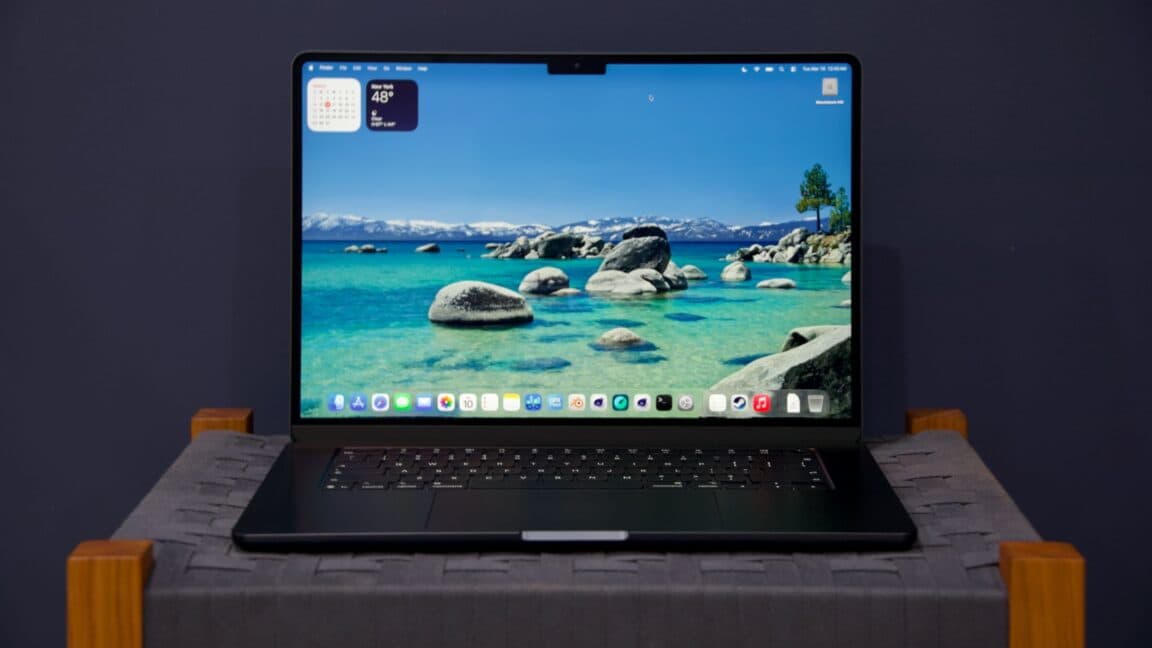
According to Ars Technica’s review, Apple’s new M5 MacBook Air is a modest iteration on last year’s M4 model rather than a radical redesign. The 13‑inch version now starts at $1,099 (up from $999), while the 15‑inch begins at $1,299. Crucially, the base configuration jumps from 256 GB to 512 GB of storage, and the Air line continues to ship with 16 GB of RAM by default.
Ars’ testing shows the M5 Air delivers roughly 10–20% higher CPU performance and around 30% better graphics performance than the M4 Air, with some GPU‑heavy workloads scaling even higher. Compared with the original M1 Air from late 2020, the M5 version roughly doubles overall performance, especially in multi‑core and graphics tasks. Battery life remains strong and the design is unchanged.
The Air now sits above Apple’s cheaper MacBook Neo and below the MacBook Pro line, which still offers active cooling, brighter ProMotion displays, more ports and higher RAM/storage ceilings.
3. Why this matters
For years, the question for Mac buyers was: Air or Pro? With the M5 generation, the more realistic question for most people is: Air or don’t overthink it. That shift is strategic.
The MacBook Air has slowly absorbed what used to be “pro‑only” territory: more RAM, more storage, support for multiple 6K external displays, better media engines. According to Ars Technica’s numbers, it’s now about twice as fast as the M1 Air from 2020 – which was already a huge leap over Intel Macs. That means Apple’s baseline laptop is now comfortably powerful for software development, photo work, 4K video editing, and even quite a bit of gaming, as long as you’re not chasing ultra‑high frame rates.
Who benefits?
- Mainstream buyers get a machine that is hard to misconfigure. The default 16 GB RAM and 512 GB storage are finally “sane” for a laptop meant to last 5–7 years.
- Apple simplifies the upsell ladder. Instead of pushing people to the Pro because the Air was under‑spec’d, it can position the Pro as a conscious luxury choice: you buy it because you want mini‑LED, ProMotion and extra ports, not because you need them to get work done.
Who loses?
- Windows OEMs face an even tougher comparison in the €1,200–€1,800 bracket. Many still ship 8 GB machines at these prices, with inconsistent battery life and noisy cooling.
- Power users on a budget get squeezed. The $100 base price hike is partially offset by the storage bump, but Apple has also removed the $999 Air tier entirely.
The immediate implication: for anyone coming from an M1 or older Intel Mac, the M5 Air is now the “no‑brainer” default. You only leave the Air if you have an unusually tight budget (Neo) or unusually heavy workloads (Pro).
4. The bigger picture
The M5 Air sits at the intersection of three broader trends.
1. Iteration over revolution
Semiconductor progress has slowed from the wild leaps of early Apple Silicon to steady, single‑digit generational gains. Ars Technica’s testing shows exactly that: 10–20% CPU, ~30% GPU gains versus M4. None of this justifies upgrading from last year’s model – but it radically changes the picture over a 4–5 year span. Someone on an M1 Air now sees roughly double the performance, with far better external display support and more sensible defaults.
This is how Apple wants you to buy Macs: infrequently, at high margin, with each generation “good enough” for many years.
2. The quiet sidelining of the MacBook Pro
The Pro still wins on sustained performance thanks to active cooling, more ports, and a superb display. But the list of must‑have features exclusive to the Pro keeps shrinking. First the Air got Pro‑level CPU cores, then more RAM, then better display support, then ProRes engines. For a lot of developers, designers and video editors, the Air is now a realistic primary machine.
Over time, that pushes the Pro further upmarket – towards people who either push their machines all day (3D, heavy code compiles, serious video) or who simply don’t mind paying extra for the best screen.
3. Pressure on the “AI PC” narrative
On the Windows side, Intel, Qualcomm and Microsoft are betting big on so‑called “AI PCs” with powerful NPUs and Copilot+ branding. Apple never needed the label: every M‑series chip already includes a strong neural engine, and macOS offloads plenty of tasks to it without fanfare.
The M5 Air therefore undercuts the AI‑PC marketing story. It tells consumers: here’s a fast, quiet, efficient machine that runs all day and doesn’t need a new buzzword every year. That contrast is particularly stark in the €1,000–€1,500 band, where some Windows AI laptops still struggle with fan noise, mediocre screens or weak base specs.
5. The European / regional angle
For European buyers, the M5 MacBook Air lands in a delicate moment: high inflation, strong price sensitivity – and a regulatory environment increasingly interested in longevity and repairability.
On pricing, expect the usual euro premiums once VAT and Apple’s cautious FX assumptions are applied. For many EU households, the new Air will be less interesting than what it does to the old one: according to Ars Technica, the M4 Air is already getting cheaper in Apple’s refurbished store, and retail clearance pricing will follow. In much of Europe, especially Southern and Eastern markets, those discounted previous‑gen models are where volume really happens.
Regulation is where it gets interesting. The EU’s Right to Repair push, along with the forthcoming Ecodesign rules for smartphones and tablets, are clearly philosophically at odds with Apple’s soldered RAM and storage. Even if laptops are moving on a slightly different regulatory track, the direction of travel is obvious: longer lifetimes, easier repairs, and more transparency about spare parts and software updates.
Apple’s counter‑argument is precisely machines like the M5 Air: sealed, yes, but extremely efficient, long‑lived, and supported with OS updates for many years. In markets like Germany and the Nordics, where buyers are both privacy‑conscious and willing to pay for quality, that trade‑off continues to work.
For European PC OEMs and channel partners, the challenge is brutal: how do you convince a customer to buy a €1,300 Windows laptop with 8 GB RAM and a noisy fan when a silent, cool, 16/512 MacBook Air sits next to it in the same chain store?
6. Looking ahead
The M5 Air also sends signals about Apple’s roadmap.
First, the performance doubling versus M1 is a psychological milestone. It gives Apple a clean story for early Apple Silicon adopters: if you bought in around 2020, your next upgrade – likely 2026–27 – will feel substantial again. Expect Apple to lean heavily on those “2× faster than M1” charts across the Mac lineup.
Second, the clear three‑tier structure (Neo → Air → Pro) is probably here to stay. The Neo catches schools and budget‑constrained buyers, the Air catches almost everyone else, and the Pro becomes the aspirational tool for demanding work. Future changes are more likely to tweak boundaries than to overhaul the stack.
Third, watch the display story. Apple is still keeping ProMotion, HDR and nano‑texture for the Pro. If any of that ever trickles down to the Air – even at 90 Hz rather than 120 Hz – that will be the sign that Apple is preparing yet another Pro re‑segmentation.
Unanswered questions remain:
- How long will Apple support M1 machines with new macOS releases? That decision will heavily influence upgrade cycles, especially in cost‑sensitive EU markets.
- Will Apple lean more visibly into on‑device AI features on macOS, justifying future NPU boosts the way Microsoft is trying with Copilot+ PCs?
- And perhaps most importantly: how far can Apple push prices before the “default Mac” starts to feel aspirational again rather than accessible?
7. The bottom line
The M5 MacBook Air is not exciting – and that is its greatest strength. It cements the Air as the laptop you can recommend to almost anyone without caveats: powerful enough, efficient enough, and now finally well‑specced by default. The price creep is real and worth criticising, but the overall value proposition has actually improved over the M1 era. The more interesting question is no longer “Is the Air good?” but “Can Windows OEMs and EU regulators live with Apple owning the middle of the market on its own terms?”