MacBook Neo: Apple’s $599 Bet on a "Good Enough" Mac
For the first time in years, buying a new Mac no longer has to start with a four‑digit price tag. With the $599 MacBook Neo, Apple is finally stepping back into the truly mass‑market laptop segment it mostly ceded to Chromebooks and low‑end Windows PCs. But this comeback has a twist: the Neo runs on an A‑series iPhone‑class chip and makes deliberate compromises. In this piece, we’ll look at what Apple is really trying to do with Neo, who it’s for, and why this could quietly reshape both the Mac lineup and the broader low‑cost laptop market.
The news in brief
According to Ars Technica, Apple has introduced a new entry‑level laptop called the MacBook Neo, priced at $599 in the US. It replaces the old 13‑inch M1 MacBook Air as Apple’s lowest‑cost Mac notebook and will be sold directly by Apple as well as through third‑party retailers. Preorders begin immediately, with availability starting March 11.
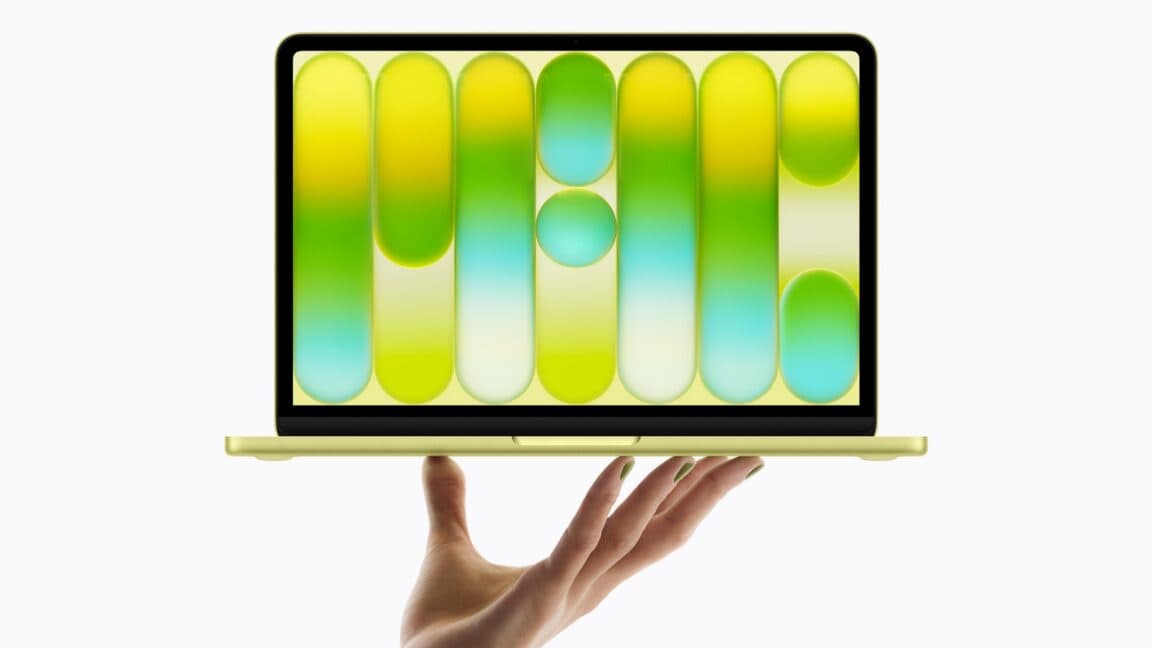
The Neo comes in four colors (silver, indigo, blush, citrus) and uses an A18 Pro processor instead of an M‑series chip. The SoC has a six‑core CPU (two performance cores, four efficiency cores), five GPU cores and is paired with 8 GB of RAM. The 13‑inch LCD has a 2408×1506 resolution and up to 500 nits of brightness, but lacks wide color (P3) and True Tone. Ports include two USB‑C (one USB 3 at 10 Gbps, one USB 2), a headphone jack, and support for a single external 4K/60 Hz display. Battery capacity is 36.5 Whr, with Apple claiming up to 16 hours of use. Touch ID is included only on the $699 configuration with 512 GB of storage.
Why this matters
The MacBook Neo is far more than “a cheap MacBook.” It’s Apple redrawing the bottom of the Mac lineup around a good‑enough experience rather than uncompromised performance.
First, the A18 Pro is the key signal. Apple is effectively repurposing its iPhone‑class silicon for the Mac, something it has avoided in public branding since the move to Apple Silicon. That lets Apple squeeze costs, reuse massive A‑series production volumes, and create a much clearer gap between Neo and the M5 MacBook Air. If you want “real Mac power,” you step up to M‑series; if you just need a web, office and media machine, Neo exists to catch you.
The winners are obvious: students, families, and schools that have been priced out of the Mac ecosystem. At $599, Neo competes directly with mid‑range Chromebooks and mainstream Windows laptops instead of just premium ultrabooks. Organizations that want macOS security and manageability for frontline workers finally have a device that doesn’t destroy the hardware budget.
But there are losers too. The spec sheet makes it clear Neo will be easy to outgrow: 8 GB RAM, reduced GPU resources, and limited external display support will frustrate power users quickly. Creators, developers and anyone living in dozens of browser tabs are being gently pushed towards the much more expensive M‑series Macs.
There’s also a brand risk: if Neo becomes the first Mac for millions of people and feels sluggish after a couple of years, users will blame “the Mac,” not Apple’s segmentation strategy. Apple is betting that its vertical optimization — tight OS tuning, Apple Intelligence support even on this low end — will keep the experience pleasant enough that most buyers never notice what’s missing.
The bigger picture
Neo slots into a week of machine‑like announcements from Apple — new M5 MacBook Airs, M5 Pro/Max MacBook Pros, updated Studio Displays and an iPhone 17e — but strategically it may be the most revealing.
Across the industry, we’re watching three converging trends:
- ARM everywhere. Qualcomm’s push for Windows on ARM, plus Apple’s own M‑series success, has normalized ARM laptops. By dropping an A‑series chip into a Mac, Apple is signaling that the underlying architecture is now flexible enough to span phones, tablets and budget laptops without apology.
- AI as a baseline feature. Ars Technica notes Neo can run Apple Intelligence. That matters: AI is no longer a premium-only checkbox. Even at $599, Apple wants buyers using on‑device models for writing, image tweaks and smart system features. Expect AI performance, not just CPU/GPU cores, to increasingly define “tiers” in Apple’s lineup.
- Deliberate stratification. Apple has spent years cleaning up its once‑messy Mac range. Now the ladder is explicit: Neo at the bottom, Air in the middle, Pro at the top. Each rung is separated by display quality, ports, external monitor support and silicon class. Neo is the first Mac that feels consciously designed to live in the Chromebook price band without pretending to be a mini‑Pro.
Historically, whenever Apple ventured down‑market — think the plastic MacBook, iPhone SE, or cheaper iPads — it was about ecosystem expansion: get people in the door, then upsell later. Neo fits exactly that playbook, but with a twist: macOS remains Apple’s most open, least controlled platform compared with iOS and iPadOS. Growing the Mac installed base strengthens Apple’s position in areas that aren’t governed by App Store rules, right as regulators scrutinize its mobile platform dominance.
The European / regional angle
For European users, the Neo lands in a particularly interesting context.
Public sector digitization programs in countries like Germany, France, Spain and across Central and Eastern Europe have often defaulted to Chromebooks and low‑end Windows laptops for budget reasons. A Mac that starts at $599 (EU pricing not yet confirmed at the time of writing) suddenly makes macOS a plausible option in education tenders and municipal roll‑outs, especially when lifecycle costs and resale value are considered.
At the same time, Europe’s regulatory environment is tightening. The Digital Markets Act (DMA) and Digital Services Act (DSA) focus mainly on platforms, but the upcoming waves of right‑to‑repair and eco‑design rules will increasingly affect hardware. A lower‑cost Mac that may be sold in higher volumes will face more scrutiny on repairability, spare parts availability and battery replacement. Apple’s recent moves toward self‑service repair in the EU will matter more if Neo becomes the default “first Mac” for households.
Privacy‑conscious European buyers, particularly in the DACH region, will also weigh Apple Intelligence carefully against the EU AI Act. Even on this entry‑level hardware, Apple is promising on‑device processing for many tasks — something that could resonate strongly in markets where exporting personal data to the cloud is politically and culturally sensitive.
For local ecosystems — from Berlin and Paris startups to Ljubljana and Zagreb dev shops — Neo could become the new standard test Mac: cheap enough to hand to interns, capable enough to run current macOS and Xcode, but limited enough that serious work still requires higher‑end machines.
Looking ahead
The Neo raises a big strategic question: is this a one‑off experiment, or the start of a full A‑series branch of the Mac family?
If Neo sells well, it’s easy to imagine an annual cadence where each new A‑series iPhone chip gets a corresponding Neo refresh, perhaps with minimal chassis changes. That would give Apple a way to keep using last‑generation mobile silicon profitably while reserving its latest M‑series for premium devices.
Developers should watch closely how macOS behaves on A‑series vs M‑series Macs over time. If performance, thermal limits or feature support start to diverge, we could see guidance emerge like “AI‑heavy workflows need M‑series,” or app store badges indicating recommended silicon classes. For now, everything is technically “Apple Silicon,” but segmentation pressure will grow.
Another open question is iPad cannibalization. A colorful $599 MacBook running full macOS and traditional desktop apps will inevitably tempt some buyers away from high‑end iPads with keyboards. In Europe in particular, where VAT and accessory pricing already make iPads expensive, Neo could become the more rational choice for students who need a real file system and multiple external services open at once.
Finally, expect competitors to respond. Windows OEMs in Europe and beyond have relied on Apple staying above €1,000 for laptops to defend their margins. A credible Mac at roughly half that psychological barrier forces them either to compete harder on build quality and battery life — or to double down on features Apple won’t offer at this tier, like touchscreens and 2‑in‑1 designs.
The bottom line
MacBook Neo is Apple’s clearest statement yet that “good enough” can be a strategy, not a compromise. By reusing iPhone‑class silicon and trimming specs, Apple has built a Mac that finally competes in the mainstream laptop price band without abandoning its design values. The risk is that too many people meet the Mac through this constrained experience and walk away underwhelmed. The opportunity is that millions more get a realistic path into macOS. The real test will be yours: is “good enough” from Apple actually good enough for the way you work?