1. Headline & intro
Apple hasn’t seriously played in the sub-$700 laptop space in decades. The new MacBook Neo changes that on paper, but the real story isn’t the price tag – it’s who Apple is targeting and what it’s willing to compromise to get there. A phone-class chip in a Mac, a non‑backlit keyboard, and asymmetric USB‑C ports would have been unthinkable a few years ago. Now they’re part of a calculated bet: convert iPhone owners and budget Windows users into lifelong Mac customers, even if that means redefining what a “MacBook” feels like.
In this piece we’ll look past the spec sheet and examine what the Neo says about Apple’s hardware strategy, the PC market, and where this leaves European buyers.
2. The news in brief
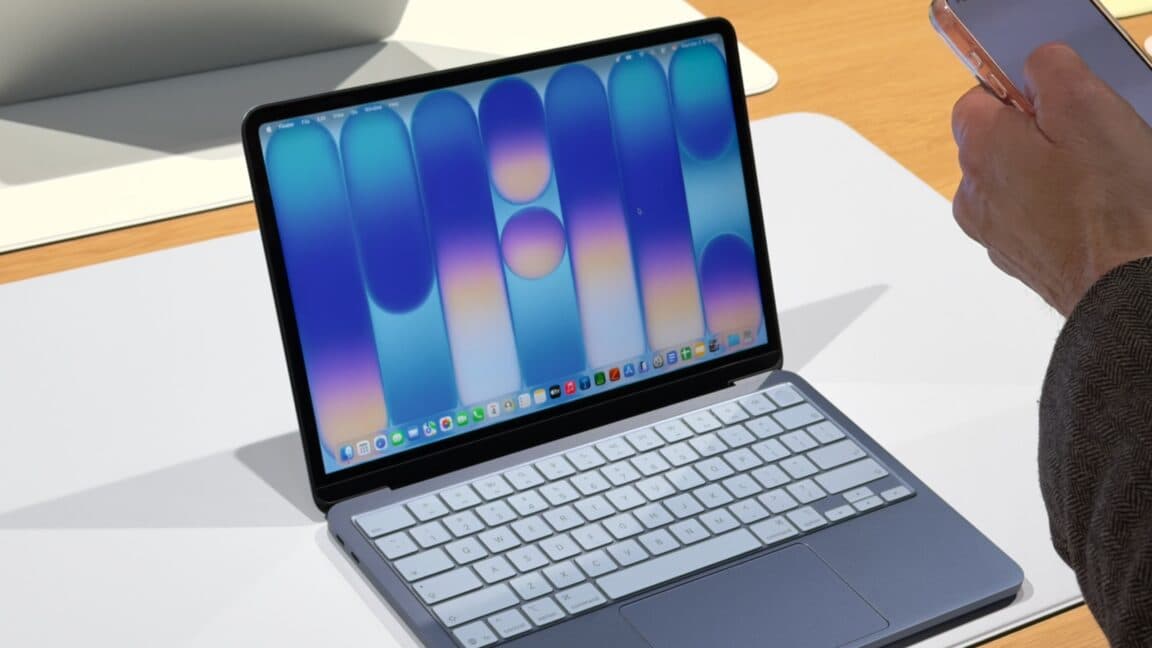
According to Ars Technica’s hands‑on report from Apple’s New York “special experience” event, the MacBook Neo is a new low‑cost Mac notebook starting at $599. That entry model includes 8 GB of RAM, 256 GB of storage and no Touch ID; a $699 version adds Touch ID and 512 GB of storage. Education buyers get a further $100 discount.
The 13‑inch laptop uses an Apple A18 Pro processor – the same chip as in the iPhone 16 Pro – rather than an M‑series Mac chip. It has a 13‑inch IPS display (2408×1506, 500 nits, sRGB), a non‑backlit keyboard, a physical (non‑haptic) trackpad, and two USB‑C ports with different capabilities: only the left port supports faster USB 3 speeds and external displays. There’s no MagSafe, and only a single external 4K display is supported.
Design-wise the Neo resembles recent MacBook Air models, with a flat aluminium chassis around 0.5 inches thick and weighing about 2.7 pounds.
3. Why this matters
The Neo is not just “a cheaper MacBook Air.” It is a new entry point into the Apple ecosystem, deliberately tuned for people who today either don’t own a computer at all or live on a low‑end Windows laptop or Chromebook.
For Apple, the benefits are obvious. First, it massively lowers the psychological barrier for iPhone users who have flirted with the idea of “going Mac” but balked at four‑figure prices. Once someone’s photos, messages, documents and AirPods all flow more smoothly between phone and laptop, churn to Android or Windows becomes less likely. The hardware margin may be smaller; the long‑term services and upgrade revenue are not.
Second, using an iPhone‑class A18 chip instead of an M‑series SoC gives Apple enormous flexibility. It can reuse an existing, high‑volume chip across product lines, squeeze more value from its silicon R&D, and keep BOM costs down. That’s classic Apple: vertical integration as a weapon, especially in price‑sensitive segments where Windows OEMs struggle on razor‑thin margins.
But there are losers. Budget Windows OEMs and Chromebook vendors now face an Apple laptop that, at least on paper, competes directly on price while offering better build quality, a stronger display, and a more coherent ecosystem story. The Neo also risks confusing Apple’s own lineup. Buyers who don’t read the fine print may see “new MacBook for $599” and assume it behaves like an M‑series Air, only to hit the ceiling of 8 GB RAM and a phone‑class chip when they try serious creative or development work.
That tension – expansion without brand dilution – is the central question the Neo raises.
4. The bigger picture
The MacBook Neo follows a pattern Apple has already proven on the iPhone and iPad side. The iPhone SE and base iPad created “good enough” devices with modern chips and downgraded screens, cameras, or cases. They didn’t destroy premium iPhone sales; they pulled new users into the ecosystem and gave existing ones a cheaper secondary device.
Now Apple is running the same playbook on the Mac, but with an extra twist: mixing mobile and desktop silicon. We’re watching the logical conclusion of Apple’s decade‑long bet on ARM. The first step was iPhone and iPad; then came M‑series Macs; now the wall between “phone chip” and “computer chip” is porous. An A18 Pro is more than fast enough for web, office work, and light creative tasks, and it offers efficiency advantages that matter in thin, fan‑light designs.
This move also lands in a PC industry that’s undergoing its own silicon reset. Qualcomm is pushing ARM‑based Windows laptops. Intel is scrambling to prove its low‑power credentials. Chromebooks have retreated from their pandemic peak but still own much of the education mindshare. In that context, a $599 Mac that feels like an Air under your fingers is not just a product; it’s a signal that Apple is willing to weaponise its supply‑chain advantages lower down the price stack.
Competitively, the Neo undercuts many “design‑forward” Windows devices and high‑end Chromebooks once you spec them with decent screens and SSDs. However, unlike the white plastic MacBook of the late 2000s, Apple isn’t visibly cheapening the chassis to hit the price. The trade‑offs are hidden: 8 GB RAM, weaker I/O, missing features like True Tone and wide colour. It’s a subtler form of segmentation that leans on invisible ceilings rather than obvious ugliness.
5. The European / regional angle
For European buyers, the Neo sits at the intersection of three realities: higher consumer prices, stricter regulation, and a particularly fragmented education market.
First, that headline $599 will not survive VAT and local distribution mark‑ups. In many EU countries the Neo will land closer to the psychological €700–€800 band, where it competes not with junk PCs but with respectable mid‑range Windows ultrabooks. The value equation changes: build quality and macOS integration vs better specs (more RAM, more ports) on the Windows side.
Second, EU regulators are looking closely at ecosystem lock‑in via the DMA and other tools. A cheap Mac that becomes vastly more attractive if you already own an iPhone plays directly into that story. Features like AirDrop, iMessage and Continuity are genuine user benefits, but they also make it harder to leave. Expect Brussels to scrutinise how Apple treats competing services and whether features are artificially limited to keep that lock‑in strong.
Third, the education angle matters. Many European school systems, from Scandinavia to Central Europe, have standardised on Chromebooks or low‑cost Windows devices for budget reasons. The Neo’s education pricing could tempt some institutions to revisit that stance – especially in wealthier regions or universities where total cost of ownership and durability carry more weight than lowest upfront price. At the same time, 8 GB RAM and limited external display support might not satisfy IT departments planning to keep machines for five to seven years.
6. Looking ahead
The Neo raises several strategic questions for Apple.
One is cadence. Does this become an annually refreshed product tied to the iPhone chip cycle, or a slow‑moving “Neo” line updated every two to three years? The former would keep performance in step with phones but risk cannibalising lower‑end M‑series Macs; the latter would cement the Neo as a deliberately constrained machine, more appliance than computer.
Another is headroom. If user feedback – or perhaps EU consumer pressure – makes 8 GB RAM untenable, Apple will eventually have to move the baseline up. Doing so on the Neo without reshuffling the entire Mac line will be tricky. This is where the A‑series vs M‑series distinction might help: Apple can always say “for serious workloads, buy an M‑chip Mac.”
Watch for three things over the next 12–18 months:
- How aggressively Apple markets the Neo in carrier stores and education channels, not just its own retail.
- Whether developers start to hit meaningful limitations on the A18/8 GB combo for mainstream apps.
- How Windows OEMs respond in Europe – with even more aggressive pricing, or by leaning into features Apple won’t touch (touchscreens, 2‑in‑1 designs, gaming‑class GPUs).
The risk for Apple is reputational. If too many buyers think they’re getting “a cheap MacBook Air” and instead experience slowdowns and limitations, the halo around the Mac brand could dim. The upside is a new generation of users whose first real computer is a Mac – and who will later upgrade into higher‑margin machines and services.
7. The bottom line
The MacBook Neo is less a love letter to budget computing and more a carefully constrained gateway drug into the Apple ecosystem. It’s a smart move in a world where many people’s first “computer” was a smartphone, but the compromises – especially the A18 chip and 8 GB RAM ceiling – are significant.
If you’re a light user living inside Apple’s ecosystem, the Neo could be the most affordable way to go all‑in. If you expect your next laptop to grow with heavier workloads, the better question is: how much are those invisible constraints worth to you in three or four years’ time?