Headline & intro
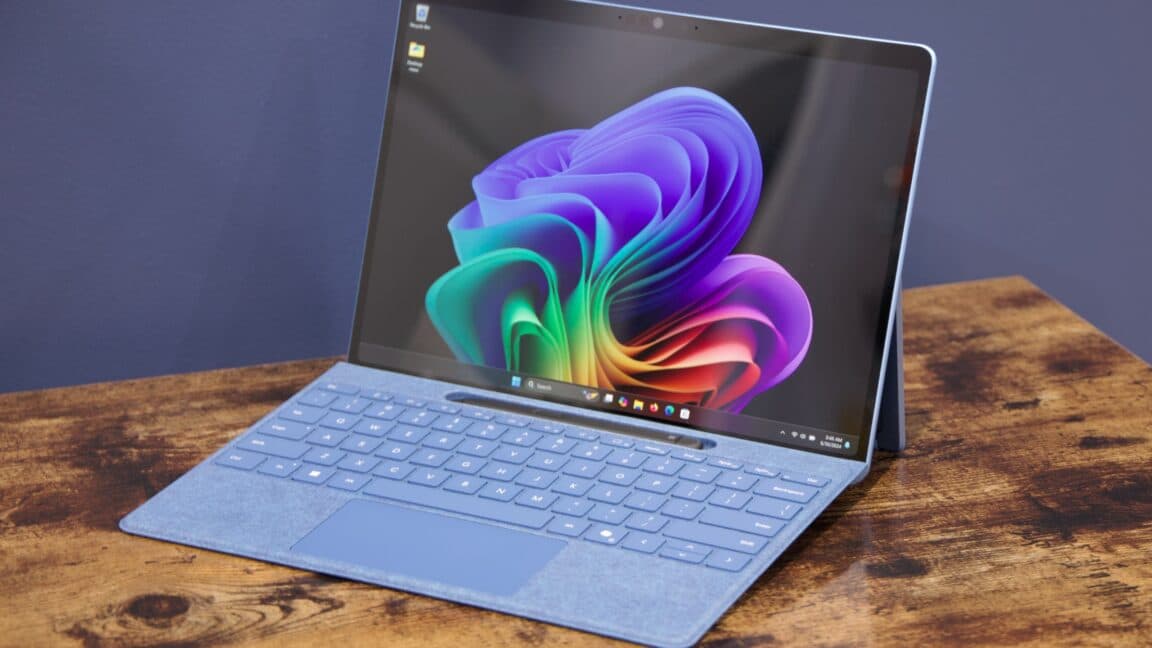
Microsoft hasn’t launched new Surface hardware, but it has quietly done something just as consequential: it has changed who Surface is for. With two‑year‑old devices suddenly costing $250–$300 more and every model now starting well above $1,000, Surface is drifting from “aspirational mainstream” into genuine luxury territory.
This isn’t just an annoying price rise. It’s a snapshot of where the PC industry is heading in 2026: fewer midrange options, more “premiumization,” and a widening gap between what manufacturers want to sell and what most people can realistically buy. In this piece, we unpack what Microsoft’s move tells us about Windows on Arm, competition with Apple, and what it means for buyers in Europe and beyond.
The news in brief
According to Ars Technica, Microsoft has raised prices across its Surface PC lineup, including models that are roughly two years old and have not received internal hardware updates.
Key points:
- The 12‑inch Surface Pro tablet that launched at $799 now starts at $1,049, a $250 increase.
- The 13‑inch Surface Laptop that debuted at $899 now costs $1,149.
- Higher‑end Surface Laptop and 13‑inch Surface Pro configurations that launched at $999 in 2024 went up to $1,199 in 2025 (after the cheaper 256 GB variants were dropped) and have now jumped again to $1,499 – a total increase of $300.
- As reported by Windows Central and cited by Ars Technica, Microsoft attributes the changes to rising memory and component costs, particularly for RAM and storage.
- There are now effectively no new Surface devices under $1,000 in Microsoft’s lineup.
Meanwhile, consumers still waiting for a refresh based on Qualcomm’s newer Snapdragon X2 Elite processors have seen prices go up twice without any corresponding silicon upgrade.
Why this matters
The most obvious impact is on buyers: students, freelancers, and small businesses that once stretched to afford an entry‑level Surface are simply being priced out. A $999 “nice but attainable” Windows flagship has become a $1,499 “think twice” luxury item.
But the deeper story is strategic. These prices are not arbitrary; they look like Microsoft deliberately repositioning Surface as a halo brand, not a volume player. Under‑$1,000 laptops are now left almost entirely to OEM partners like Lenovo, HP, Dell, Acer, and Asus. Surface becomes the aspirational showroom for “the best of Windows”, while everyone else fights in the discount aisle.
That solves one problem for Microsoft – channel conflict. For years, PC makers have quietly complained that Surface competed directly against them. If Surface lives at $1,500+, that pressure eases, and OEMs are free to own the mass market.
However, it creates two new problems:
The Apple comparison looks brutal. Ars Technica notes that a similarly configured M5 MacBook Air is now around $400 cheaper than a comparable Surface Laptop, and nothing in Microsoft’s lineup touches the MacBook Neo on value. Considering that Apple also offers longer OS support and a very efficient chip, this makes Windows on Arm look like the more expensive and less mature alternative.
It slows the Arm transition. Microsoft needs developers and early adopters to embrace Windows on Arm. Pricing the reference‑design hardware out of reach reduces the pool of enthusiasts willing to take a chance on the new platform.
In short: Microsoft protects margins and OEM relationships, but risks undermining its own platform transition and alienating exactly the tech‑savvy users Surface was built for.
The bigger picture
These hikes don’t happen in a vacuum. They sit at the intersection of three broader trends.
1. Component volatility and AI demand. Memory and storage have always been cyclical, but the current spike is intensified by AI. Data‑center GPUs and “AI PCs” are eating vast amounts of RAM and fast SSDs. When hyperscalers and workstation vendors are willing to pay top dollar, consumer devices get squeezed. Microsoft blaming memory and component costs, as reported by Windows Central, is plausible – but many OEMs are choosing to absorb some of that instead of raising prices on two‑year‑old hardware.
2. Premiumization across consumer tech. We’ve seen this movie in smartphones: midrange models stagnate while brands push customers toward more expensive flagships with modest year‑on‑year improvements. Laptops are following the same script. Instead of offering a $799–$999 Surface with slightly lower margins, Microsoft removes that tier entirely and concentrates on high‑margin buyers.
3. Apple’s long game pays off. Apple’s vertical integration around Apple Silicon insulates it from exactly this sort of shock. When you design the chip, control the software, and buy huge volumes of components, it’s easier to smooth out BOM fluctuations and keep consistent price tiers. The result: in 2026, per Ars Technica’s comparison, Apple can undercut Microsoft on price for similar performance while still selling a premium‑branded device.
Historically, PC makers could always claim the value crown versus Apple. The Surface pricing flip is symbolically important: it suggests that, at least in the premium thin‑and‑light segment, that narrative may no longer hold.
The European / regional angle
For European buyers, this shift is amplified by two realities: higher base prices and lower average purchasing power compared to the US.
A Surface Pro or Laptop that now starts at $1,499 in the US typically lands well north of €1,600–€1,700 once you factor in VAT, local distribution, and the usual US‑to‑EU price translation. In countries where the average net salary is closer to €1,500 than €3,000, that pushes Surface firmly into “corporate procurement” and “creative professional” territory, not mainstream consumer.
That has several consequences:
- Public sector and education in the EU, often bound by procurement rules and tight budgets, will increasingly default to cheaper Windows OEM devices or even ChromeOS rather than Surface.
- Privacy‑ and sovereignty‑minded users in markets like Germany, France, or the Nordics may see this as an opportunity to look at European‑friendly alternatives: German brands like TUXEDO or Schenker/XMG, modular options like Framework (now shipping in much of Europe), or EU‑based system integrators that preinstall Linux.
- DMA and DSA context. The EU isn’t regulating laptop prices, but it is pushing back on platform lock‑in and gatekeeping. If Microsoft sells ever‑pricier first‑party hardware while tightly integrating Windows services and app stores, that could draw regulatory scrutiny over time, especially as the Digital Markets Act is enforced more aggressively.
For many European consumers, the Surface price hikes will simply confirm something they already felt: Surface is a beautiful object, but financially out of reach.
Looking ahead
Where does this go next?
The most immediate open question is whether Microsoft will pair the inevitable Snapdragon X2‑based refresh with yet another price bump. If it does, Surface risks becoming less a “reference Windows PC” and more a niche luxury line comparable to a high‑end ThinkPad X1 or a boutique ultrabook.
Watch for three signals over the next 12–18 months:
- OEM Arm laptops under €1,000. If Lenovo, Asus, or others ship solid Windows on Arm notebooks at mainstream prices, they—not Surface—will become the real drivers of the platform transition.
- EU and UK procurement patterns. If government and education deals shift away from Surface faster than from other Windows OEMs, Microsoft will feel pressure to justify its pricing or offer region‑specific SKUs.
- Refurbished and outlet channels. A sharp rise in discounted or previous‑gen Surfaces sold through Microsoft’s own outlet and partners would suggest that the market is pushing back against the new MSRPs.
There is also a risk that, by normalising price hikes on aging hardware, the industry trains consumers to hold onto devices longer. That’s good for the environment, but bad for annual upgrade cycles and OEM revenue. Expect more emphasis on subscription add‑ons (Microsoft 365, Copilot, cloud storage) to compensate.
The bottom line
Microsoft’s Surface price increases are not just an annoyance – they’re a strategic statement. Surface is no longer trying to be the polished Windows laptop for everyone; it is becoming a showcase product for those who can afford it, even when the internals are two years old. That may keep OEM partners happy and margins healthy, but it hands Apple the value argument in the premium segment and slows the adoption of Windows on Arm. The real question for readers: when your next upgrade comes, will you still consider Surface at these prices – or is it time to look elsewhere?