Panasonic Hands Its TVs to Skyworth – and Closes a Chapter in Tech History
For anyone who grew up lusting after Panasonic plasma TVs, this week’s news feels like the end of an era. The last major Japanese TV makers are effectively stepping back from actually building televisions, ceding the factory floor to Chinese and Korean giants. But this is more than nostalgia. It’s a sharp illustration of how hardware has become a low-margin commodity, while the real power now sits in software, data, and supply-chain scale. In this piece, we’ll unpack what Panasonic’s Skyworth deal really means, who actually wins, what it signals for Europe, and why your next “Japanese” TV may have far more China inside than the logo suggests.
The news in brief
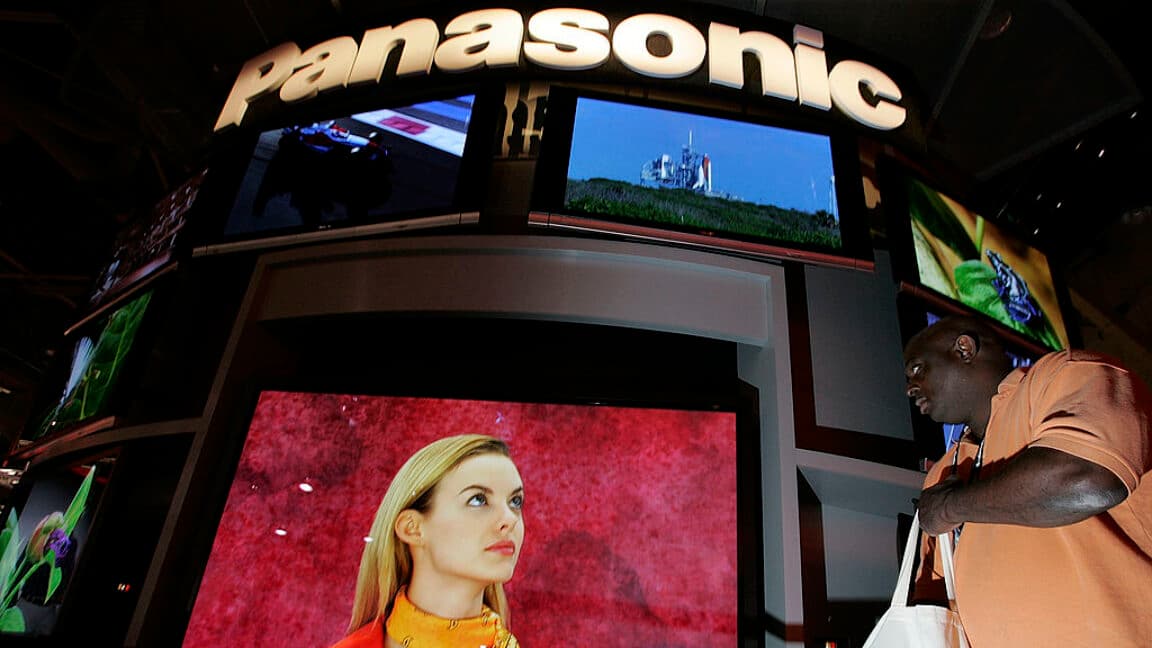
According to Ars Technica, Panasonic has announced that it will no longer manufacture its own televisions. Instead, Chinese company Skyworth, based in Shenzhen, will take over production, marketing, and sales of Panasonic‑branded TVs.
Skyworth already ranks among the larger global TV vendors. Research firm Omdia reported it as a top‑five TV brand by revenue in the first quarter of 2025. The new partnership will cover the US and Europe, where the companies are reportedly targeting a double‑digit market share.
Panasonic says it will continue to provide expertise, quality control, and joint development for high‑end OLED models, while Skyworth handles sales, logistics, and the bulk of operations. Support is promised for all Panasonic TVs sold up to March 2026, as well as the new Skyworth‑built models shipping from April onward.
The move follows years of retreat from TV manufacturing by Japanese brands. Panasonic had previously exited plasma production in 2014, left the US TV market by 2016, outsourced TV production in 2021, and only recently re‑entered the US with premium sets.
Why this matters
This deal is not just a supply‑chain tweak; it’s Panasonic formally admitting that the economics of TV hardware no longer work in its favor. TVs have become a brutally competitive, low‑margin business dominated by a handful of scale players. Korean manufacturers like Samsung and LG, and Chinese firms such as TCL, Hisense, and Skyworth, now control most global volume. Japanese incumbents simply couldn’t match that combination of manufacturing scale, aggressive pricing, and tight integration with panel suppliers.
In the short term, Panasonic wins by offloading capital‑intensive manufacturing while still monetising its brand and image quality expertise. It becomes, effectively, a premium label on top of Chinese industrial muscle. Skyworth gains instant credibility in Western markets where its own brand recognition is still modest, especially in Europe and the US, and gains better access to retail channels that still trust the Panasonic name.
The losers are clear as well. Anyone who equated Japanese TVs with domestically engineered and built hardware now has to adjust expectations: almost no mass‑market TVs are actually made in Japan anymore. Local Japanese manufacturing jobs in this segment are gone. And smaller TV brands without either massive scale or a strong brand to license will be squeezed even harder.
Strategically, this cements a broader shift: consumer electronics brands are increasingly splitting into two tiers. On one side are design, UX, and brand owners. On the other are manufacturing specialists and panel makers. Panasonic is moving decisively into the first camp.
The bigger picture
To understand this move, you have to zoom out to three intertwined trends.
First, the TV market has been stuck in a slow‑growth, price‑eroding cycle for years. Larger screens, 4K, 8K, HDR – they all drove replacement cycles for a while, but each technology wave commoditized faster than the last. By the time mid‑range Chinese brands are shipping decent 65‑inch 4K HDR sets at budget prices, it’s extremely hard for a traditional manufacturer with higher costs to justify a premium on hardware alone.
Second, the centre of gravity has shifted from panels to platforms. Smart TV operating systems – Android TV / Google TV, webOS, Tizen, Roku OS – now shape the user experience, the app ecosystem, and increasingly the revenue model. Data from viewing habits, advertising inventory, and paid placements on home screens often matter more to manufacturers than the margin on the physical display. That game favours companies that are comfortable with adtech, data partnerships, and software roadmaps, not just factories.
Third, we’re watching a broader realignment of Japanese consumer electronics. As Ars Technica notes, Sharp, Toshiba, Hitachi, and Pioneer have already abandoned direct TV manufacturing, usually via brand‑licensing deals. Sony recently agreed to sell a majority stake in its TV and home‑entertainment business to TCL. Panasonic’s move is therefore not an anomaly; it’s the last major domino falling.
Looked at through that lens, the Panasonic–Skyworth alliance is part of a global pattern: the centre of TV manufacturing has shifted to China and South Korea, while Japan’s role is retreating to niche components, professional displays, and brand licensing.
The European angle
For European consumers, a Panasonic logo will no longer guarantee a fundamentally different supply chain from a Skyworth, TCL, or Hisense TV. Many sets on the shelf will share similar panels, SoCs, and even operating systems – the differentiation will be in tuning, design, and after‑sales support.
From a regulatory perspective, this also tightens the link between Chinese manufacturing and European data rules. Smart TVs have quietly become one of the most data‑hungry devices in the living room. Under the GDPR and the Digital Services Act, any profiling, advertising, and app‑store behaviour connected to EU users is tightly regulated, regardless of where the hardware is built. Panasonic’s continued involvement in software and quality assurance means it cannot pretend to be just a passive licensor; regulators will expect accountability.
The forthcoming EU AI Act may also touch recommendation engines and content discovery features on smart TVs, particularly where opaque algorithms influence viewing choices. Chinese manufacturers entering deeper into the EU market under Japanese brands will need robust compliance strategies, European data‑storage options, and transparent consent flows – areas where many budget brands have struggled.
For European retailers, the deal offers a more competitive mid‑ to high‑range Panasonic line, potentially at lower wholesale prices thanks to Skyworth’s cost base. But it also accelerates consolidation: more brands on paper, fewer actual manufacturers behind them.
Looking ahead
Expect the first Skyworth‑made Panasonic TVs for Europe and the US to focus on two pillars: premium OLED flagships co‑developed with Panasonic engineers, and aggressively priced mid‑range models that lean on Android TV / Google TV or another major platform.
If the partnership works, Panasonic’s TV division could stabilise as a leaner, higher‑margin business centred on brand value, picture processing know‑how, and long‑term relationships with broadcasters and streaming platforms. If it fails – for example, due to quality problems, poor software updates, or geopolitical tensions affecting Chinese supply chains – Panasonic may accelerate a full exit, turning the TV brand into a pure licensing asset.
For Skyworth, success in Europe and the US is not guaranteed. It must convince privacy‑sensitive markets that it can meet or exceed local expectations on security and data protection, while still playing the advertising and data‑monetisation game that now underpins TV economics. The firm also competes directly with fellow Chinese players like TCL and Hisense, who have been investing heavily in brand building across Europe.
Watch, over the next two to three years, for how clearly Panasonic discloses the origin of its sets, how quickly software updates arrive, and whether picture quality remains a genuine differentiator. Also watch whether EU regulators start to treat smart TV ecosystems more like smartphones – with stricter rules on bloatware, tracking, and default services.
The bottom line
Panasonic’s decision to let Skyworth build its TVs marks the symbolic end of Japan’s dominance in the living‑room display – and the triumph of scale and software over manufacturing pride. Consumers may benefit from sharper prices and more feature‑rich sets, but at the cost of yet another layer of opacity about who really controls their devices and data. The real question now is not whose logo sits on your TV, but whose ecosystem – and whose rules – run behind the glass.