1. Headline & intro
The Pixel 10a is the kind of phone reviewers hate and ordinary buyers increasingly love: boring, predictable, and absolutely fine. Google has taken last year’s Pixel 9a, filed off a few rough edges, and put a new number on the box. According to Ars Technica’s review, it’s barely an upgrade – and still probably the best $500 Android phone you can buy.
That disconnect is the real story. The Pixel 10a is less about specs and more about what happens when smartphones become long‑lived appliances, AI becomes a paid upgrade tier, and mid‑range buyers are quietly locked into ecosystems for seven years at a time.
2. The news in brief
As reported by Ars Technica, Google’s Pixel 10a is a $500 mid‑range Android phone that closely mirrors last year’s Pixel 9a. It keeps the same Google Tensor G4 chip, 8 GB of RAM, and 128/256 GB storage options, along with a 6.3‑inch OLED display and a 48 MP main camera plus 13 MP ultrawide.
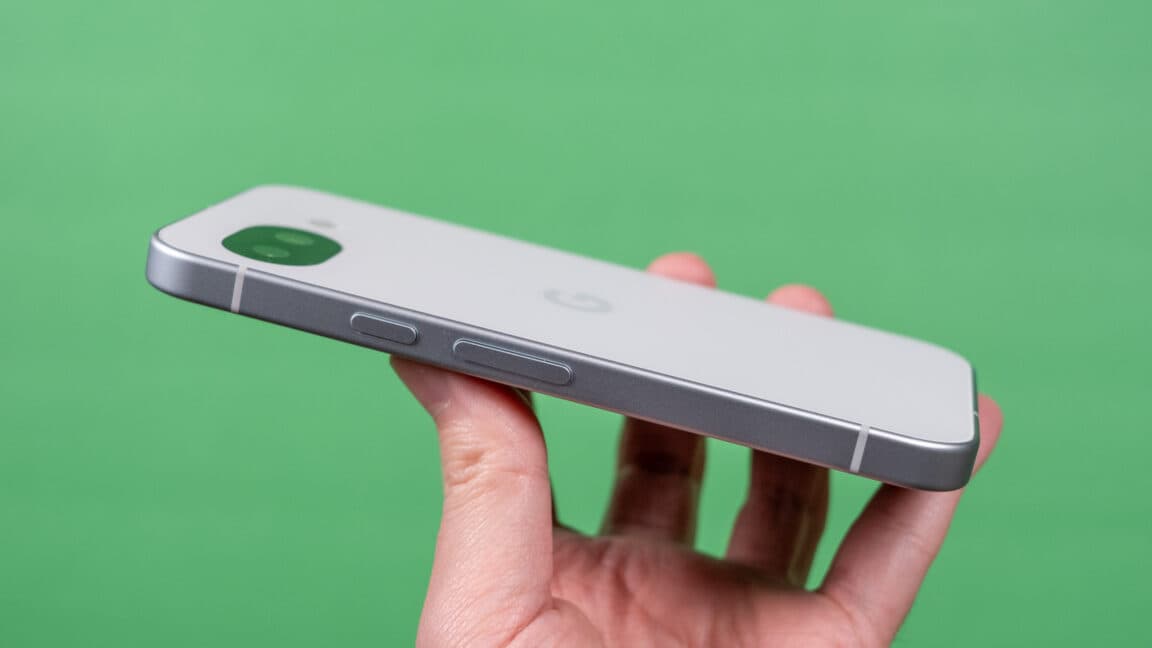
Changes are modest: a slightly brighter screen with newer Gorilla Glass 7i, a redesigned rear that makes the camera module sit flush with the back, and faster wired (30 W) and wireless (10 W) charging. Battery capacity stays at 5,100 mAh.
The phone launches with Android 16 and is promised seven years of OS and security updates, matching Google’s flagship line. However, unlike the Pixel 10 and 10 Pro, it lacks the newer Tensor G5 processor, the PixelSnap magnetic system, and several of Google’s most advanced on‑device AI features.
3. Why this matters
On paper, the Pixel 10a looks like corporate laziness. In practice, it’s a clear statement of Google’s smartphone strategy: the mid‑range is no longer about annual hardware leaps, but about locking in users with software, support, and “good enough” silicon.
The first winner is Google itself. Reusing the Tensor G4 cuts R&D and manufacturing risk, while keeping the price at $500 in a year of rising memory and component costs (as Ars Technica notes) likely protects margins. When you control the chip and the OS, you don’t need to chase Qualcomm’s latest numbers; you need stability and a predictable update story.
The second winners are non‑enthusiast buyers. If you just want a phone that takes great photos, lasts all day, and doesn’t feel old in three years, the 10a does that without asking you to care about NPUs or benchmark graphs. Seven years of updates on a $500 phone is still rare in Android land.
The losers are power users and spec‑hunters, who now face a clearer class system inside the Pixel lineup. The message is blunt: if you want the best Google can do with on‑device AI, you’re supposed to buy the flagship with Tensor G5. The A‑series is being repositioned as the “appliance” tier – rock‑solid, unexciting, and intentionally a step behind.
Most importantly, the Pixel 10a crystallises a new buying rule: in the mid‑range, last year’s phone at a discount is often the smartest choice. That undermines the annual upgrade cycle more than any environmental campaign ever has.
4. The bigger picture
The Pixel 10a fits into three broader shifts that have been building for years.
1. Smartphone hardware is plateauing. Outside of folding screens and niche gaming phones, the Android market has become a sea of very similar slabs. Meaningful improvements now come every three to four years, not every 12 months. Google’s decision to keep the same chip and camera is just an unusually honest admission of that reality.
2. Longevity is becoming a competitive weapon. Earlier, Samsung matched Google’s promise of seven years of updates on its Galaxy S24 line. Apple has long delivered half a decade or more of support. What used to be a nerdy spec is turning into a mainstream selling point – especially as prices creep up and people hold onto phones longer.
In that context, the Pixel 10a’s most important spec isn’t the 3,000‑nit display; it’s the 2033 end‑of‑life date.
3. AI is the new segmentation line. Instead of cutting corners on cameras or screens, Google is now carving up the lineup by AI capability. The budget Pixel gets the core Google experience and some helpful AI features (call screening, spam protection, Gemini integrations), but not the full generative toolbox running on the Tensor G5’s beefier NPU.
This mirrors what we’re seeing across the industry: Samsung’s “Galaxy AI” experience is richer on high‑end devices, and Apple is expected to take a similar approach as it rolls out more on‑device models. Hardware is converging; software – especially AI – is where vendors will now differentiate and upsell.
The Pixel 10a, then, is less a phone than a node in Google’s long‑term AI and services strategy.
5. The European / regional angle
For European buyers, the Pixel 10a raises an uncomfortable question: why are we paying flagship‑level VAT on phones that barely change year to year?
Pixel availability in Europe has historically been patchy, with official sales in a limited set of countries and everyone else relying on imports and grey‑market resellers. Where it is sold officially, the A‑series has quietly become the reference Android camera phone at the €500 mark – the device operators put in front of people who say “I just want something that takes great pictures and will last.”
The Pixel 10a’s seven‑year update promise lines up neatly with EU priorities. Brussels has been pushing for longer software support, better repairability, and more sustainable electronics. While the Pixel isn’t modular or particularly repair‑friendly compared with Fairphone or Shiftphone, it nails the software‑support part of the brief.
At the same time, the European market is much more competitive at this price point than the US. Buyers can choose between Xiaomi, Realme, OnePlus Nord, Nothing and Samsung’s A‑series, many of which offer higher refresh‑rate screens, faster charging, or more RAM on paper. What they usually can’t match is Google’s camera processing and guaranteed updates.
In an EU increasingly defined by regulation – GDPR, the Digital Markets Act, the upcoming AI Act – that support story matters. A phone you can safely keep until 2033 is good not only for your wallet, but also for regulators who want to see less e‑waste and more security.
6. Looking ahead
The Pixel 10a is likely a template for how Google will handle its mid‑range from now on.
Expect the A‑series to routinely stay one Tensor generation behind the flagships. That lets Google amortise chip development costs over more years and use the older silicon for a “stable” tier while experimenting on the cutting edge in the premium line.
We should also expect more deliberate feature gating. Today it’s PixelSnap and some on‑device Gemini tricks. Tomorrow it could be more of the camera magic, live translation, or offline summarisation. The pattern is clear: heavy AI workloads will live on the most recent chip, while the A‑series gets a subset that keeps the experience smooth over its long lifespan.
For buyers, the strategy to watch is pricing rather than specs. Google is already leaving multiple A‑series generations on sale at the same list price, as Ars Technica notes, then letting discounts do the work. That’s how you end up with a “sidegrade” year where the best deal might be the 9a, not the new 10a.
The open questions:
- Will Google stay disciplined on seven years of support when Tensor G4 is truly old silicon? 8 GB of RAM in 2032 is going to feel tight.
- How will EU repairability and battery rules evolve, and will Google respond with more modular designs – or simply pay the regulatory cost?
- And perhaps most importantly, will a competitor offer a genuinely better camera plus seven‑year support at this price in Europe? That would finally force Google to do more than a sidegrade.
7. The bottom line
The Pixel 10a is deliberately unexciting – and strategically very important. It confirms that mid‑range Android is now about longevity, software, and AI tiers, not about annual spec fireworks. If you’re shopping around €500, the smart move is simple: buy whichever recent Pixel A‑series model is cheapest where you live, and ignore the number on the box.
The real question isn’t “Is the 10a worth upgrading to?” but “How many more years will you keep your next phone?”