1. Headline & intro
Google just launched a new “budget” Pixel that looks suspiciously like the old one. In a year when every company is shouting about AI and custom silicon, the Pixel 10a arrives with last year’s chip, last year’s design, and a slightly brighter screen for the same $499 price.
That’s not laziness; it’s strategy. The 10a is a case study in how Google now thinks about the mid-range: protect the flagships, ride out component shortages, and lean on long software support instead of flashy hardware. In this piece we’ll unpack who this move really serves, what it says about the smartphone market, and why European buyers should read the spec sheet differently.
2. The news in brief
According to Ars Technica, Google has announced the Pixel 10a, arriving 5 March with pre-orders starting immediately at $499 in the US for the 128 GB model.
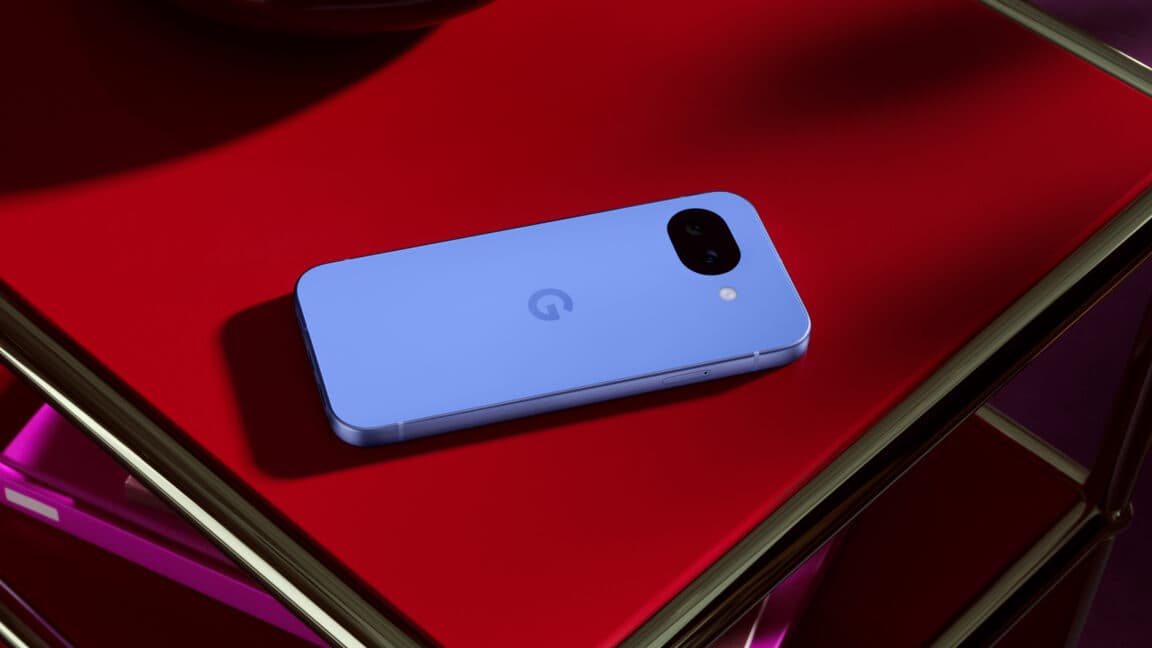
The phone is extremely close to last year’s Pixel 9a. It keeps the same Tensor G4 processor, 8 GB of RAM, 128/256 GB storage options, 5,100 mAh battery and the same camera hardware (48 MP main, 13 MP ultrawide, 13 MP selfie). The main visual change is that the rear camera bar is now completely flush with the back.
There are modest upgrades: the 6.3-inch OLED reaches up to 3,000 nits peak brightness and uses Gorilla Glass 7i instead of Glass 3. Wired charging goes from 23 W to 30 W, wireless from 7.5 W to 10 W, Bluetooth jumps to 6.0, and Google increases the share of recycled materials. Unlike the flagship Pixel 10 line, the 10a keeps a physical SIM slot. Google promises seven years of OS updates, starting from Android 16.
3. Why this matters
The Pixel 10a looks underwhelming on paper, but strategically it’s very deliberate. Google is sending three clear signals.
First, the A‑series is no longer the place for aggressive innovation. For years, reviewers happily recommended A‑series Pixels over the flagships because you got 80–90 percent of the experience for far less money. Shipping the same Tensor G4 again – while the Pixel 10 reportedly moved to a more capable G5 – redraws that line. If you want the latest AI features and performance headroom, Google wants you at $800 and up, not $499.
Second, Google is quietly redefining value away from raw specs and towards longevity. Seven years of OS support on a $499 phone is arguably the most important line in the spec sheet. For mainstream buyers, a device that stays secure and functional until 2033 matters far more than a 15 percent faster CPU they’ll never notice. The mid‑range is becoming the “default smartphone” that you buy, forget about and keep until the battery finally gives up.
Third, this is a response to the component crunch caused by the AI boom. Training clusters and data centers are devouring high‑bandwidth memory, NAND and advanced packaging. Ars Technica notes Google’s own explanation: sticking with G4 helps balance cost in a year when RAM and storage are getting pricier. When your cloud division is fighting for the same components as your hardware team, you save your best silicon for the products that bring in the highest margin.
The losers are spec‑hungry enthusiasts and anyone who expected the A‑series to keep pushing boundaries. The winners are Google’s margins, carriers looking for a reliable mid‑tier Android, and ordinary users who just want a solid phone they won’t have to think about for a long time.
4. The bigger picture
Zoom out, and the Pixel 10a looks less like an exception and more like a pattern.
Apple has been essentially coasting with the iPhone SE line, recycling older designs and chips while pushing serious innovation into the main iPhone series. Samsung’s Galaxy A family increasingly sees small yearly bumps rather than sweeping redesigns. The hyper‑competitive mid‑range of the late 2010s – when each year brought huge camera or display jumps – has flattened.
Two structural shifts explain this. Hardware has plateaued for most people’s needs, and software support is stretching dramatically. Samsung now promises up to seven years of updates on its premium phones; Google is matching that even on the 10a. When a mid‑range device is “good enough” on day one and still supported many years later, the business incentive to wow buyers every 12 months disappears.
At the same time, AI is the new battlefield – but not for the $500 bracket. Advanced on‑device models crave more powerful NPUs, faster memory and tighter integration with the cloud. That investment goes into the flagships where OEMs can justify higher prices. Mid‑range devices will often get a subset of cloud‑based features, but increasingly they will miss out on the most demanding on‑device AI tricks.
We’ve seen this playbook before. Laptops went through a similar phase: ultrabooks became “good enough,” innovation moved to premium gaming/workstation lines, and mainstream buyers started upgrading less often. The Pixel 10a suggests smartphones are entering the same maturity stage. The story is now about staying power, not excitement.
For Google, this also simplifies its line‑up. The Pixel 10 becomes the obvious choice for enthusiasts who want the bleeding edge, while the 10a is the sensible default. That separation makes marketing cleaner – even if it makes the A‑series far less interesting to follow.
5. The European / regional angle
For European users, the Pixel 10a is a more complex proposition than the US‑centric price tag suggests.
First, pricing. Historically, Google’s “$499” devices land in Europe at a noticeably higher figure once VAT and regional mark‑ups are added. That drops the 10a into direct competition with strong mid‑range players like Samsung’s A‑series, Xiaomi’s Redmi and POCO lines, and increasingly brands like Nothing. Those rivals often offer fresher designs, faster charging and sometimes newer chipsets – but weaker software support.
Where Google has a uniquely European advantage is alignment with policy. The EU has been pushing for longer device lifetimes through right‑to‑repair and circular economy initiatives. Regulators have floated requirements for extended software and security support, and some member states are already nudging manufacturers in that direction. Seven years of OS updates on a mid‑range phone is exactly the kind of commitment Brussels wants to see.
The continued presence of a physical SIM tray also matters more in Europe than Silicon Valley might think. eSIM adoption is growing, but many Europeans still juggle prepaid offers, cross‑border roaming or a work/personal SIM pair. Apple’s decision to go eSIM‑only in the US sparked concern here; Google keeping the slot on the 10a will be welcomed, especially in markets with high travel and cross‑border commuting.
There’s also the AI and privacy angle. With the EU AI Act and the Digital Services Act tightening rules on data processing and transparency, on‑device processing becomes politically attractive. Yet by sticking with Tensor G4, Google may constrain how far it can push heavy on‑device AI for A‑series owners over the next seven years. Europeans may end up with long‑lived phones that are stable and well‑supported, but that miss the most advanced local AI features reserved for newer chips.
6. Looking ahead
The Pixel 10a will probably not be a blockbuster headline device – but it doesn’t need to be. Expect it to do most of its quiet business through carrier deals, trade‑in promotions and discount cycles once the initial launch buzz fades. A $499 list price is just a starting point; in 12–18 months, this phone discounted by 20–30 percent could be extremely compelling.
The more interesting question is what happens to the A‑series next. Google now has several levers to pull when it wants to push users up the ladder: restrict some AI features to Tensor G5 and above, introduce camera upgrades only on the mainline Pixels, or eventually shorten the A‑series portfolio altogether. If the mid‑range becomes too good, it cannibalises the high‑margin flagships. If it stagnates too much, buyers drift to Chinese brands.
Watch three things over the next two years:
- How aggressively Google differentiates AI features by chip generation. If big new capabilities become “Pixel 11+ only,” 10a owners may feel left behind despite seven years of updates.
- Whether Google keeps skipping chip generations in the A‑series. If the Pixel 11a (or whatever comes next) also recycles silicon, we can treat this as a permanent policy, not a one‑off reaction to component prices.
- How EU regulation around device longevity crystallises. If Brussels locks in long‑term update requirements, Google will be ahead of the curve – and some rivals may struggle to match that on slim mid‑range margins.
The risk for Google is reputational: the Pixel brand has built a loyal following of enthusiasts who expect the A‑series to be the “smart buy.” Turning it into the “safe but boring buy” may shift that narrative.
7. The bottom line
The Pixel 10a is less a new phone and more a policy statement: Google is happy to slow mid‑range hardware progress in exchange for cleaner product segmentation, healthier margins and long‑term software support. For most people, it will be a sensible, durable choice – especially once discounts kick in – but it also marks the moment when the A‑series stops being exciting.
The real question for readers is simple: in 2026, do you still want a new phone every year, or do you just want one you can forget about for the next seven?