1. Headline & intro
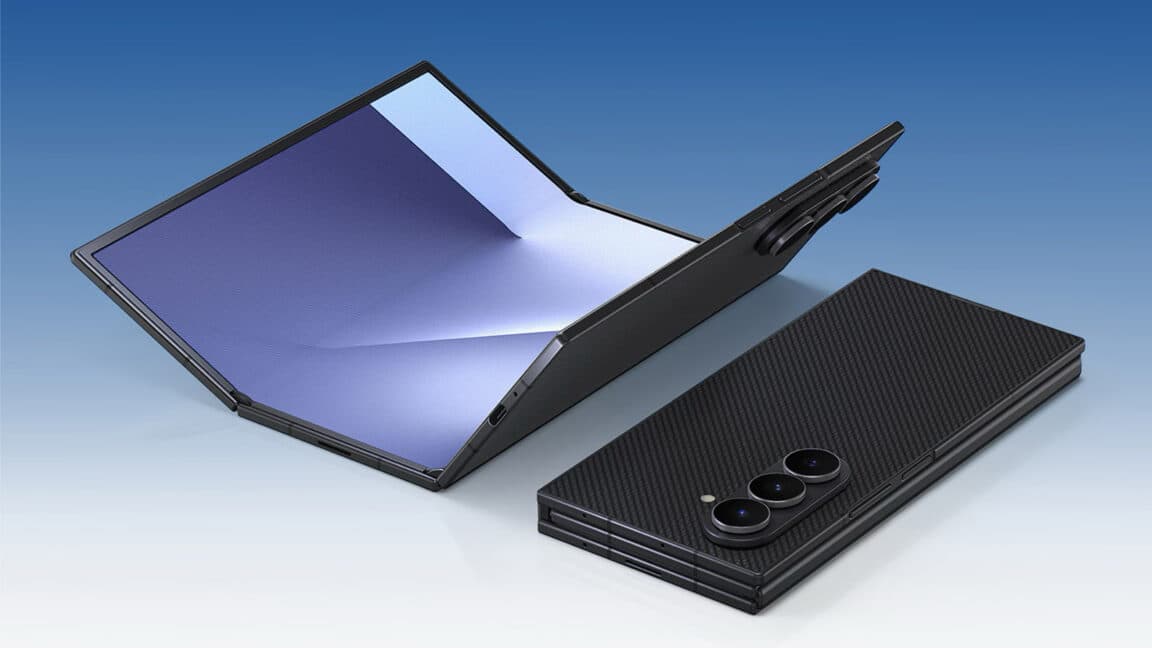
Samsung didn’t just pull an exotic gadget from its online store; it quietly closed a chapter in how far mainstream mobile hardware is willing to stretch. The Galaxy Z TriFold was the ultimate tech flex: a pocket brick that unfolded into a 10‑inch tablet and cost more than many laptops. Now, just three months later, it’s gone. That decision matters far beyond a single niche device. In this piece we’ll look at what Samsung’s retreat says about component economics, the maturity of foldables, the limits of ultra-premium phones, and where big‑screen mobility goes next.
2. The news in brief
According to Ars Technica, Samsung has decided to end sales of the Galaxy Z TriFold, a tri‑folding Android device that launched first in South Korea in December 2025 and in the US in January 2026 at a price of $2,899.
As reported by Bloomberg and summarized by Ars, Samsung is winding down sales in Korea and letting remaining inventory sell through in other markets, including the US. The phone is already shown as sold out on Samsung’s online store.
Samsung has not provided a public explanation, but the TriFold appears to have been production‑limited rather than a sales flop. The device was reportedly selling out quickly, with Samsung teasing restocks and units even trading above retail on secondary markets. Component costs – particularly for memory and storage – are believed to be a major factor, given the TriFold’s 16 GB of RAM and 512 GB of storage in the base model.
3. Why this matters
The obvious narrative is “niche luxury gadget discontinued, nothing to see here.” That would be a mistake.
First, the TriFold was Samsung’s most visible attempt to test how far the market will tolerate complexity and price in exchange for screen real estate. The answer seems to be: enthusiasts will pay, but the bill of materials is now competing with far more lucrative product categories. In a world where AI servers are devouring high‑end DRAM and NAND, using 16 GB of premium memory on a low‑volume halo phone starts to look irresponsible to shareholders.
This is Samsung choosing margin discipline over headline‑grabbing experimentation. The clear winners are Samsung’s mainstream flagship lines – notably the Galaxy S26 Ultra and the more conventional Galaxy Z Fold/Flip series – which can inherit the best ideas from the TriFold without its manufacturing headaches.
The losers are power users who genuinely wanted a pocketable tablet and were willing to pay for it. With Huawei’s Mate XT Ultimate hard to buy and limited to a few regions, the global market for truly oversized foldables has effectively collapsed to zero.
There’s also a subtler signal: if even Samsung, with its vertical integration in displays and memory, can’t make a tri‑fold work at $2,899, that form factor is nowhere near ready for mass‑market primetime.
4. The bigger picture
The TriFold’s short life fits into several broader trends.
First, the component crunch driven by AI. Memory and storage prices have been climbing as hyperscalers and AI model training soak up supply. Samsung is not just a phone maker; it’s one of the world’s biggest memory vendors. Every gigabyte soldered into a TriFold is a gigabyte not sold into a data center at far higher margins. When that trade‑off bites, vanity projects are the first to go.
Second, foldables are maturing. Early Z Fold and Z Flip generations were proofs of concept. By 2025–26 they had become boring in a good way: thinner, more durable, better‑sealed, cheaper. The frontier moved from “can we fold a screen” to “can we justify this price delta versus a slab phone?” The answer so far: yes for mid‑to‑high‑end foldables, very uncertain for ultra‑premium monsters.
Historically, the industry has seen a similar arc with “phablets.” The 6‑inch monsters of 2012 became the default by 2018, but only after prices normalized and software caught up. Tri‑fold devices are at the 2012 stage: technically dazzling, ergonomically divisive, and economically fragile.
Meanwhile, competitors are cautious. Huawei’s Mate XT Ultimate exists but is region‑locked and aging. Other Chinese OEMs show tri‑fold prototypes at trade shows, not at scale. Apple is still on the sidelines of foldables entirely, focusing instead on refining large flat phones and iPads. In that context, Samsung’s retreat looks less like a failure and more like the market collectively deciding that two folds are currently one fold too many.
5. The European / regional angle
For most European consumers, the TriFold was more a YouTube curiosity than a real purchase option. Availability was limited, pricing landed well above €3,000 once taxes and local markups were included, and carriers had little incentive to subsidise such a niche device.
Yet the decision to kill it still matters for Europe. The EU is pushing hard on durability, reparability and sustainability through initiatives like the Ecodesign rules and the upcoming Right to Repair measures. Triple‑hinge devices with fragile ultra‑thin glass, complex cables running through multiple folds and tiny production runs are almost the textbook opposite of what Brussels wants the market to build.
If Samsung had pushed TriFold‑style designs in Europe at volume, it would quickly have run into questions about longevity, spare parts availability and software support windows. A device this complex also risks higher failure rates – expensive for Samsung under European consumer protection law and damaging for its foldable brand image.
There’s also an opportunity cost for European networks and developers. Instead of chasing an exotic screen layout used by a few thousand people, they can focus on optimizing apps and services for the much larger base of single‑hinge foldables, tablets and laptops that Europeans actually buy.
6. Looking ahead
Samsung executives have already hinted, via Bloomberg reporting, that a direct TriFold sequel is far from guaranteed. That doesn’t mean the concept was a dead end.
Expect the “lessons learned” to show up in more conservative products. A wider aspect ratio for the next Galaxy Z Fold, refined hinge mechanisms, better crease management and smarter multitasking UI patterns are all likely to originate in TriFold R&D. In other words: the TriFold may disappear as a product line, but live on as a donor of ideas.
For the next 24–36 months, the safest bets are:
- Single‑hinge book‑style foldables get slightly larger and wider, edging closer to small tablets without needing a second hinge.
- Prices for mainstream foldables continue to drift down as yields improve and competition intensifies.
- True tri‑fold devices retreat to the prototype stage until component prices stabilise and there’s a clearer software story.
Watch for three signals if a TriFold‑class device is to return: a downturn in memory prices, Android (and major apps) embracing more flexible multi‑panel layouts, and at least one other top‑tier vendor committing to large‑screen foldables as a strategic category rather than a demo.
7. The bottom line
Samsung’s decision to stop selling the Galaxy Z TriFold is less about weak demand and more about hard economics and strategic focus. In today’s AI‑driven component market, a tri‑fold phone is an indulgence even Samsung can’t justify. The real impact will be felt not in discontinued stock, but in how quickly its ideas trickle down into more practical foldables. The open question for readers: would you ever spend laptop money on a pocket‑sized tablet – and if not, what would need to change?