Headline & intro
Nintendo has quietly admitted something many early Switch 2 owners already noticed: a 1080p handheld screen can make old 720p games look worse, not better. The new “Handheld Mode Boost” feature is Nintendo’s first systemic answer to that problem. On paper, it’s simple: run original Switch games as if the console were docked, even in handheld mode. In practice, it’s a fascinating window into how Nintendo thinks about backward compatibility, battery life, and long-term platform strategy. In this piece, we’ll unpack what the update actually does, who it helps (and hurts), and what it signals for the future of hybrid consoles.
The news in brief
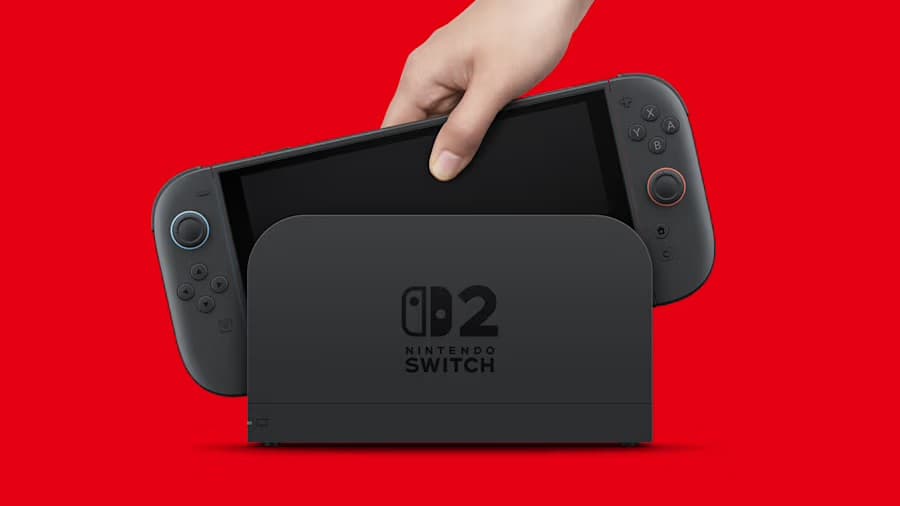
According to Ars Technica, a new system update (version 22.0.0) for the Nintendo Switch 2 adds an optional setting called Handheld Mode Boost. As reported earlier by NintendoLife and others, this toggle lives in the System Settings under "Nintendo Switch Software Handling".
When enabled, the Switch 2 will try to run original Switch (Switch 1) games using their docked graphics profile, even when you’re playing in handheld mode. For many titles, that means jumping from 720p to 1080p, plus higher-quality textures and longer draw distances—essentially TV mode visuals on the built-in screen.
Ars Technica tested the feature with unpatched copies of Mario Kart 8 Deluxe and Dragon Quest XI S and saw sharper 2D and 3D elements and docked-like graphics in handheld play. Nintendo warns that the mode can reduce battery life and disables touchscreen input while active, since games believe they are running on a TV. It doesn’t affect native Switch 2 titles or games already updated specifically for the new hardware.
Why this matters
Handheld Mode Boost is more than a convenience toggle; it’s Nintendo acknowledging a core tension in the hybrid model.
The original Switch was designed around a 720p handheld baseline. Many developers targeted that resolution, then scaled up to 900p or 1080p when docked. With Switch 2’s 1080p handheld screen, that 720p image must now be upscaled every single frame. On a TV, you’re often sitting a couple of meters away; on a handheld, the pixels are 30–40 cm from your eyes. The softness is far more obvious.
Nintendo could have left it to developers to patch their games, but that’s unrealistic for hundreds (soon thousands) of titles, many from studios that have moved on. Handheld Mode Boost is essentially a platform-level safety net: if the game already has a higher-quality docked profile, the system can force it in handheld to better match the new screen.
Who benefits?
- Players with large Switch libraries get a more modern-looking experience on Switch 2 without waiting for patches.
- Nintendo shores up the perceived value of backward compatibility; BC that looks worse than the original hardware is a reputational risk.
Who loses?
- Battery life takes a hit; pushing higher resolutions and effects costs watts.
- Game design assumptions break: no touchscreen, Joy-Cons treated as a single Pro Controller, and any UI that changes between docked/handheld could behave oddly.
In other words, it’s a trade-off: visual fidelity vs. the original handheld ergonomics. Nintendo is betting that, for many players, sharper pixels are worth the compromises.
The bigger picture
Step back and Handheld Mode Boost fits a broader industry pattern: once consoles hit a certain maturity, platform holders start stacking performance and compatibility layers to extend their ecosystems.
Sony did this with the PS4 Pro and later with PS5’s boost modes for PS4 titles. Microsoft introduced resolution and FPS boosts on Xbox for selected older games. Those efforts were often curated per title. Nintendo is now attempting something slightly different: a generic, system-level override for any game that already supports separate docked and handheld profiles.
It also highlights how much modern consoles rely on firmware as a design tool. When the first Switch launched, you bought the capabilities that were on the box. By contrast, Switch 2 is clearly conceived as a platform that will evolve through system software:
- Today, generic Handheld Mode Boost.
- Tomorrow, potentially per-game profiles, smarter heuristics, or even machine-learning upscalers if the hardware and licensing allow it.
Before Switch 2 was even officially confirmed, there were persistent rumors that Nintendo’s next hardware would lean more heavily on advanced upscaling (for example, via newer NVIDIA technology). Handheld Mode Boost doesn’t prove any of that, but it shows Nintendo thinking in that direction: leaning on existing performance headroom and smarter system software to make old content look better without heavy developer involvement.
Historically, Nintendo’s relationship with backward compatibility has swung back and forth—some generations were fully compatible, others started from scratch. With Switch 2, the company has clearly decided that continuity is an asset, not a burden. Investing engineering time into things like Handheld Mode Boost is a signal: the Switch era isn’t a seven-year product cycle, it’s a multi-generation platform.
The European / regional angle
For European players, this update is particularly important because of how and where the Switch is used. Across cities like Berlin, Paris, Madrid or Warsaw, Nintendo’s hybrid is a commuter device as much as a living-room console. That means handheld image quality is not a niche concern; it’s the primary way many people play.
In price-sensitive European markets, the average player stretches their game purchases longer than in the US. Backward compatibility and visual comfort on old titles aren’t merely nice-to-have—they are consumer protection issues in practice, even if not labeled as such.
The EU has been pushing hard on sustainability, right‑to‑repair, and reducing e‑waste. Making it viable to bring a large Switch library forward to a new device, without feeling like you must keep the old console around because it “looks better”, indirectly supports those goals. One device lasting longer, doing more, is easier to justify than a drawer full of obsolete hardware.
There’s also a cultural angle: European players tend to be more battery‑life and privacy conscious than their US counterparts. An optional toggle is exactly the sort of compromise that resonates here—power users can trade battery for fidelity, while families can leave the default and avoid shorter play sessions on long trips.
Finally, Nintendo’s competitors in Europe—cloud gaming services from Microsoft, NVIDIA and others—position themselves as “future proof” because older titles can look sharper via server-side upgrades. Handheld Mode Boost helps Nintendo argue that a local, cartridge‑based library can also age gracefully, even on newer screens.
Looking ahead
Handheld Mode Boost is clearly version 1.0 of an idea, not the final form.
Expect Nintendo to refine this in several ways:
- Per‑game recommendations: Some titles will likely suffer frame‑rate drops or UI glitches when forced into docked mode profiles. Nintendo could introduce automatic suggestions or a curated list of “Boost‑friendly” games.
- More granular controls: Instead of an all‑or‑nothing docked profile, future updates might allow a subset of enhancements—higher resolution but not maximum effects, for instance—to better balance battery life and performance.
- Developer hooks: Nintendo could expose APIs so studios can flag how their games should behave when Boost is active (enable touch, keep split Joy-Cons, adjust HUD size, etc.).
There’s also a strategic risk: if Handheld Mode Boost works “well enough” for many popular games, some publishers may feel less pressure to issue proper Switch 2 patches or paid upgrades. From Nintendo’s perspective, that might be acceptable—what matters most is that players see continuity and quality, not necessarily that every box says “Switch 2 Enhanced”.
The next 6–12 months will show how aggressively Nintendo tunes this feature. Key questions:
- Will we see per‑title whitelists or blacklists?
- Will battery life complaints push Nintendo to dial back Boost behavior?
- Could a future revision integrate smarter scaling techniques so even strictly 720p games look cleaner without invoking docked mode?
What’s clear is that backward compatibility is no longer just about “does it boot?” It’s about does it feel like a downgrade? Handheld Mode Boost is Nintendo’s acknowledgment that for a premium new console, that answer must be no.
The bottom line
Handheld Mode Boost is a clever, if imperfect, way for Nintendo to fix a self‑inflicted problem: old 720p games on a 1080p handheld screen. It improves perceived value for existing libraries, reinforces the Switch ecosystem as multi‑generation, and shows Nintendo is willing to use system software—not just new hardware—to solve compatibility pain points. The trade‑offs around battery life and input quirks are real, but optional. The deeper question for players is simple: when you buy into a platform, do you expect your old games to merely work, or to actually age well?