1. Headline & Intro
Buying a TV used to be simple: pay once, plug in, watch. With Walmart’s latest move, that model edges closer to extinction. Select new Vizio TVs in the US now require a Walmart account to complete setup and access smart features. This isn’t a UX tweak; it’s a business model pivot. Your living-room screen is being wired directly into a retail ad machine.
In this piece, we’ll unpack why Walmart is doing this, what it signals for the future of smart TVs, how it fits into the rise of “retail media,” and why European consumers should pay close attention even if Vizio isn’t a big brand in their local stores.
2. The News in Brief
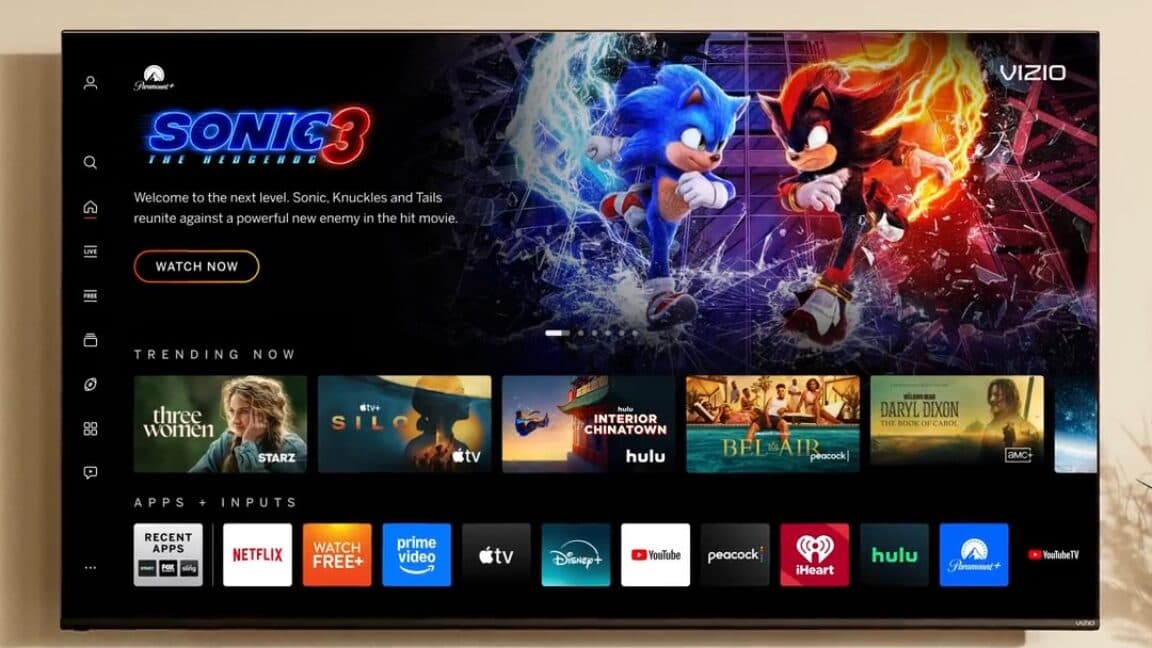
According to Ars Technica, Walmart— which completed its acquisition of TV maker Vizio in December 2024 — has started requiring Walmart accounts on some newly purchased Vizio TVs running Vizio OS.
A Walmart spokesperson told Ars that, for “select new Vizio OS TVs,” owners must log in with a Walmart account to finish onboarding and to use smart TV functions. Vizio accounts, which have been mandatory since mid‑2024 for features like subscription management, can be merged into Walmart accounts. Users who don’t want that linkage can delete their Vizio account, but the Walmart account requirement on affected models remains.
Walmart did not specify which TV models are covered, nor whether the change will roll out to all Vizio sets or via software updates to existing devices.
The integration is part of Walmart’s effort to connect viewing behavior with its $6.4 billion advertising business and wider retail operation. In Vizio’s last quarter as an independent company, ads brought in roughly $115.8 million in gross profit, while the hardware business lost about $6.7 million.
3. Why This Matters
This is not just one company tweaking its login screen; it’s a clear statement about where the TV industry’s money is now made.
For Walmart, the logic is brutally straightforward:
- Hardware is a loss leader. Vizio’s own numbers showed profits coming from ads and data, not from the panels themselves.
- Accounts equal identity. A mandatory Walmart login ties what you watch to who you are as a retail customer. That’s gold for “retail media,” the high-margin business of selling ad targeting based on shopping data.
- First‑party data is the new oil. As browser cookies decline and privacy rules tighten, owning the login layer on a big screen becomes a strategic asset. Walmart doesn’t just know what you buy in-store; it now wants to know what you watch while sitting on your sofa.
The winners are clear: Walmart and its advertisers. They get:
- persistent user IDs across TV, app, and web;
- more accurate attribution from ad exposure to product purchase;
- a new channel for “shoppable” ads that can push you to Walmart product pages.
The losers are consumers who thought they were buying a TV, not signing up for an ad platform. If the device won’t function as advertised without tying it to a retail account, the classic ownership model is weakened. You’re not fully in control of the device you paid for; you’re a logged‑in endpoint in someone else’s ad network.
The immediate risk is normalization. If Walmart can get away with this in the US, other TV makers and retailers will be tempted to follow, especially in the lower‑cost segment.
4. The Bigger Picture
Walmart’s move slots neatly into several broader trends.
First, TVs as ad platforms. Roku and Amazon’s Fire TV have long been explicit about monetizing home screens, tracking viewing, and inserting ads into interfaces. Major TV brands like Samsung and LG increasingly push ads on their home screens and app rows. The hardware race is commoditized; ads and data are where margins live.
Second, retail media networks. Advertisers are shifting budgets from traditional TV to platforms that can prove impact. Walmart, Amazon, Carrefour, and others are turning their ecommerce and loyalty programs into ad networks, using purchase data to target and measure campaigns. Plugging Vizio TVs into Walmart’s system closes a loop: what you watch, what you click, what you buy.
Third, there’s precedent for backlash. Vizio has already faced regulatory trouble in the past in the US for quietly tracking viewing data on millions of TVs without proper consent. That resulted in settlements with authorities and a promise to be more transparent. This time the tracking is more up-front — the account requirement is explicit — but it raises a similar underlying question: how much surveillance is acceptable for a device most people see as basic household infrastructure?
Compared with competitors, Walmart is pushing slightly further on hard tying of hardware to a retail identity. Many TV ecosystems encourage or gently nag you to sign in (Google, Samsung, LG), but completely gating core smart features behind a retailer’s account is a bolder step.
If it works commercially, expect copycats: more “free” or discounted TVs, more account walls, more shoppable ad formats integrating directly into the TV interface.
5. The European / Regional Angle
Vizio’s footprint in Europe is small, and Walmart-branded accounts are a US phenomenon — but the playbook is absolutely relevant to European consumers and regulators.
European TV buyers already face similar dynamics:
- Samsung, LG, Sony (with Google TV), Philips, TCL and others regularly push users to create accounts and agree to extensive data collection.
- Home-screen advertising and content recommendations based on viewing behavior are now standard on many smart TVs sold across the EU.
The difference is regulatory context. Under GDPR, consent must be specific, informed, and freely given. If access to essential smart TV functionality is effectively conditional on agreeing to broad tracking or linking to a retailer account, European data protection authorities could argue that consent is not truly “free”. The Digital Services Act also tightens transparency demands around recommender systems and targeted advertising.
So while Walmart may never roll out its Vizio account model in Europe, local players are watching. Large European retailers with strong loyalty programs — think Carrefour, Tesco, MediaMarktSaturn — could look at Walmart’s experiment and wonder whether a similar TV strategy makes sense, especially via white-label Chinese TV brands.
For privacy-conscious European households, the practical takeaway is simple: when you buy a TV, you’re not just comparing picture quality and HDR anymore. You’re choosing an ecosystem — and, increasingly, an advertising and data regime.
6. Looking Ahead
Expect three things over the next 12–24 months.
1. Deeper Walmart–Vizio integration.
It would be surprising if Walmart stopped at “select” models. Extending the account requirement across all new Vizio OS TVs is the logical next step, followed by tighter links to Walmart+, in‑TV shopping, QR codes on ads, and maybe even special discounts on Vizio sets for Walmart members.
2. A sharper split between “appliance” TVs and ad TVs.
As more manufacturers chase ad revenue, a counter‑trend is emerging: people paying extra for “dumb” or minimally smart TVs, or for high‑end models where you can disable most tracking and plug in an external box of your choice (Apple TV, Nvidia Shield, open‑source media players). Small European and boutique brands have an opportunity here if they can market privacy and simplicity as features.
3. Regulatory probing and legal tests.
In the US, the question will be whether tying core device functions to a retailer identity crosses any consumer-protection lines. In Europe, even if Walmart’s exact model doesn’t land, national data protection authorities are likely to scrutinize TV makers that bundle tracking and login with essential functionality. Smart TVs are becoming a textbook case for testing what “freely given” consent really means in the GDPR era.
Consumers should also watch for retroactive changes: firmware updates that suddenly demand new logins or expand tracking. Once your TV’s OS is tightly linked to a corporate account system, the balance of power shifts even further away from the buyer.
7. The Bottom Line
Walmart turning Vizio TVs into mandatory Walmart-account devices is a clear sign: in the TV business, you are increasingly not the customer, but the data source. If this model proves profitable, it will cascade through the industry, from budget sets to premium screens.
The real question for readers is simple: are you willing to trade control over a core household device for marginally cheaper hardware and “personalized” recommendations — or is it time to start valuing dumb TVs and external boxes again, even if they cost a bit more?