AMD’s First Ryzen AI Desktops Show Who AI PCs Are Really For
AI PCs were marketed as the next big thing for consumers, but AMD’s first Ryzen AI desktop chips quietly reveal the opposite: the real push is happening in office towers, not gaming rooms. With its new Ryzen AI 400 Pro processors for AM5, AMD is giving business desktops Copilot+ credentials, stronger integrated graphics and on-device AI — while leaving DIY builders empty‑handed for now. In this piece we’ll unpack what AMD actually launched, why Microsoft will be pleased, why enthusiasts shouldn’t be, and how this fits into the broader AI PC and European regulatory story.
The news in brief
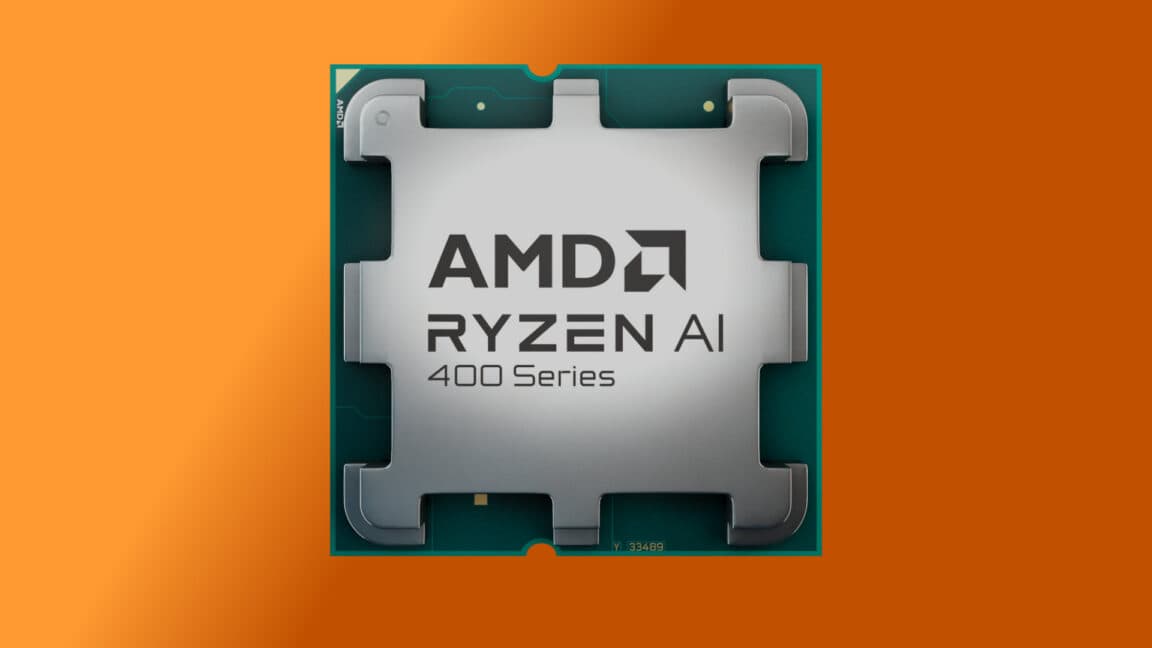
According to Ars Technica, AMD has announced its first Ryzen AI-branded desktop processors for standard AM5 motherboards. The line-up consists of six models: the 65 W Ryzen AI 7 Pro 450G, Ryzen AI 5 Pro 440G and Ryzen AI 5 Pro 435G, plus 35 W "GE" variants of each. All carry Ryzen Pro branding, targeting managed business PCs rather than retail CPU boxes for consumers.
Technically, these chips are repackaged laptop silicon. They combine Zen 5 CPU cores with RDNA 3.5 integrated graphics (up to a Radeon 860M with 8 compute units) and an NPU delivering around 50 TOPS (trillion operations per second). That’s enough to meet Microsoft’s Copilot+ PC requirement and unlock features like Recall and enhanced Windows 11 AI capabilities on desktops.
None of the announced models offer the full 12-core CPU or higher-end integrated GPUs available in AMD’s top laptop parts. AMD also isn’t (yet) offering boxed versions for the DIY market; the chips will appear primarily in OEM business desktops that don’t use dedicated graphics cards.
Why this matters
The most important signal here is not raw performance — it’s who AMD is shipping to first. The initial Ryzen AI desktops are strictly a business story. That tells you where the AI PC transition is actually being monetised: in corporate refresh cycles controlled by IT departments, not in consumer upgrades.
Winners:
- Microsoft gets more Copilot+ PCs into the market, extending Windows 11’s AI feature set to business desktops while keeping its 40+ TOPS NPU baseline intact.
- OEMs and IT managers gain a standardised way to buy AI‑capable office PCs with better graphics, modern management features (via Ryzen Pro), and the reassurance of staying inside Microsoft’s blessed configuration.
- AMD closes a gap with Intel, whose recent Core Ultra/Meteor Lake desktop designs and future parts also lean heavily on NPUs and integrated graphics for AI workloads.
Losers (for now):
- DIY builders and small system integrators: no boxed CPUs means fewer options for compact, iGPU-only AI desktops or budget creative rigs.
- Entry-level dedicated GPUs: every time integrated graphics get stronger in business desktops, a few more low-end dGPUs become impossible to justify.
The other crucial angle is on-device AI. A 50 TOPS NPU in a mainstream business tower suddenly makes running smaller language models and vision models locally a realistic default, not an exotic option. That has implications for privacy, latency and cloud costs — especially in regulated industries.
But the chips also expose the fragility of the AI PC narrative. If end users don’t see clear value beyond a handful of Windows tricks, corporate buyers will treat the NPU like yet another checkbox, not a reason to accelerate upgrades. AMD is giving Microsoft the hardware runway; the software side still has to earn its place on the balance sheet.
The bigger picture
Ryzen AI 400 for desktops sits at the intersection of three big trends.
1. The AI PC arms race. Intel, AMD and Qualcomm are all chasing Microsoft’s Copilot+ badge with faster NPUs and integrated GPUs. Laptops got attention first, but desktops are where the long-term volumes and conservative buyers live. AMD repackaging laptop dies for AM5 isn’t lazy; it’s efficient. It lets OEMs reuse a proven building block instead of waiting for a bespoke desktop die.
2. The death of the low-end GPU. Each Ryzen APU generation eats a bit more of the bottom of Nvidia’s and AMD’s own discrete GPU stack. With DDR5 prices elevated and margins thin, OEMs would rather ship one chip that is "good enough" for office 3D, light content creation and AI inference, instead of adding a cheap GPU that complicates thermals, support and inventory. The fact that AMD isn’t rushing high-core-count, high-iGPU APUs to AM5 suggests even they don’t see a profitable mini-gaming-PC niche right now.
3. An iterative year for PC hardware. As Ars Technica notes, these chips are a modest evolution over existing Ryzen AI 300 laptop processors; NPU performance is even slightly lower than the newest mobile parts. That aligns with a 2025–2026 environment of constrained TSMC capacity, memory price spikes and OEMs still digesting past inventory. Vendors are threading a needle: they need "new" AI-branded SKUs to please investors and Microsoft, but they can’t afford radical redesigns every 12 months.
Historically, we’ve seen similar cycles. Think of Intel’s short‑lived Optane push, or various "accelerators" tied to specific Windows features. The difference now is that general‑purpose AI workloads are real and multiplying. If on-device models become standard in office software, video tools and CRM systems, the NPU could avoid the fate of those forgotten add-ons. But it’s still a bet, not a certainty.
The European / regional angle
For Europe, the move to AI‑capable business desktops isn’t just a performance story; it’s a regulatory and sovereignty story.
With GDPR and the upcoming EU AI Act, many enterprises and public institutions are under pressure to minimise uncontrolled data flows to US-based cloud services. An NPU-equipped office PC makes it feasible to run document summarisation, email assistance or basic vision tasks locally, keeping personal and confidential data on‑premise.
This could be especially attractive to:
- Banks, insurers and healthcare providers managing sensitive records.
- Public administrations that must justify any external data processing.
- Industrial firms wanting predictive maintenance or inspection models at the edge, without shipping data to the cloud.
There’s a catch: many of the headline Copilot+ features, like Windows Recall, raise exactly the kind of continuous-monitoring concerns that European regulators dislike. Even if the data never leaves the device, creating a searchable log of everything an employee sees and does on their screen will interest works councils and data protection authorities in Germany, France and beyond.
European system builders and smaller OEMs may also feel the impact. If AMD keeps Ryzen AI desktop silicon as an OEM-only product for long, large global vendors gain another differentiator versus local integrators who rely on boxed CPUs. That matters in markets like Germany, Austria, Slovenia or Croatia, where regional IT resellers still dominate business PC deployment.
At the same time, these chips open a door for European software vendors. Local CRM, ERP, medical and legal-tech providers can start assuming that mid-range business PCs from 2026 onward often include an NPU, and design AI features that run entirely on the client side — a strong selling point in EU tenders.
Looking ahead
The obvious question is: when do regular consumers get interesting Ryzen AI desktops?
AMD’s current stance suggests a two‑phase approach. Phase one: seed the enterprise market with safe, Pro-branded parts and let Microsoft drive the AI feature story via Copilot+. Phase two, once DDR5 prices stabilise and TSMC capacity loosens, could bring more ambitious APUs to retail: higher-end GPUs, more cores and boxed SKUs for DIY builders.
In the near term, watch for three things:
- Real software support for NPUs beyond Copilot+. Do Adobe, Autodesk, Slack, Zoom, Atlassian and European SaaS vendors ship NPU‑accelerated features that clearly outperform CPU/GPU-only versions on business desktops? Or does everything still end up on the GPU or in the cloud?
- Enterprise policies around Recall and similar always‑on features. In Europe especially, expect many IT departments to ship Copilot+ PCs with the most controversial functions disabled by default for compliance reasons. That will blunt some of Microsoft’s marketing narrative.
- Linux and cross‑platform support. If AMD wants to win public sector and scientific desktops in Europe, ROCm and mainline Linux need to expose these NPUs in a way that open‑source software can actually use. Right now, AI acceleration on Linux often means "use the GPU or nothing".
Risk-wise, AMD faces a familiar problem: if AI PCs fail to excite, these chips will be remembered as slightly nicer APUs with a latent NPU that few apps touched. The opportunity, however, is substantial. The desktop installed base in enterprises turns over slowly but predictably. If Ryzen AI becomes the default choice for AI‑capable business towers, AMD cements itself as the silicon behind Europe’s day‑to‑day AI workloads — not in flashy data centres, but on office desks.
The bottom line
AMD’s first Ryzen AI desktop CPUs are less about thrilling enthusiasts and more about quietly standardising AI hardware in business PCs. They give Microsoft the Copilot+ footprint it wants, offer enterprises a path to on‑device AI that aligns with European regulation, and marginalise the low‑end GPU even further. The real test now moves to software: will developers and IT departments actually build and enable workflows that justify putting an NPU into every office PC, or will this become just another unused checkbox on the spec sheet?