Apple’s quiet pivot: cheaper Macs, pricier intelligence
Apple is promising “a big week” of product news, but the real story isn’t flashy new designs. It’s a structural shift in how the company prices entry into the Apple ecosystem – and who gets access to Apple Intelligence.
What’s coming looks like a wave of modest-looking updates: a cheaper MacBook, a refreshed base iPad, an iterative iPhone 17e, and some chip bumps across iPads and Macs. On paper, it’s boring. Strategically, it’s anything but.
This is Apple trying to solve two problems at once: defend the low end of the market from Windows and Android, and raise the minimum ticket price for meaningful AI features. The outside of the devices may look familiar; the business model underneath is changing.
The news in brief
According to Ars Technica, Apple is preparing multiple hardware announcements starting the week of 3 March, with press releases spread over several days and an in‑person “special experience” mid‑week for media hands‑on.
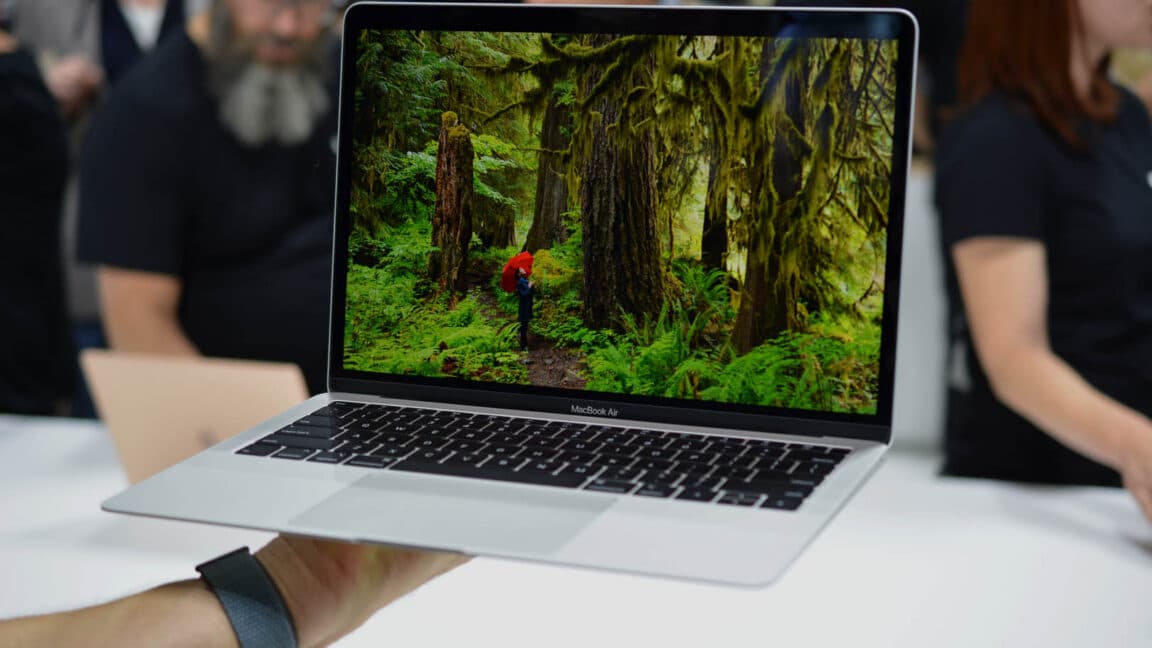
The most widely rumoured product is a new, lower‑cost 13‑inch MacBook that should sit below the MacBook Air in price. Leaks point to it using an A18 Pro chip – the same family used in recent iPhone Pro models – likely paired with 8 GB of RAM and a design very close to the previous‑generation MacBook Air that Apple has been quietly selling through Walmart in the US.
Ars Technica also expects:
- A refresh of the €349/$349 base iPad with an A18 or A19 chip and 8 GB of RAM, making it eligible for Apple Intelligence.
- An iPhone 17e with an upgraded A19 chip and MagSafe charging, but otherwise basic hardware.
- An iPad Air jump to the M4 chip, with few external changes.
- Possible M5‑based updates for more Macs and a long‑overdue Apple TV refresh, mostly focused on internal silicon rather than new designs.
Why this matters: hardware as a gate to Apple Intelligence
Viewed individually, none of these products looks transformative. Together they reveal a clear strategy: Apple is turning RAM and chip generations into a hard gate for its AI features – and then quietly upgrading the cheapest devices just enough to get them over the bar.
Winners first:
- Mainstream buyers finally get a genuine budget Mac that isn’t an ancient Intel relic. For students, families and office workers who just want a reliable laptop for documents and web apps, an Apple‑grade machine in the €600–800 range could be a big deal.
- Apple itself widens the funnel for Apple Intelligence. A base iPad and cheap MacBook with 8 GB of RAM mean the company can credibly say that even its entry devices “support AI”, driving future services revenue and lock‑in.
But there are losers too:
- Existing owners of recent but under‑specced devices (particularly 6 GB iPads and Macs with 8 GB but older chips) are being nudged toward earlier replacement cycles. When core OS features and a revamped Siri are restricted to newer devices, “planned obsolescence” stops being a Twitter insult and starts feeling like company policy.
- Windows OEMs and Chromebook vendors in the midrange will feel pressure. They’ve long dominated €400–700 laptops on price; Apple is now saying: for a bit more, you can have a Mac that also unlocks its flagship AI features.
The immediate implication: Apple is redefining “minimum spec” for a modern computer. In Apple’s world, a personal computer without integrated AI is increasingly framed as incomplete – which conveniently makes anything pre‑A18/M‑class feel old, even if the hardware is still perfectly capable.
The bigger picture: the age of “good enough” hardware
What Ars Technica describes – almost all action happening on the inside – fits a broader pattern. Smartphone and PC hardware has hit a plateau where yearly design overhauls are harder to justify. Apple appears to be stretching exterior design cycles to five, six, even seven years, while rotating silicon and AI features on a faster cadence.
We’ve seen this movie before:
- The iPhone SE / iPhone “e” line reuses older chassis with modern chips to hit price points without massive engineering spend.
- The €329‑class iPad was built on recycled designs and components, yet it slowly became Apple’s volume workhorse in education and home use.
- The current MacBook Pro design has already lasted several chip generations and, according to multiple reports, may stick around until an OLED/touchscreen redesign later this decade.
Compared to competitors, Apple is leaning hardest into vertical integration. Qualcomm’s PC chips are only just entering the market in force. Windows AI PCs are still fragmented across vendors, each with their own compromises. Google’s Chromebook push in education has stalled in many markets.
By contrast, Apple can take a 2020 chassis, drop in an A18‑class chip, promise seven‑plus years of OS support, and then layer Apple Intelligence on top. The value proposition isn’t raw performance or radical design; it’s coherence.
This also signals where the industry is heading: toward AI‑first platforms where:
- Chip choice dictates what the OS can do.
- Operating systems evolve faster than hardware shells.
- Vendor‑controlled AI stacks become the primary differentiator.
In that world, a dull‑looking MacBook with a powerful NPU and 8 GB of RAM can be far more strategically important than a flashy new case.
The European angle: education, regulation, and privacy narratives
For Europe specifically, the rumored “budget MacBook” is not just a cheaper laptop; it’s a direct assault on two entrenched realities: Windows in public institutions and Chromebooks in schools.
- Education markets in countries like the UK, Netherlands, Nordics and parts of Central Europe are highly price‑sensitive and procurement‑driven. If Apple can offer a durable Mac around or just under €800, suddenly MacOS becomes viable in tenders that previously defaulted to Windows notebooks and ChromeOS.
- In smaller markets with strong Apple loyalty but lower purchasing power, such as much of Central and Eastern Europe, a cheaper MacBook could be the first non‑second‑hand Mac many households consider.
Regulation is the other big lever:
- Under GDPR and the upcoming EU AI Act, Apple’s “on‑device AI” message has real weight. Being able to say that Apple Intelligence runs locally on an A18/M‑class chip, with minimal data leaving the device, is a privacy narrative that plays exceptionally well in Germany, France, and the Nordics.
- At the same time, the Digital Markets Act (DMA) forces Apple to open up in areas like default apps and distribution. If Apple Intelligence becomes deeply embedded across the system, regulators will eventually ask whether it unfairly advantages Apple’s own services over rivals.
Finally, European hardware makers – from German and French PC assemblers to niche Chromebook vendors – will feel squeezed. Their traditional advantage has been price and local support. Competing with a “cheap” Mac that doubles as a gateway to Apple’s AI ecosystem will be significantly harder.
Looking ahead: what to watch in Apple’s “big week”
Assuming the leaks are broadly correct, the announcements themselves may feel iterative. The real questions are in the fine print.
Key things to watch:
- Price positioning of the budget MacBook in euros, not dollars.
- Does Apple aggressively target the €699–799 band, or play it safe around €899? The former is a genuine market disruption; the latter is just a slightly cheaper Mac.
- RAM and storage baselines.
- If 8 GB/256 GB is still the entry point in 2026, Apple will be rightly criticised, especially as it markets heavy on‑device AI workloads.
- Apple Intelligence support matrix.
- How explicitly does Apple tie features to A18/M‑class chips and 8 GB of RAM? A transparent chart would be honest – and would also expose how aggressively Apple is pushing upgrades.
- Education and SMB messaging.
- Dedicated bundles, education discounts and management tools announced alongside the cheap MacBook would signal that this is a strategic play, not just a clearance of old designs.
- Any hint of subscription‑style AI upsells.
- If Apple teases “premium” Apple Intelligence tiers or capabilities, the hardware we see next week becomes the on‑ramp to a much more lucrative services story.
Risk-wise, Apple’s biggest danger is boring its enthusiast base. Another year of “same shell, new chip” could push power users toward waiting even longer between upgrades – or experimenting with Windows AI laptops that, while rougher, feel more adventurous.
The bottom line
Apple’s “big week” is unlikely to deliver jaw‑dropping hardware, but it will quietly redraw the map of who can afford a Mac or iPad that fully participates in Apple’s AI future. A cheaper MacBook and refreshed entry iPad are less about generosity and more about making Apple Intelligence the new baseline expectation.
For users, the trade‑off is clear: more choice at the low end, but faster obsolescence for perfectly capable older gear. The question to ask yourself this week isn’t “Do I like the new designs?” – it’s “Am I comfortable locking my next five‑plus years of computing into Apple’s AI stack?”