1. Headline & intro
Apple hasn’t just shipped faster MacBook Pro chips; it has quietly torn up the Apple Silicon playbook. With the M5 Pro and M5 Max, Apple moves from elegant monolithic designs to a much more modular, chiplet-style architecture and introduces a third class of CPU core. That’s not a routine speed bump—that’s a strategic pivot.
In this piece, we’ll look beyond Apple’s marketing to what this redesign really signals: why Apple is embracing chiplets now, what three tiers of cores mean for real workloads, how this reshapes the M‑series roadmap, and why European users should care even if they never read a spec sheet.
2. The news in brief
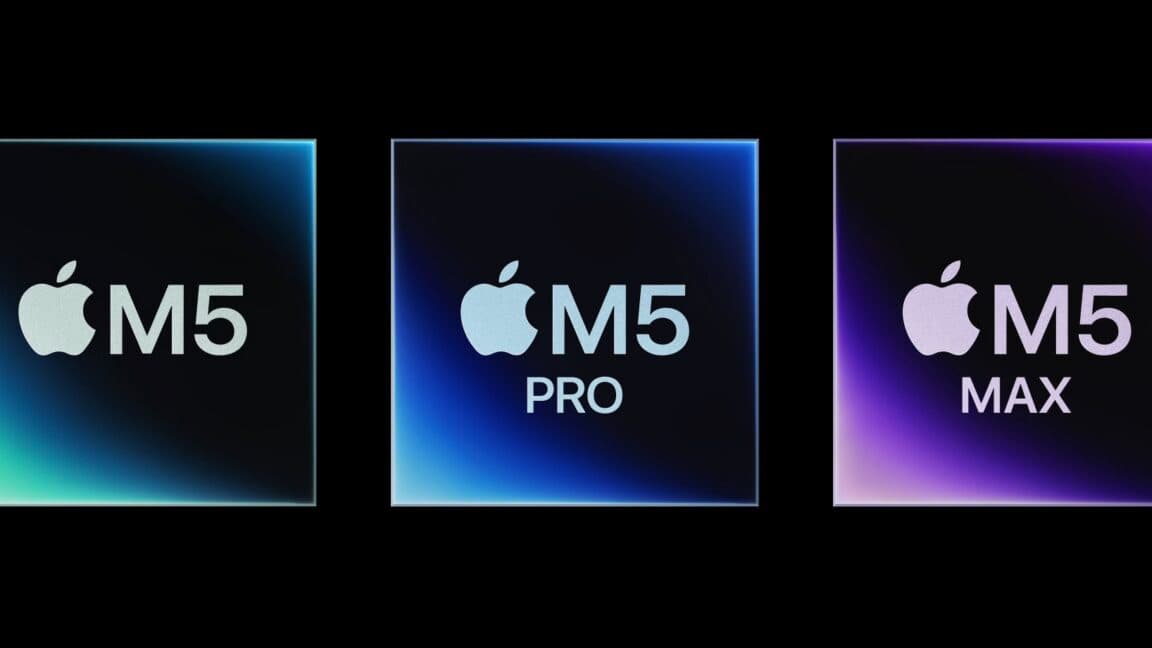
According to Ars Technica’s detailed breakdown of Apple’s launch, the new M5 Pro and M5 Max—announced alongside updated MacBook Pro models on 3 March 2026—are the most radical refresh of Apple Silicon since the original M1.
Both chips use what Apple calls a new "Fusion Architecture": instead of a single monolithic die, each package combines two chiplets built on TSMC’s 3 nm process. One die contains the 18‑core CPU, a 16‑core Neural Engine, storage and Thunderbolt controllers. The second die is focused on graphics and memory.
On that GPU/memory die, M5 Pro offers up to 20 GPU cores, one media engine and up to 307 GB/s of memory bandwidth. M5 Max doubles most of that: up to 40 GPU cores, two media engines and up to 614 GB/s bandwidth.
Apple also reorganises its CPU core taxonomy. The M5 Pro/Max use three distinct core types: high‑end "super" cores for peak single‑thread performance, new "performance" cores tuned for dense multi‑threaded work, and familiar efficiency cores for low‑power tasks.
3. Why this matters
The M5 Pro and Max are Apple’s admission that the old formula—one big die, two core types, scale everything up—has hit practical limits.
Winners:
- Apple itself. Splitting the SoC into CPU/IO and GPU/memory chiplets gives Apple more flexibility. It can reuse the same CPU die in Pro and Max, swap only the GPU die, and potentially bin chips more aggressively. This improves yields and margins on very expensive 3 nm wafers.
- Pro users with mixed workloads. Video editors, 3D artists and AI researchers get significantly more memory bandwidth and GPU scaling, while still benefiting from faster "super" cores for UI responsiveness and scripting. The new mid‑tier performance cores should shine in heavy, sustained multi‑core workloads like Xcode builds or Blender renders.
- Battery and thermals. Three tiers of cores allow macOS to place tasks more intelligently. Light work can sit on efficiency cores, interactive work on super cores, and background heavy lifting on performance cores that are tuned for throughput per watt, not peak clock.
Losers:
- Simplicity. Until now, choosing a MacBook Pro was: more cores = more speed. With heterogeneous cores and chiplets, actual performance will depend more on workload characteristics. Two machines with “18 cores” may behave quite differently if your app is single‑threaded or memory‑bound.
- Developers who ignore the hardware. Threading models and scheduling hints suddenly matter a lot more. Apps that assume all big cores are equal may under‑utilise the new performance cores or clash with macOS’s scheduler.
Competitively, this is Apple stepping into the same arena as AMD and Intel, who already use chiplets and hybrid cores. The difference is that Apple controls silicon and OS, so it can hide complexity better—if it gets the software story right.
4. The bigger picture
Three trends converge in the M5 Pro/Max design.
1. The chiplet decade.
AMD popularised chiplets in Ryzen and Epyc to keep huge CPUs affordable. Intel followed with Foveros stacks in Meteor Lake and beyond. High‑end monolithic dies are simply becoming too large, too hot, and too expensive at advanced nodes. Apple held out longer than most, but once it started welding two Max dies into an Ultra, the direction of travel was obvious. Bringing chiplets down to the Pro tier signals that modularity is now the default, not an exotic option.
2. Heterogeneous compute everywhere.
Intel’s P‑core/E‑core mix and AMD’s planned "c" variants (Zen 4c/5c) show the industry converging on asymmetric CPUs. Apple’s three‑tier layout goes a step further: "super" cores for latency‑sensitive work, mid‑tier performance cores for throughput, efficiency cores for background/battery tasks. That resembles a miniature server cluster inside your laptop.
Crucially, it’s not just about benchmarks. It’s about sustaining performance under tight thermal limits—especially in thin laptops where a 120 W power budget is fantasy.
3. The AI and media push.
While Ars Technica focuses (rightly) on CPU/GPU structure, the quiet story is that Apple is clearly building for heavier on‑device AI and media workloads. Doubling GPU resources and memory bandwidth in the Max, plus keeping a 16‑core Neural Engine standard, sets the stage for more local generative AI, real‑time upscaling, and multi‑stream high‑resolution video.
This aligns with broader industry moves: NVIDIA pushes AI‑centric GPUs into laptops, Microsoft leans into "AI PCs," and Qualcomm’s Snapdragon X Elite touts NPU TOPS figures. Apple’s twist is to treat the GPU and Neural Engine as first‑class citizens inside a tightly coupled SoC rather than bolt‑on accelerators.
5. The European / regional angle
For European users, this is not just a spec party in Cupertino; it has concrete implications.
First, energy and sustainability. EU regulations and corporate ESG targets push for reduced energy use. Three‑tier CPUs, aggressive power gating, and higher performance per watt make it easier for enterprises to justify power‑hungry creative and AI workloads staying on laptops instead of being offloaded to always‑on cloud servers. That reduces both energy bills and the compliance headache around cross‑border data transfers.
Second, data protection and on‑device AI. Under GDPR and the upcoming EU AI Act, keeping sensitive data local is increasingly attractive. A MacBook Pro that can run sizeable language models, vision pipelines or analytics directly on the M5 Max GPU/Neural Engine lets European organisations explore AI without instantly tripping over international data‑transfer rules.
Third, supply‑chain reality. All this silicon still comes from TSMC in Taiwan. The EU’s Chips Act aims to reduce dependency on Asian fabs, but for the foreseeable future, Apple’s pro Macs remain exposed to the same geopolitical and logistical risks as before. European studios and agencies planning multi‑year hardware cycles should factor that into their risk assessments.
Finally, for Europe’s creative capitals—Berlin, London, Paris, Amsterdam, Stockholm—MacBook Pros remain the de facto standard in design, audio and video. The M5 generation raises the performance ceiling again, but also widens the gap between base M‑series machines and serious pro hardware. That will sharpen purchasing decisions for small studios that might previously have "made do" with a high‑end Air or base Pro.
6. Looking ahead
The obvious next question is: what does an M5 Ultra look like in this new world?
Previous Ultras simply fused two Max dies, doubling everything. With the M5 family already modularised into CPU and GPU/memory chiplets, Apple has more options:
- It could still double up the existing Pro/Max modules, keeping a simple mental model but resulting in a very complex multi‑chip package.
- Or it could design dedicated Ultra‑class GPU and memory chiplets and reuse the same 18‑core CPU tile, emphasising graphics and bandwidth over sheer CPU core count.
On laptops, the near‑term story is software. Over the next 6–12 months, watch for:
- macOS releases that refine the scheduler for three‑tier cores, especially under Rosetta and in mixed CPU+GPU+Neural Engine workloads.
- Xcode and Metal updates that give developers clearer visibility and control over where work runs.
- Real‑world benchmarks from video, 3D and AI tools that reveal whether Apple has balanced super vs performance cores correctly, or if some workloads regress vs M4 Max.
There is risk. If the scheduling isn’t stellar, users may see inconsistent performance or strange battery behaviour. If developers don’t adapt, parts of the chip will sit idle. But there’s also opportunity: software that is aware of the new topology could gain a free performance edge—especially smaller European toolmakers competing with US giants.
7. The bottom line
The M5 Pro and M5 Max mark the end of the "beautifully simple" era of Apple Silicon and the start of a more modular, more complex—but ultimately more scalable—phase. Apple is trading architectural purity for flexibility, better yields and higher ceilings in GPU, memory and AI performance. That’s good news for serious Mac users, provided Apple’s software teams and third‑party developers do their homework.
The real test is just starting: can Apple make this level of hardware complexity feel as effortless as the M1 did?