Apple’s M5 Pro/Max MacBook Pros Show Where the Real Pro Tax Lives Now
Apple’s latest MacBook Pro and Studio Display updates are less about raw performance and more about repositioning what “pro” means — and what it costs. The M5 Pro and Max chips look like serious multi‑threaded upgrades, but the real story is Apple quietly rewriting the baseline: 1–2 TB of storage, Wi‑Fi 7, mini‑LED panels… and significantly higher starting prices. For creatives, developers, and small studios, this is the moment where you either double down on Apple’s integrated ecosystem or start seriously evaluating high‑end Windows machines and third‑party monitors. In this piece, we’ll unpack the silicon changes, the display strategy, and the business logic behind Apple’s new “pro” tax.
The news in brief
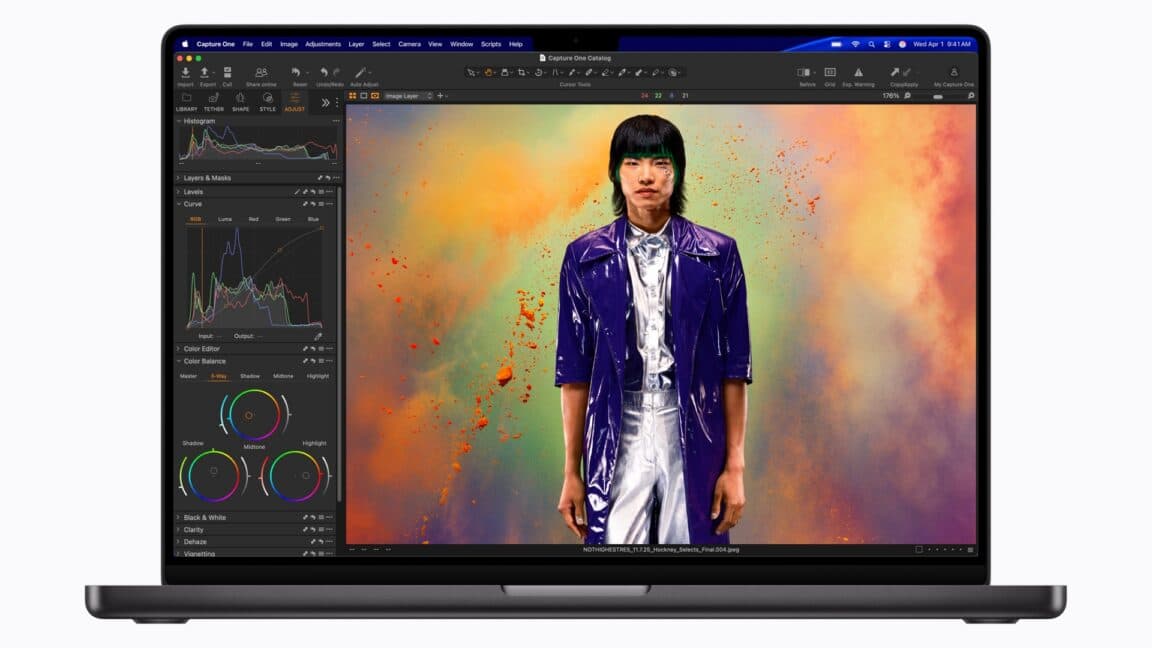
According to Ars Technica, Apple has refreshed the 14‑ and 16‑inch MacBook Pro line with new M5 Pro and M5 Max chips, following the base M5 MacBook Pro that arrived in October. The new models keep the same chassis and mini‑LED screens but introduce updated silicon, faster internal storage, and higher default capacities.
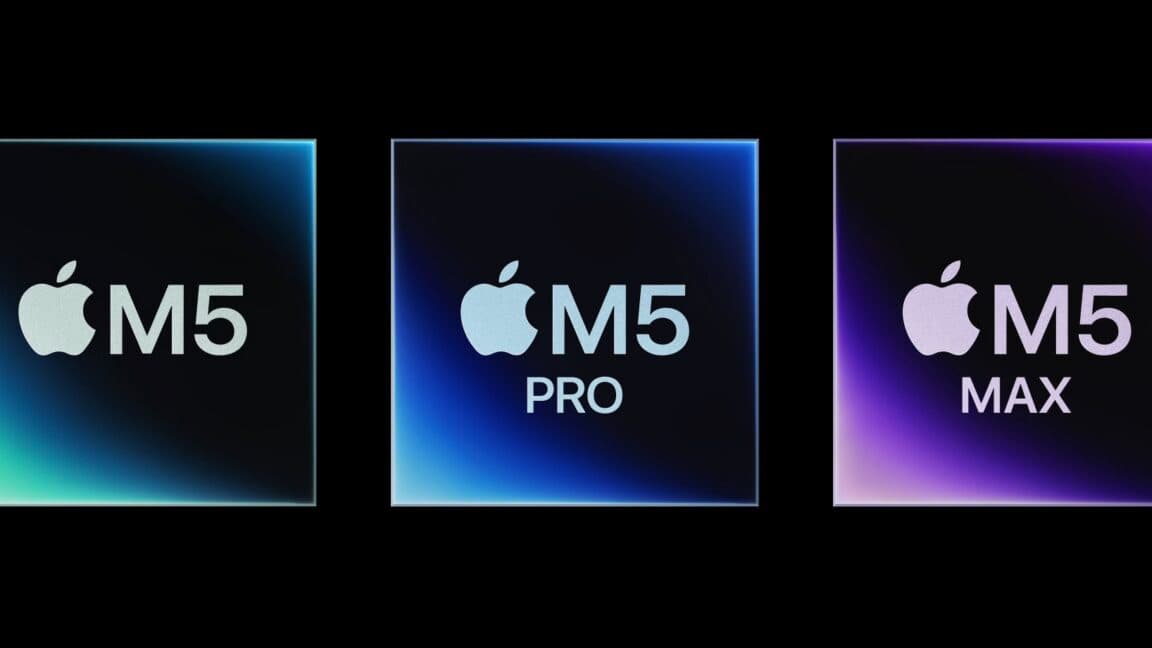
The M5 Pro and Max both use an 18‑core CPU: six high‑performance “super” cores and 12 new power‑efficient performance cores aimed at multi‑threaded workloads. Apple claims up to 2.5× higher multi‑threaded performance versus the original M1 Pro and Max, plus GPU options up to 20 cores (Pro) and 40 cores (Max) with more memory bandwidth.
Base storage doubles: 1 TB for M5 Pro models and 2 TB for M5 Max, with faster SSDs. But prices also rise: in the US, 14‑inch M5 Pro now starts at $2,199, 16‑inch at $2,699, and the entry M5 MacBook Pro at $1,699.
Alongside the laptops, Apple updated the 27‑inch Studio Display with a new chip, better camera processing, and Thunderbolt 5, while keeping the same 5K LCD panel and $1,599 price. A new Studio Display XDR adds mini‑LED, 120 Hz, higher brightness, and a standard height‑adjustable stand — starting at $3,299.
Why this matters
The headline is performance, but the real shift is in Apple’s definition of “baseline pro hardware.” Apple isn’t just adding cores; it’s removing low‑end options. If you previously stretched to buy an entry‑level 512 GB MacBook Pro, that configuration simply no longer exists. You get 1 TB by default — but you must pay more for the privilege.
Beneficiaries are clear:
- High‑end professionals working with large media projects, codebases, and local AI workflows gain from higher multi‑threaded throughput, faster SSDs, and bigger default storage. These machines will chew through Xcode builds, 8K timelines, and on‑device ML models more comfortably.
- Apple protects its margins in a PC market that is flat to shrinking. By raising average selling prices while justifying them with storage and connectivity upgrades, it keeps revenue growth without radically changing form factors.
On the losing side:
- Prosumers and students who once bought the cheapest “real” MacBook Pro now face a tougher decision: settle for a MacBook Air, accept a smaller SSD on the Air, or pay hundreds more for a Pro they may not fully utilize.
- Monitor buyers get a brutally segmented line: a still‑pricey 5K LCD at $1,599 and a big jump to $3,299 for Apple’s mini‑LED option.
In competitive terms, Apple is doubling down on its advantage in performance‑per‑watt and integrated design, while essentially admitting that “affordable pro” is not a segment it intends to serve directly anymore.
The bigger picture
This update fits into three broader trends in Apple’s Mac strategy.
1. The Apple Silicon cadence is maturing.
We’re past the dramatic leaps of M1 and M2. The M5 Pro/Max story is more about smarter core mixes and targeted multi‑thread gains than eye‑catching single‑thread numbers. Apple is optimizing for the actual workloads of people who buy the expensive models: Xcode, Final Cut, Resolve, Cinema 4D, Unreal Engine, and increasingly, local AI inference.
The introduction of a new class of power‑efficient “performance” cores alongside “super” cores echoes what we see in the wider industry: hybrid architectures from Intel and, crucially, the new wave of Windows on Arm laptops. Qualcomm’s push with custom Arm chips has put pressure on Apple to keep its lead in sustained, multi‑core performance at reasonable power budgets.
2. Pro pricing is moving steadily upward.
We’ve already watched iPhone “Pro” models march past four‑figure euro prices, iPad Pro creep into laptop territory, and entry‑level Macs shed the lowest storage tiers. These MacBook Pro changes extend the same playbook: remove the cheapest configuration, keep the headline price increase modest, and position it as “more storage for your money.” Technically true, strategically brilliant, and financially painful for many buyers.
3. Displays reveal Apple’s priorities.
The retirement of the 32‑inch Pro Display XDR without a direct 32‑inch successor says a lot. Instead of serving the very high‑end reference monitor niche, Apple is aiming squarely at its own MacBook Pro buyer base: people who want a 27‑inch, high‑density, color‑accurate external monitor that feels like a natural desktop extension of their laptop. Mini‑LED, 120 Hz, and higher SDR/HDR brightness address creators and developers who live in code editors and timelines.
If you wanted a reasonably priced Apple 27‑inch 120 Hz 5K display, it’s here — just not at a reasonable price.
The European angle
For European buyers, these updates land in an environment where Apple hardware was already at a premium after currency swings, inflation, and local taxes. Expect euro prices that feel even further detached from median incomes in many EU countries. The effective “Apple tax” in Europe gets compounded by VAT and fewer discount channels than in the US.
There are also regulatory undercurrents. The EU’s growing focus on sustainability and repairability — from right‑to‑repair proposals to eco‑design rules — increasingly clashes with Apple’s tightly integrated, hard‑to‑upgrade machines. Doubling base storage is convenient, but it also locks you into a configuration you can never change, making the initial purchasing decision more critical and wasteful if your needs grow.
At the same time, these M5 Pro/Max Macs are perfect machines for local AI workloads, which meshes with the upcoming EU AI Act. Companies nervous about sending sensitive data to US‑hosted clouds can run more models locally on powerful notebooks, keeping data inside EU borders while still leveraging advanced AI tooling.
European display buyers remain in a familiar position: creatives in Berlin, Barcelona, Paris, or Ljubljana who want color accuracy and high DPI will often pair Macs with third‑party 4K or 5K panels from LG, Dell, Eizo, or Philips. Apple’s new Studio Display XDR will find homes in well‑funded studios and agencies, but most freelancers will continue living in the ecosystem gap between cheap 27‑inch 1440p panels and Apple’s 5K pricing.
Looking ahead
The next moves are fairly predictable — and revealing.
On the Mac side, an M5 Ultra for Mac Studio and Mac Pro is almost guaranteed. That will be the real test of Apple’s new core layout: can it keep scaling multi‑thread performance without hitting thermal walls or sacrificing efficiency? If it succeeds, we’ll likely see even more pro workflows, including heavy AI inference and simulation, migrate from desktop workstations to compact desktops and laptops.
For laptops, the bigger question is not performance but segmentation. Will Apple keep pushing the MacBook Air upward, both in power and price, or will it finally acknowledge a gap for a mid‑range “creator” machine below the MacBook Pro? Right now, it feels like Apple is comfortable letting Windows OEMs fight over that territory with OLED, 120 Hz 4K, and aggressive pricing.
Displays are murkier. The absence of a new 32‑inch panel suggests either that Apple is rethinking its place in the reference‑monitor market or that a much more expensive 32‑inch mini‑LED or even OLED product is still in the oven. Watch for:
- Whether the Studio Display XDR appears in bundled deals with high‑end Macs.
- Any sign of Apple experimenting with more flexible stands, VESA‑first designs, or lower‑priced 5K options — which would signal pressure from third‑party monitors.
- How quickly pro apps on macOS embrace 120 Hz workflows on external displays.
For buyers, the near‑term risk is clear: over‑spending on fixed configurations that you can’t expand. The opportunity is just as real: if you genuinely need multi‑thread power and live in Apple’s pro apps, this generation may give you several years of headroom.
The bottom line
Apple’s M5 Pro and Max MacBook Pros, plus the new Studio Display line, crystallize a strategy that’s been forming for years: fewer compromises, higher baselines, and a steeper entry price for anyone who wants into the “pro” tier. The hardware is excellent; the value is debatable unless you routinely push your machine to its limits. The real question for readers isn’t whether Apple’s new gear is fast — it is — but whether you’re still willing to pay Apple’s growing pro tax when the alternatives have never been stronger.