Asus is stepping away from the smartphone fight.
At a 2026 kick-off event in Taiwan, chairman Jonney Shih confirmed the company is putting its phone business on an indefinite pause and shifting its energy toward AI hardware.
“Asus will no longer add new mobile phone models in the future,” Shih said, according to a machine-translated report from Taiwanese outlet Inside. In practical terms, that means no new Zenfone or ROG Phone in 2026—and very possibly ever.
ROG Phone 9 may be the last of its kind
If you bought a ROG Phone 9, you might own the end of an era.
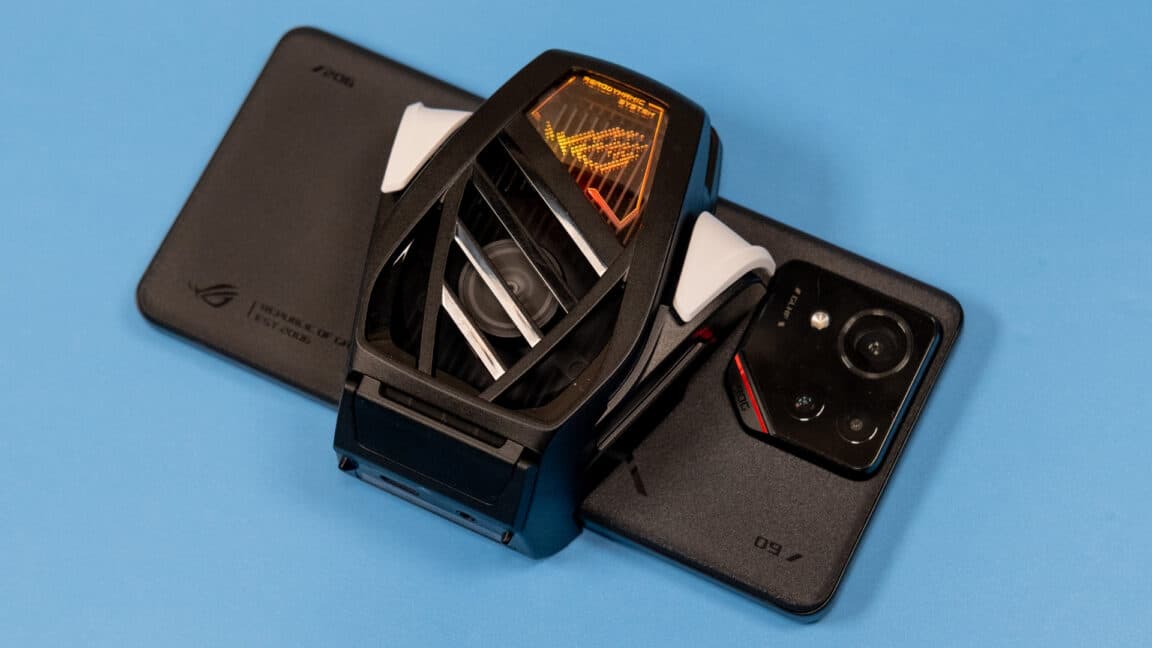
The ROG Phone line was one of the few true “gaming phones” left: top-tier chipsets, active cooling fans, multiple USB‑C ports, bolt‑on controllers, RGB lighting, and yes, a headphone jack. The latest model, the ROG Phone 9 Pro, starts at $1,200—more expensive than Samsung’s flagships.
That niche appears to have been too small. The pool of people who won’t just game on an iPhone or a Galaxy has always been limited, and Asus had to support a dedicated hardware platform, custom accessories, and a global channel around it.
The more mainstream Zenfone line had a different pitch: smaller, slightly cheaper Android phones in a sea of giant slabs. But even there, Asus struggled to keep up with the long‑term software support now expected from premium devices.
Update policies never caught up
Existing Asus phones are not being bricked or abandoned overnight. According to Ars Technica’s reporting, current devices should continue to receive updates under policies the company already committed to.
Those policies, however, were never industry‑leading:
- ROG Phone 9 Pro: only two major OS updates and five years of security patches.
- Recent Zenfones: two Android version updates and four years of security updates.
That’s a full step behind the best Android players, which increasingly target five years of OS upgrades and more for security on their flagships. If you were paying four figures for a gaming phone, that gap was hard to ignore.
A mature market, fewer seats at the table
Shih described Asus’ return to phones as an “indefinite wait-and-see” situation—again via machine translation. In other words, don’t hold your breath.
The broader market doesn’t give Asus many reasons to come back. Smartphones are a mature product category. Year‑over‑year gains are incremental. Prices are high. People are holding onto devices longer.
At the same time, Chinese manufacturers like Vivo, Xiaomi, and Huawei have flooded global markets with aggressively priced hardware. That leaves less and less room for niche OEMs that don’t have massive scale or carrier muscle.
As Ars notes, Asus used to be a much bigger presence in Android hardware. In the late 2000s and early 2010s, the company experimented with:
- Phones
- Tablets
- Phone‑tablet hybrids
- Tablets that docked into quasi‑PCs
Back then, the category was wide open—from slider keyboards to pico‑projector gimmicks. Today, the flat glass slab has won, and differentiation is expensive.
The LG warning sign
History is not on Asus’ side if it ever considers a comeback.
No Android OEM that paused its smartphone roadmap has successfully spun things back up later. LG is the cautionary tale. It once traded blows with Samsung in its home market, then began scaling back its phone releases around 2019 after years of losses. At the time, LG insisted it would launch new phones when it had a good reason.
Instead, it wound down the entire mobile division.
Asus is now walking a similar path: stop the bleeding, keep existing phones on life support, and put R&D elsewhere.
Asus chases AI servers, robots, smart glasses
That “elsewhere” is AI.
Alongside the smartphone pause, Shih highlighted that Asus grew revenue 26.1 percent in 2025, helped by a doubling of its AI server business. That’s where the company sees real momentum.
Asus is repositioning itself around AI‑centric products—servers, robots, smart glasses, and other hardware that can tap into the current wave of machine learning demand from cloud providers and enterprises.
Whether that’s the right long‑term bet is an open question. AI infrastructure is an increasingly crowded, capital‑intensive space dominated by the likes of Nvidia, Supermicro, and major cloud providers building their own hardware.
But there’s one thing Asus is certain of: continuing to lose money in phones is not an option.
What this means if you own an Asus phone
If you’re holding a recent Zenfone or ROG Phone:
- You should still get the promised OS upgrades and security patches.
- Don’t expect surprise bonus updates beyond what Asus has already committed to.
- Accessory ecosystems for ROG Phone, in particular, will likely stagnate.
The bigger story is choice. With Asus stepping back, the Android market loses another distinct voice—especially in gaming‑focused hardware and compact premium phones.
For now, Asus is content to let Samsung, Apple, and the Chinese giants fight over your next smartphone, while it tries to ride the AI wave instead.